No. 47Time3 minviews 21
Published by GK Library Annex
Why do weekend mornings vanish so fast?
You slept in, made one coffee—and it is already lunch. Where did those two hours go?
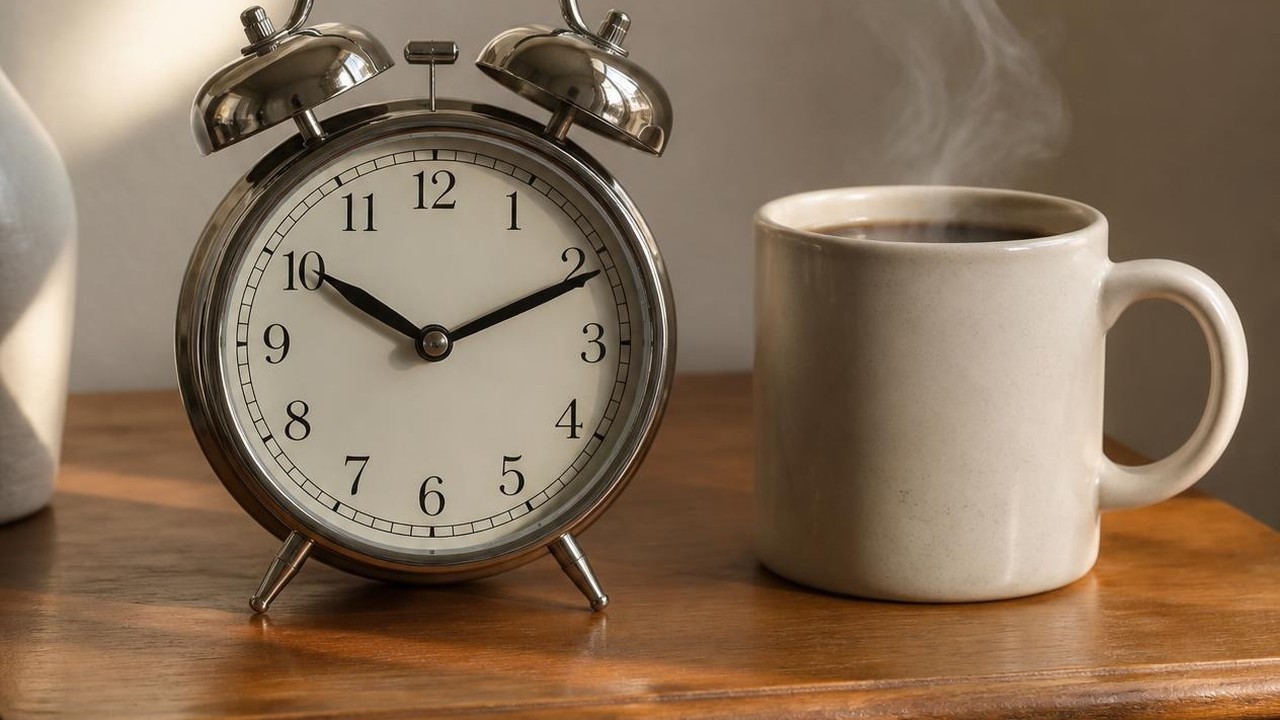
Weekend mornings feel gone in a blink not because the clock sped up. When we look back, we gauge length by how many scenes memory kept, not by the watch. A slow, familiar morning stores few scenes, so two hours fold into one.
Looking back, we count scenes
Felt duration works two ways: timing the present, and estimating the past. Looking back, the count of remembered events and scene changes is the yardstick. In 1969 psychologist Ornstein reported that equal stretches packed with more information are remembered as longer.
Weekday mornings carve wake, wash, eat, leave into separate slots. Weekends drop those slots; lying, sitting, and staring out the window glue into one lump.
When you ignore the clock it races
On weekdays with alarms and appointments you check the time often. Paying attention to time itself makes the present feel slower—like a watched pot that never boils.
Weekend mornings you barely glance at the clock. So time flies while it passes, and looking back few scenes remain, so it also feels short. Both effects stack.
Familiar folds shorter
Israeli researchers found time filled with routine acts feels shorter in retrospect. An easy, familiar weekend morning is exactly that.
People say 「time flies when you're having fun」, but remembered length is a bit different. A first day exploring a strange city can feel quick while it happens yet long and full later. What shrinks memory is fewer new scenes, more than how fun it was.
One small slot
To leave a longer morning, one small slot beats a big plan: buy bread on a new route, play unfamiliar music by the window, or move one plant. A new scene draws a boundary so the morning does not vanish whole.
Slowness is still good rest. Feeling short does not mean you lost the morning.
Related reads
Weekend mornings feel short because of few remembered scenes—not a fast clock.
Notes and references · Ornstein 1969 · Avni-Babad & Ritov 2003 · Block & Zakay 1997. Past duration estimates grow with information and scene change (Ornstein 1969; meta-analysis Block & Zakay 1997). Time spent on repetitive acts feels shorter looking back (Avni-Babad & Ritov 2003, J. Exp. Psychol. General).
Editorial standardsReport an error
Quick quiz