No. 48Everyday life3 minviews 26
Published by GK Library Annex
Why won't water alone clean a greasy plate?
Even blasting hot water, the plate stays slick. What is water missing?
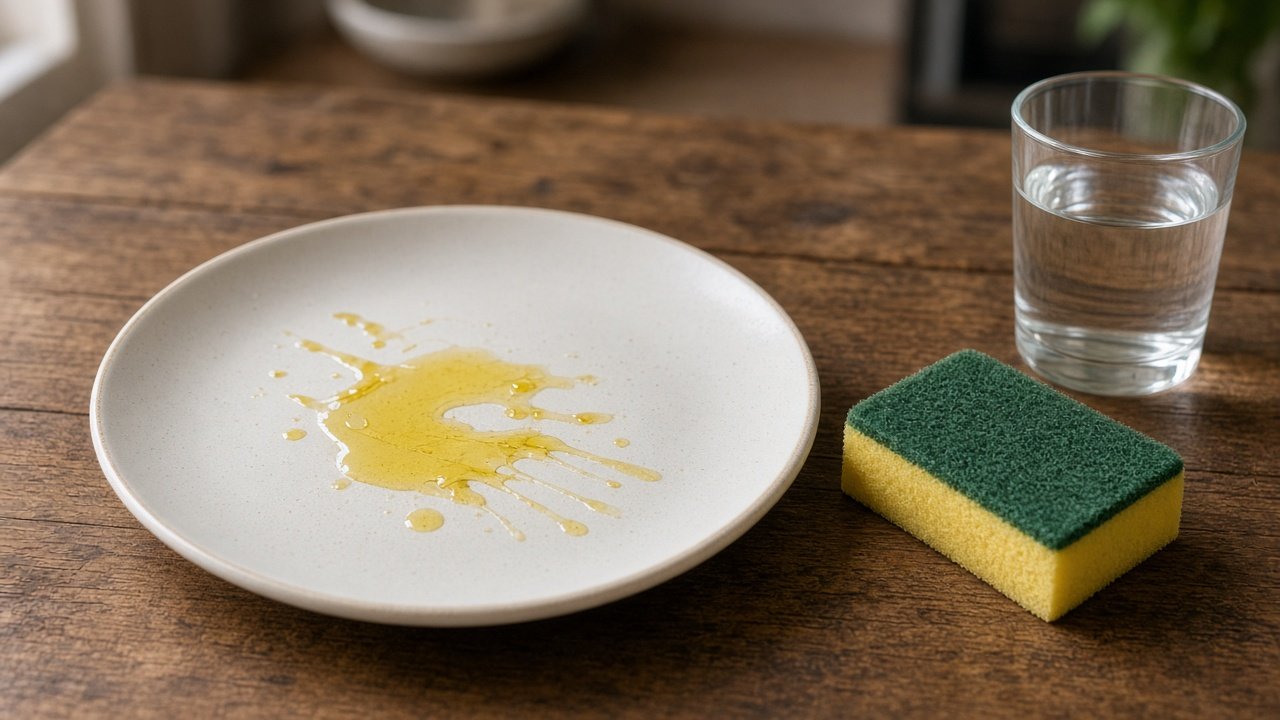
A greasy plate resists water alone because water and oil do not mix. Water molecules cling to each other and oil cannot squeeze between them. Soap has to wrap oil into tiny droplets before water can carry it away.
Water pushes oil away
Rinse a greasy plate with water only and droplets bead and roll. Oil will not dissolve in water, and water will not enter oil, so a yellow rim stays at the edge.
Hot water softens and thins solidified fat a bit. It does not dissolve the oil away. Softened grease can re-stick to the next dish as it cools. Water alone has no hand to grab oil and take it with it.
Temperature depends on the stain
Cooking oil stays liquid at room temperature, but pork fat melts near body heat and beef fat needs higher heat. A meat pan rinsed in cold water can go white and waxy; warm water loosens it better.
Egg or milk protein stains, though, can set in hot water. Soak those dishes in cool water first, then wash.
Soap builds a bridge
Soap molecules love water at one end and oil at the other. Scrubbing breaks oil into droplets; oily tails tuck inward while watery heads face out. That wrapped droplet is a micelle. With a water-friendly shell, running water carries the oil away.
More foam does not mean cleaner—a common myth. Foam only shows soap is still there; the work is done by dissolved molecules, not bubbles. You do not need a mountain of suds.
Wipe first, then wash
For oily pans or plates, wipe once with a paper towel first—you use far less soap and water. Oil poured down the drain cools, hardens, and binds with scraps to clog pipes.
Then warm water and soap with one scrub pass break the film. If rinse water still beads, grease remains. When water sheets evenly, you are done.
Related reads
Wipe greasy dishes first, then scrub with soap and warm water.
Notes and references · Surfactant & micelle basics · U.S. EPA FOG guidance. Surfactants wrap oil into micelles with water-loving heads and oil-loving tails so grease disperses in water. Foam volume does not equal cleaning power. Fat, oil, and grease hardening in drains is covered in EPA FOG guidance.
Editorial standardsReport an error
Quick quiz