No. 37Psychology3 minviews 30
Published by GK Library Annex
The other line always seems to move faster
At the checkout, the next line seems to shrink first. Is yours really slower?
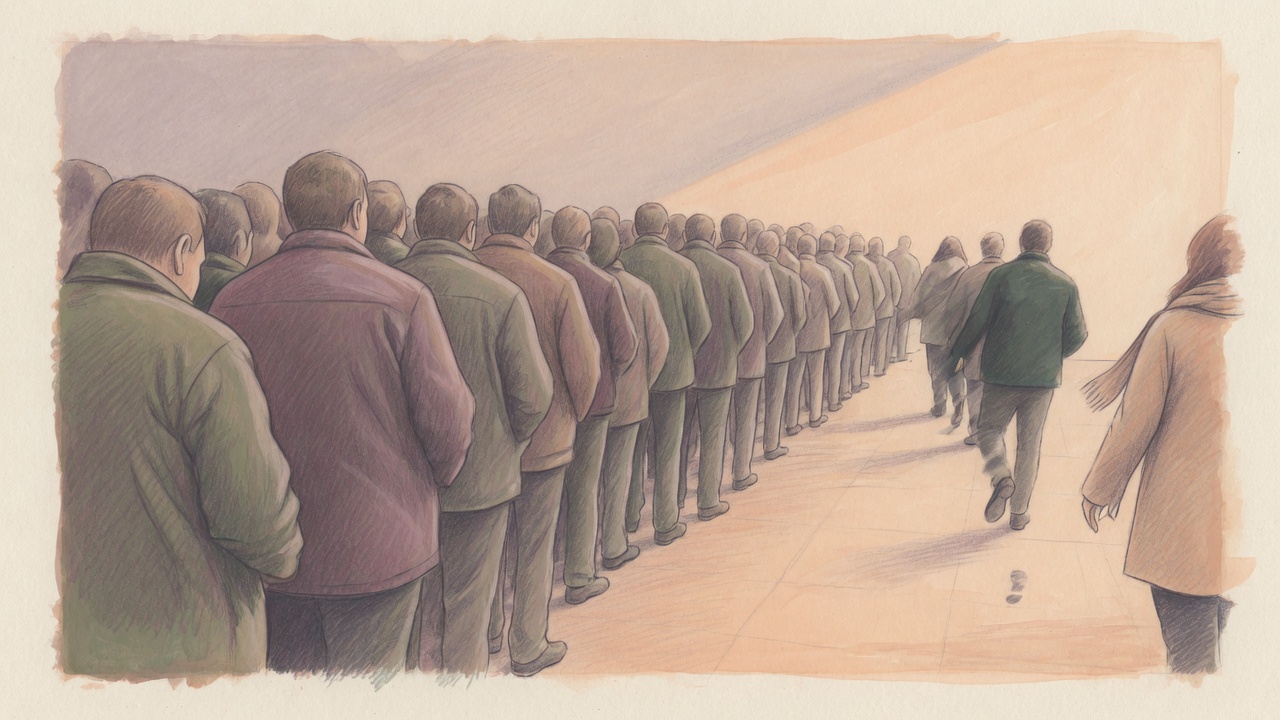
In a store, the next line often looks as if it shrinks first. Your line is not simply frozen: your eyes catch moving scenes more readily. Measure length alone and the gap is often small.
Your line shows mostly backs
The person ahead of you barely moves. You see their back, and the number of spots to the register hardly seems to change.
The next line shows side profiles, so someone walking off with a bag jumps into view. When you see motion, that line feels faster. Even when both lines are the same length, only the empty spots stick in memory. When your own line shortens by one, it is just backs shifting a little, so it is easy to miss. Same pace, different feeling.
Switching often feels the same
The idea that switching always gets you through faster often misses. Maister, who studied waiting, noted that anxiety makes waits feel longer. The claim that the other line is always quicker often grows from that unease.
The highway illusion that the next lane is faster is similar. As Redelmeier and Tibshirani observed in 1999, being overtaken sticks in memory longer than overtaking. Even after you switch, a card failure or a hunt for bags can happen in any line. Each time, only the next line pulling ahead stays with you.
Look at the whole checkout area
Staring only at your line builds frustration. Lift your head and scan the whole checkout area: the next line also pauses, and yours inches forward too. Basket size, how many cashiers are open, and whether a sale is slowing someone all help you choose. The amount of stuff often matters more than head count.
Bus stops and bank ticket counters feel similar. While you wait, your eyes follow people leaving more than places that stay still. Rather than always switching to win, picking once and glancing at the whole floor now and then often feels calmer.
Weigh length and load together
A slightly longer line can finish quickly if baskets are light. A short line with full carts can take forever. One scan of the registers softens the sense that the other side always wins. When loads look similar, choose by line length.
Related reads
The other line looks faster because motion is easy to see. By length alone, the gap is often small.
Notes and references · Maister on waits · Redelmeier & Tibshirani 1999. The next line shows people leaving; yours shows backs. Eyes go to motion first, so equal lengths feel different, and anxiety makes waits feel longer.
Editorial standardsReport an error
Quick quiz