No. 14Psychology3 minviews 38
Published by GK Library Annex
I forget why I came in as soon as I enter a room
Sometimes what you meant to do goes blank the moment you cross into the kitchen
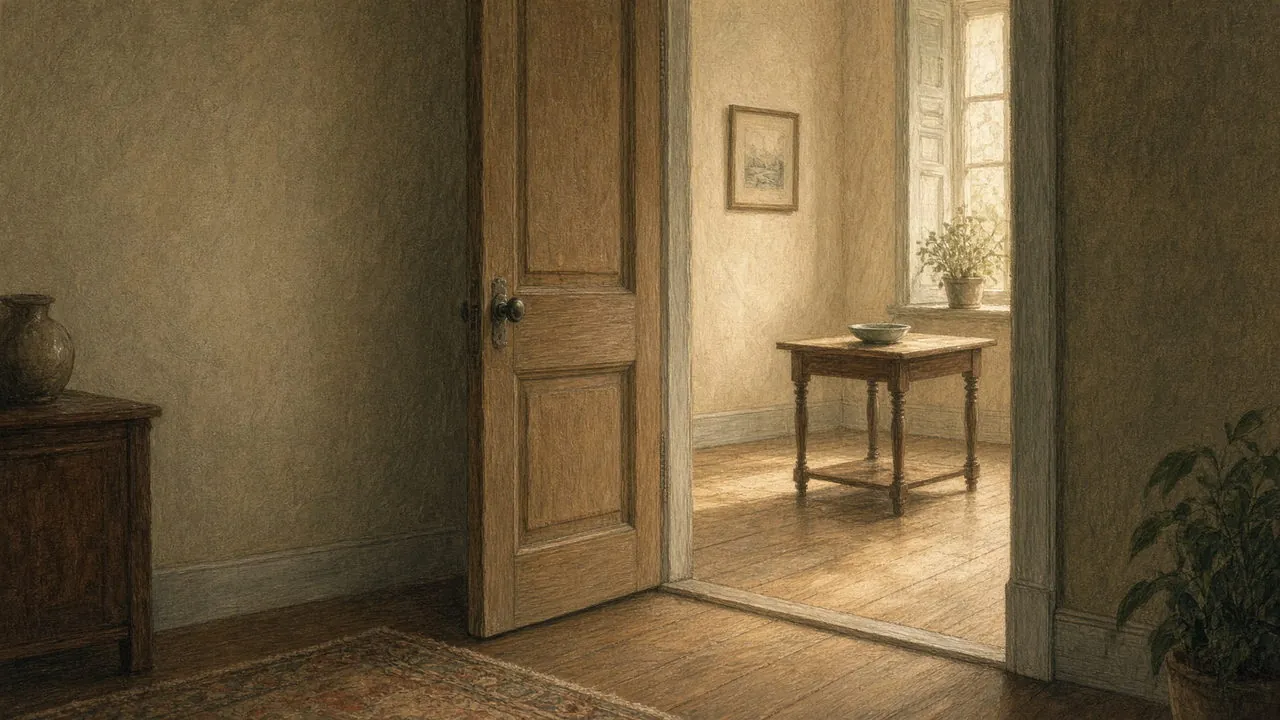
Once you step through the kitchen doorway, your mind goes blank about what you came for. Your memory hasn't gotten worse. Changing rooms moves your mind to a new scene, and the task you meant to do stays behind in the previous one. Psychologists call this the doorway effect.
Tasks stick to rooms
What you meant to do is often tied to the room you were in. If you think, "I should get some water," on the sofa, that thought is bundled together with the sofa, the screen you left on, and the feeling of thirst.
When you enter the kitchen, dishes, the hum of the fridge, and smells come in all at once. Your mind is busy taking in the new room, and the thought you just had gets pushed aside. That's why you pause at the door. Forgetting more easily while walking and looking at your phone follows the same pattern. The more new information comes in, the further the earlier task gets pushed away.
The doorway changes the scene
A door is where the scene changes. Just as a film cuts to a new scene, when your body enters another room, your mind wraps up the previous scene and sets it aside. In experiments at the University of Notre Dame in the United States, people who walked through a doorway mixed up the object they had just carried more often than people who walked the same distance without one. The results were similar whether they walked through rooms on a screen or moved between real rooms.
Still, a door doesn't erase memories. In later experiments the effect didn't always appear, and it showed up more when people had a lot of other things on their minds. That's also why you tend to forget more often when you're busy or distracted.
Go back and it comes back
When you go back to the first room, the thought often returns. The way you sat on the sofa or the screen you were watching gives you the cue again. This fits experimental findings that memories are easier to retrieve in the place where they were formed. If going back is a hassle, simply standing still and picturing how you were just sitting can help.
Preventing it is simple too. Say the task out loud once, or repeat a short word like "spoon" as you walk, and you'll forget less. Carrying an object linked to the task, like an empty cup, is also a good cue. There's no need to blame yourself for forgetting. The room changed, and the task was still waiting in the previous one.
Related reads
The forgotten task is left in the previous room. The doorway changed the scene.
Notes and references · Doorway effect research (Radvansky et al.). In 2011, Radvansky's team at Notre Dame reported that walking through doorways can blur memory. A 2021 replication found it clear only under heavy mental load, so its size is debated.
Editorial standardsReport an error
Quick quiz