No. 125Time3 minviews 28
Published by GK Library Annex
At 12 noon, is the sun really at its highest?
In Seoul, the moment the sun climbs highest is about 30 minutes off from 12 o'clock on the clock. The key is which line the clock is set to.
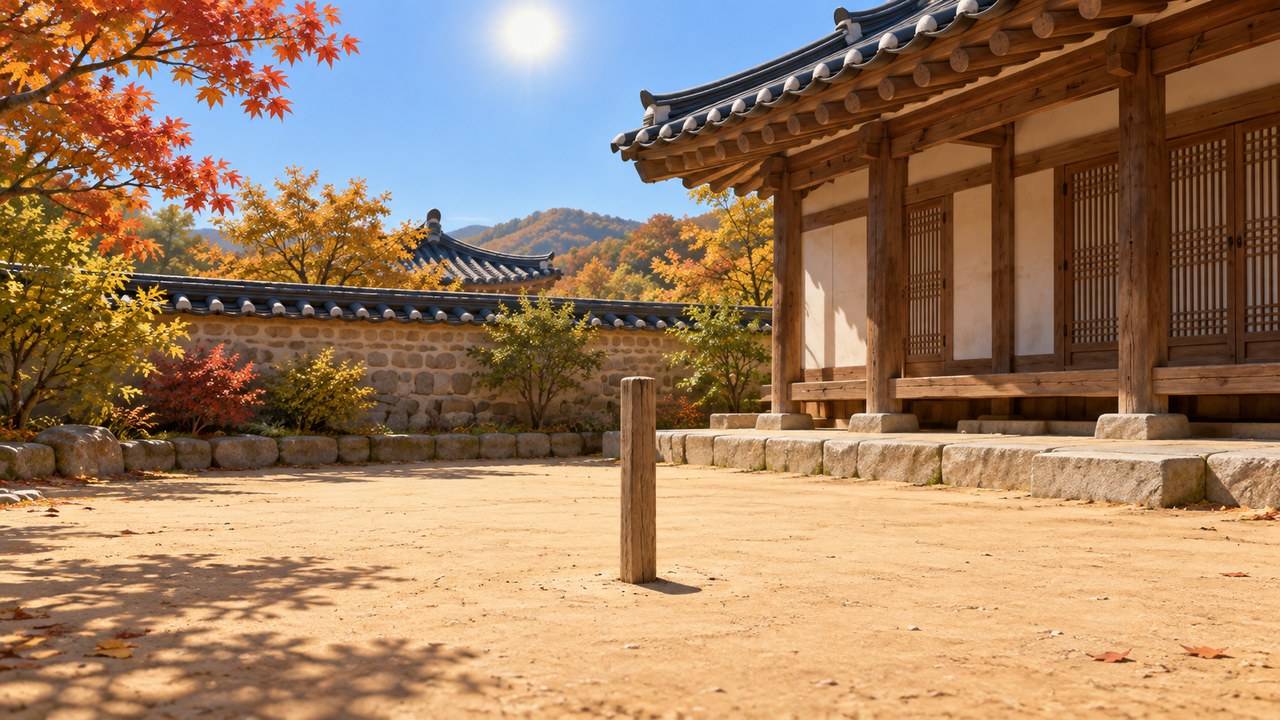
In Seoul, the sun reaches its highest point in the sky not at 12 noon but at about 12:32 on average. Korean clocks are set to the 135°E meridian, which runs east of Seoul near Akashi in Japan, so 12 o'clock on the clock and the sun's true noon are about half an hour apart.
Clocks follow a line to the east
Earth turns 15 degrees an hour, so for every degree of longitude you move west, the sun reaches its peak 4 minutes later. Each country picks one reference meridian and calls it 12 o'clock when the sun is highest over that line. That is standard time.
Korean law sets the reference at 135°E. Seoul, however, sits at about 127°E. An 8-degree gap times 4 minutes is about 32 minutes, so the sun over Seoul reaches its peak roughly half an hour after the clock says noon.
It shifts a little each day
This time is not the same every day, either. Earth's path around the sun is not a perfect circle and its axis is tilted, so the moment the sun peaks drifts back and forth by about 15 minutes over the year.
By calculation, the earliest it happens in Seoul is around 12:16 in early November, and the latest is around 12:46 in mid-February. In mid-October, it comes at about 12:17, one of the times of year when the clock and the sun are fairly close.
Why 135 degrees?
Korea's standard time has changed several times. Under the Korean Empire, the country used 127.5°E, which passes near Seoul, and during Japanese colonial rule it switched to 135°E, the same as Japan. After liberation it returned to 127.5°E in 1954, and since August 10, 1961, it has used today's 135°E.
A reason often given for 135°E is that it is exactly 9 hours ahead of Universal Time, which makes the math easy. Others keep arguing for a return to a line that crosses Korean soil. The Korea Astronomy and Space Science Institute describes it as a matter of choice rather than right and wrong.
Finding true noon with a shadow
Many people think shadows are shortest at 12 noon, but in Seoul they are shortest at the moment the sun peaks, somewhere between 12:16 and 12:46. Stand a stick upright and find the moment its shadow is shortest, and the shadow will then point almost due north.
The daylight hours are also split in two around this true noon, not around 12 o'clock. So if you add the day's sunrise and sunset times and divide by two, you can work out the true noon for your own neighborhood.
Related reads
Seoul's true noon is about 12:30 by the clock. Shadows are shortest around then, and the time moves about 15 minutes either way depending on the date.
Notes and references · KASI · National Archives of Korea. Standard time and solar noon follow an FAQ by the Korea Astronomy and Space Science Institute (KASI); the history of changes follows National Archives of Korea records. Times by date use an approximate formula and may be off by 1 to 2 minutes.
Editorial standardsReport an error
Quick quiz