No. 10Health3 minviews 23
Published by GK Library Annex
Rice gets sweeter the longer you chew it
What happens in your mouth as bland rice turns sweeter the longer you chew
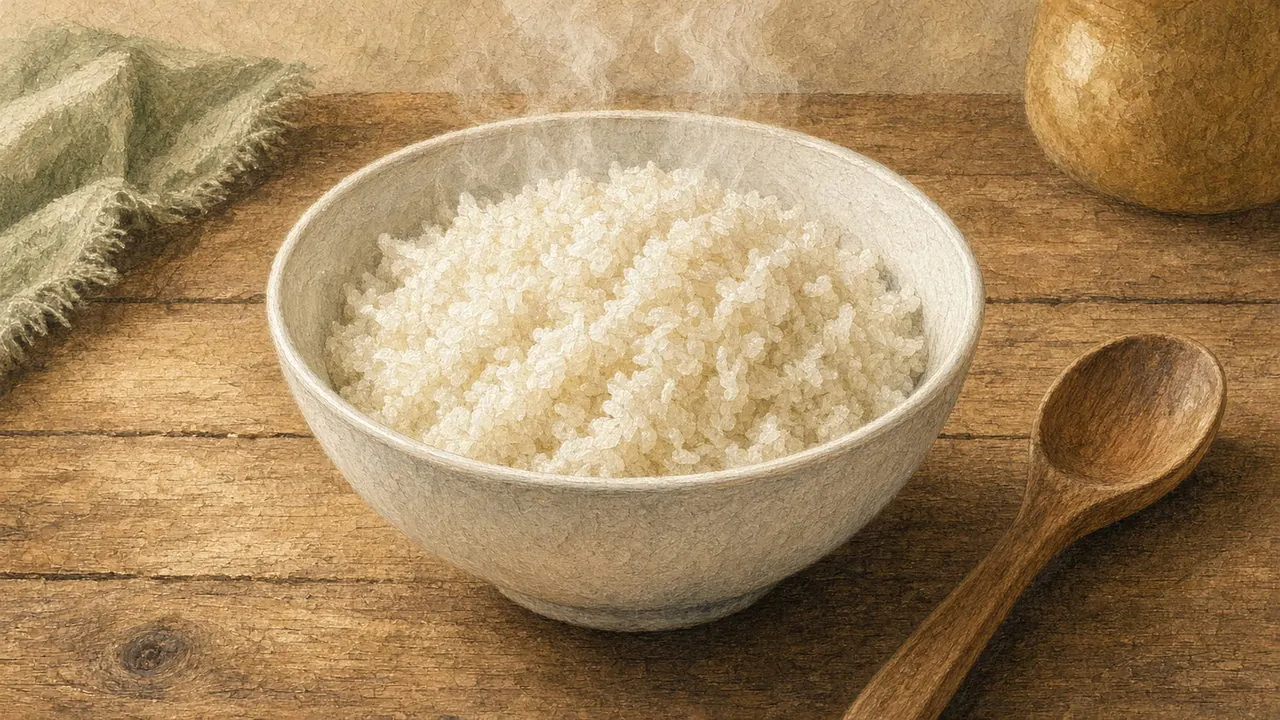
If you chew rice slowly, at first it just tastes like rice. Keep chewing and it turns sweet. Your tongue hasn't become more sensitive. Saliva is breaking the starch in the rice into sugars.
Saliva cuts up starch
Most of rice is starch. Starch is a long chain of small sugars linked one after another, so in that form your tongue doesn't pick it up well as sweetness.
Saliva contains something that cuts these long chains. As you chew, the starch breaks into shorter pieces, and your tongue tastes small sugars such as maltose as sweet. The longer you chew, the finer the grains break and the more surface saliva can reach, so rice chewed slowly tastes sweeter than rice swallowed in a hurry.
It's not like watermelon
Watermelon and apples taste sweet the moment you bite into them, because their sugars are already free. In rice, bread, and potatoes, the sweetness is locked up in starch, and it only comes out bit by bit once saliva cuts it.
Even so, it never gets as sweet as table sugar. Maltose is less sweet than sugar, so it comes across as just faintly sweet. You can notice a similar change if you chew plain bread or crackers for a long time. Sikhye, a drink made by steeping cooked rice with malt, tastes sweet even with only a little sugar for the same reason: the starch has been cut up.
Does digestion finish in the mouth?
The saying that chewing thoroughly digests food completely in your mouth is an exaggeration. Saliva cuts only part of the starch, and that work soon stops once swallowed food mixes with stomach acid. Most starch is broken down again in the small intestine.
That doesn't make chewing well pointless. Food broken into small pieces is easier to swallow, and eating slowly gives you time to notice when you feel full. The amount of this ingredient in saliva differs from person to person, so even with the same rice, how quickly the sweetness shows up can vary a little.
Try it at home
Put a spoonful of plain rice in your mouth with no side dishes and chew it about thirty times. Around the tenth chew it still tastes plain, but past twenty you'll likely notice a sweet aftertaste.
If you eat it with side dishes, salty and spicy flavors cover the sweetness, so it's hard to notice. Freshly cooked warm rice tends to turn sweet more easily than rice that has cooled and hardened. When starch packs back together tightly, it's harder for saliva to get in.
Related reads
Rice getting sweeter isn't your imagination. It's the taste of saliva cutting starch into sugars.
Notes and references · Saliva and starch digestion. Amylase in saliva cuts starch into short sugars like maltose. It stops when it meets stomach acid, and most starch is digested in the small intestine. The idea that long chewing completes digestion is an exaggeration.
Editorial standardsReport an error
Quick quiz