No. 18Everyday life3 minviews 27
Published by GK Library Annex
What happens when cooked rice cools and hardens?
Fresh rice and rice from the fridge come from the same grains, so why do they feel so different?
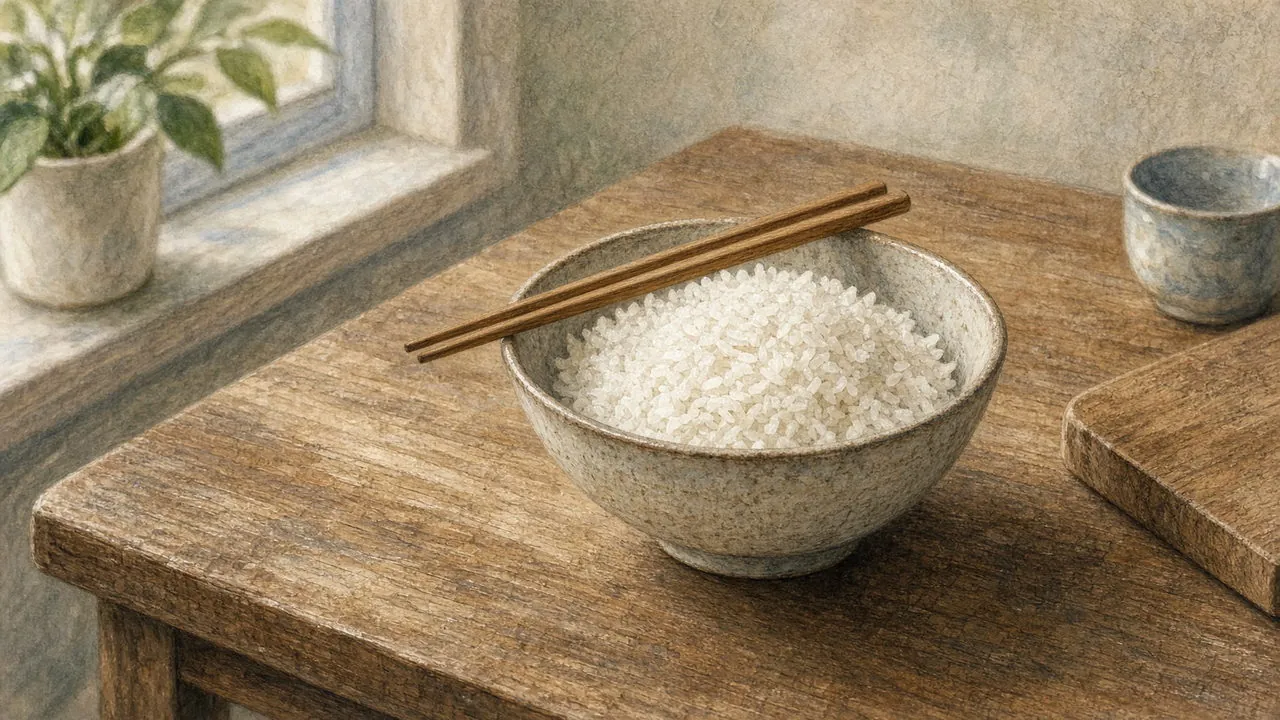
Rice that was soft while warm can turn so firm after cooling, or after a night in the fridge, that a spoon barely goes in. Many people assume it simply dried out, but rice kept under a tight lid hardens just the same. The starch inside the grains changes shape as it cools.
Starch that loosened while cooking packs together again
In raw rice, starch is tightly packed inside tiny granules. When it is heated with water, that structure loosens, soaks up water, and swells until it turns soft. That is what makes cooked rice tender.
As the rice cools, the loosened starch chains move close together again and start lining up. The water between them gets pushed out, and the grains firm up. Food scientists call this starch retrogradation. It is the same thing that makes bread go dry and crumbly after a day. Sticky rice hardens more slowly than regular rice because it contains almost none of the straight-chain starch that clumps back quickly.
The fridge speeds up the hardening
Retrogradation happens fastest at cool temperatures just above freezing, roughly the temperature inside a fridge. So rice in the fridge hardens much faster than rice left at room temperature. Despite the idea that cold keeps food at its best, for texture alone the fridge is the worst spot for rice.
Freezing it solid, on the other hand, makes it hard for the starch chains to move, so retrogradation slows down. That is why leftover rice keeps its taste better in the freezer than in the fridge.
The same reason explains why gimbap or rice balls come out of the fridge dry and crumbly. If you will eat them the same day, a cool spot is better for texture, but in hot weather food spoils easily, so do not leave them out long.
Reheating makes it soft again
Even hardened rice softens again when it gets water and heat, because part of the starch structure loosens once more. Sprinkle a spoonful of water on it and cover it before microwaving so the steam spreads evenly and the rice comes back better.
To freeze rice, wrap it while it is freshly cooked and still warm, one bowl at a time, in a thin, flat portion. The trapped steam returns moisture when you reheat it, and thinner portions heat evenly to the center. Frozen in a lump, it tends to get hot outside and stay hard in the middle. Rice that is reheated and cooled again will harden again, so take out and reheat only as much as you will eat.
Related reads
Cooled rice hardens less because it dries out and more because starch that loosened during cooking packs tightly together again as it cools.
Notes and references · Starch retrogradation · Wang et al. 2015. Wang et al. (2015), Starch Retrogradation (Comprehensive Reviews in Food Science and Food Safety): cooked, loosened starch reorganizes into an ordered structure as it cools. This is fast at refrigerator temperatures and slow when frozen, and reheating partly reverses it.
Editorial standardsReport an error
Quick quiz