No. 11Money3 minviews 25
Published by GK Library Annex
Compound vs simple interest: how different after 10 years?
Yesterday's interest joins the principal starting today.
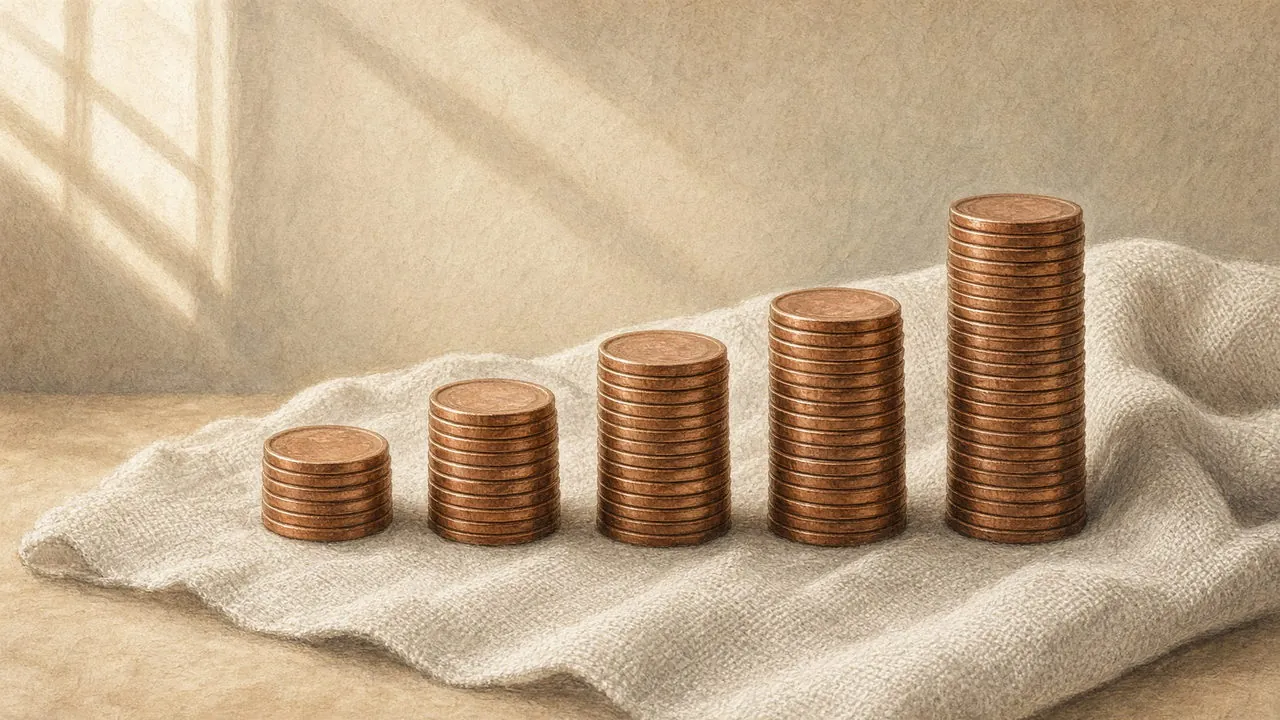
Open a bank app and a little interest sits next to the money you put in. That interest does not vanish tomorrow; it joins the next calculation. That is compound interest.
It is not like simple interest
Simple interest adds interest only to the first amount you put in. Compound interest treats that interest as principal too and adds interest again.
The 100 won that arrived as interest yesterday sits beside the principal from today, so that 100 won also earns interest. It feels like a coin you just stacked becoming the floor of the next layer. Even at the same rate, 「where interest attaches」 differs. So it is hard to look at the same number and decide 「the result must be the same.」 Simple interest keeps looking only at the original principal; compound looks again at the grown total. Once you know that difference, ad copy makes you ask first whether interest earns interest.
After 10 years, a gap appears
Say 10,000 won at 5 percent a year. With simple interest that is 500 won each year, so after 10 years you have 15,000 won. With compound interest once a year, you apply 5 percent again to the grown total and end near about 16,300 won.
At first the gap is only a few hundred won. It widens as years pass, because interest already earned grows again next year. 「Same rate means same result」 is nearly true only for short periods. Those figures omit tax and fees, so your app may show slightly different numbers. Still, asking only whether interest earns interest points the same way. A day or two can look similar, but stacked years change the story.
Savings work the same way
A savings habit that puts in about a bus fare each day is similar. This month's interest joins next month's principal, and that sum earns interest again. If you spend the interest midway, the next 「layer」 of compounding gets shorter.
You do not need to memorize a formula. Leave earned interest in place and it grows faster than plain addition. The longer the time, the bigger the gap. Do not decide 「same」 from the rate alone—check whether interest attaches again. The feel may be small in a short window, but years change the story. Today's small interest can become tomorrow's principal. So 「leave it a little longer」 can be a bigger choice under compounding than it first seems.
Related reads
Compound interest treats earned interest as principal again. Over time, interest calls more interest.
Notes and references · Basics of compound vs simple interest. Simple interest applies only to principal; compound applies to principal plus interest. At 10,000 won, 5% a year, 10 years: simple is 15,000; annual compound is about 16,300 (before tax and fees).
Editorial standardsReport an error
Quick quiz