No. 128Health3 minviews 23
Published by GK Library Annex
Does hot water wash germs off your hands better?
Warm water feels like it should get your hands cleaner, but the experiment said something a little different. So what really matters?
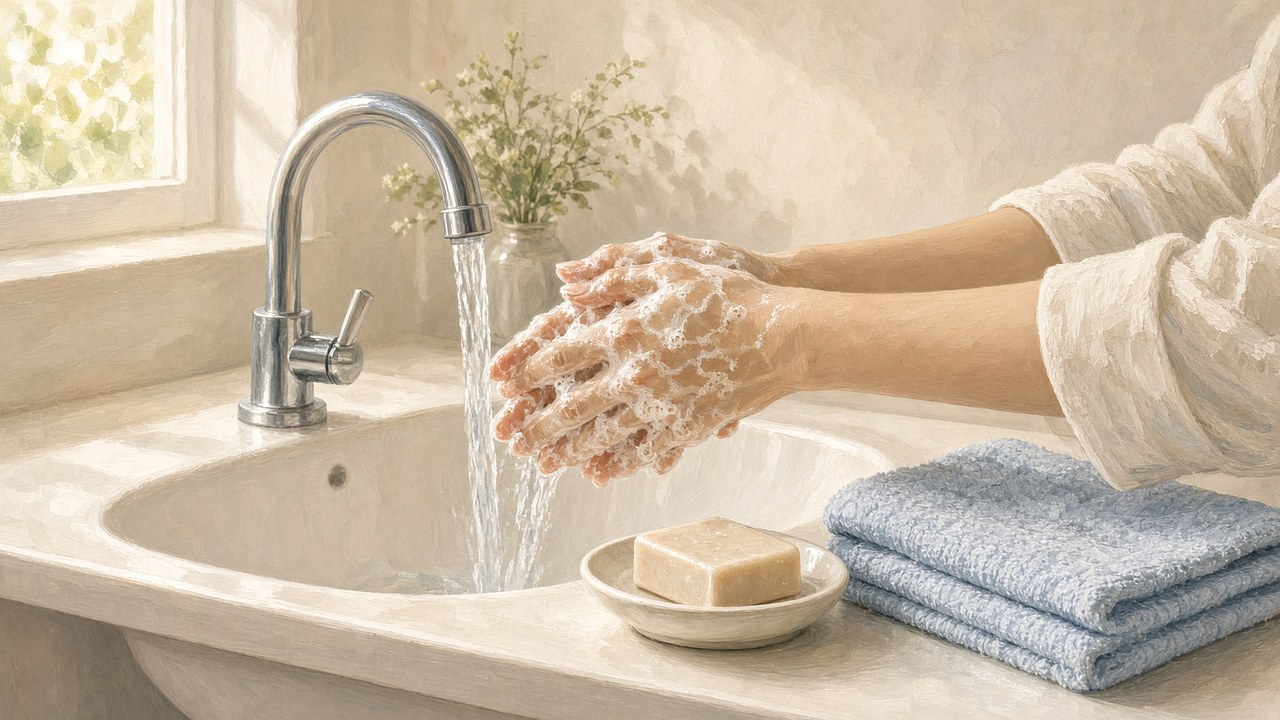
It's easy to think hot water gets rid of more germs when you wash your hands, but in an experiment there was almost no difference between cold and warm water. What makes hands clean is not the water temperature but soap and how long you rub your hands.
Comparing 15°C and 38°C
In 2017, a research team at Rutgers University in the US put harmless E. coli on the hands of 20 volunteers and had them wash while changing the water temperature, the amount of soap, and how long they lathered. Then they counted the germs left on the hands after washing.
The result was surprising. There was no meaningful difference in how much the germs decreased between cold 15°C water and warm 38°C water. In fact, in one condition, lathering for 20 seconds removed more germs than lathering for 5 seconds.
Handwashing water doesn't kill germs
The idea that hot water kills germs is only half right. Killing germs with heat takes a much higher temperature. Even low-temperature pasteurization of milk heats it to around 63°C for about 30 minutes. The water we can stand to put our hands in is far cooler than that, so the heat of the water alone can hardly kill germs during the few dozen seconds you spend washing.
What lifts germs off your hands is soap. Soap wraps around the oil and dirt stuck to the skin and loosens them, the rubbing pulls them off, and running water rinses them away.
Hot water can even be a downside
The US Centers for Disease Control and Prevention (CDC) explains that water temperature does not appear to affect germ removal. It adds that warmer water may irritate the skin more and takes more energy to heat. If you also use hot water in winter, when you wash your hands often, your hands can easily get chapped.
That doesn't mean you have to insist on cold water either. When the water is too cold on a chilly day, it's tempting to rinse for a few seconds and stop. That's why researchers recommend washing your hands in whatever water temperature feels comfortable to you.
Mind the time, not the temperature
When you wash your hands at home, it's better to spend time working up a good soap lather than to wait for the water to warm up. The Korea Disease Control and Prevention Agency recommends washing with soap under running water for at least 30 seconds. Don't just rub your palms; scrub the backs of your hands, between your fingers, and under your nails.
After washing, dry your hands well with a clean towel. Wet hands can spread germs more easily than dry hands.
Related reads
Handwashing works because of soap lather and rubbing time, not water temperature. Washing for at least 30 seconds in comfortable water is enough.
Notes and references · Jensen et al. 2017, Journal of Food Protection · CDC. An experiment that put E. coli on the hands of 20 volunteers and compared water at 15, 26.6, and 38°C. It measured only how much the germs decreased, not actual protection from infection, and researchers from a soap company took part.
Editorial standardsReport an error
Quick quiz