No. 65Time3 minviews 29
Published by GK Library Annex
Why does sunset come earlier day by day in autumn?
In June, the journey home stayed bright until nearly 8 p.m. In October, it is dim soon after 6. The clock has not changed, so what has?
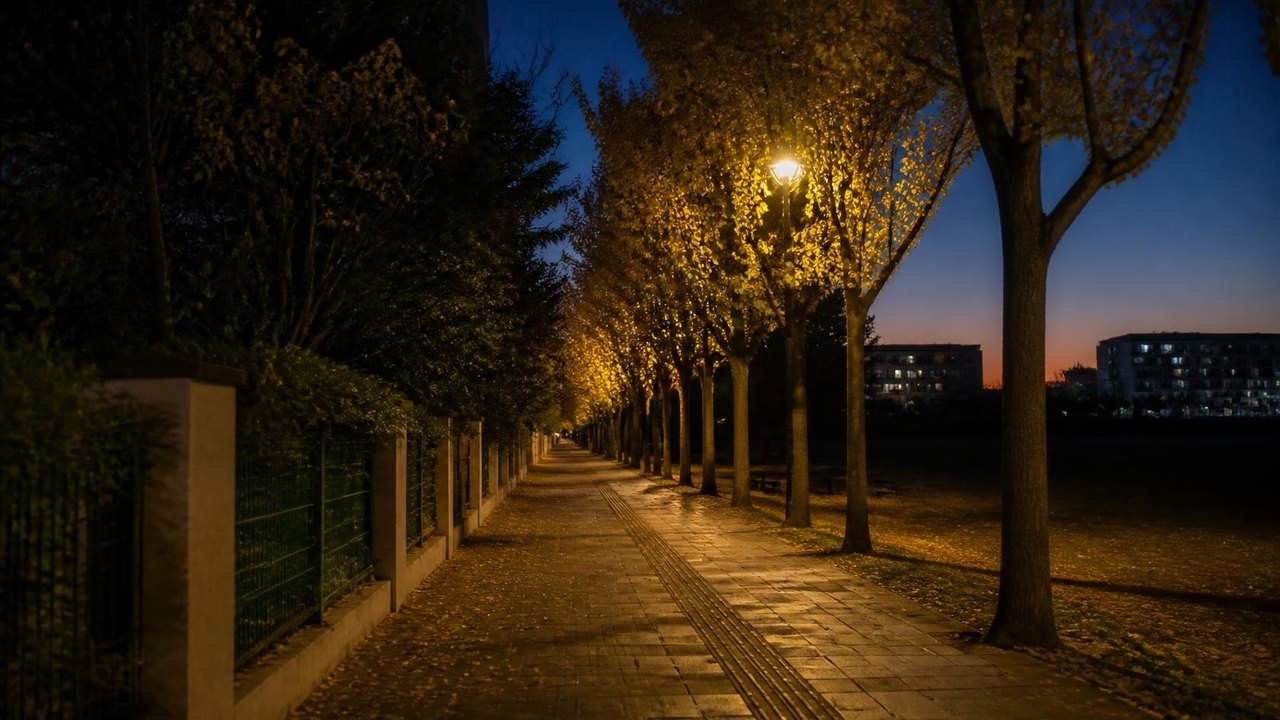
Autumn evenings darken sooner because sunset itself moves earlier. Earth orbits the sun with a tilt of about 23.5 degrees. After the autumn equinox in late September, nights become longer than days in the Northern Hemisphere, where Korea lies.
Almost two hours in about three months
In Seoul, sunset is around 7:57 p.m. in late June. On October 8, it is about 6:05 p.m., almost two hours earlier after a little over three months. A 6 p.m. journey home is therefore bright in July, while in October the sun is just setting and streetlights are beginning to come on. Some light lingers in the sky for 20 to 30 minutes after sunset, but after that it gets dark quickly. Before an autumn hike or an evening walk, check that day's sunset time rather than relying on what you remember from last month.
The change is fastest around the equinox
Daylight does not shrink at the same rate every day. It changes very little near the summer and winter solstices, and shrinks fastest around the autumn equinox. At this time of year in Seoul, daylight shortens by a little over two minutes a day, while sunset moves about a minute and a half earlier. That adds up to more than ten minutes in a week, so it is natural to feel that evening is arriving especially quickly.
The sun isn't getting farther away
It is easy to assume days shorten in autumn because Earth is moving away from the sun. In fact, Earth comes closest to the sun in early January. The change in distance over the year is also only a little over 3%, not enough to create the seasons. The seasons come from Earth's tilted axis. After the autumn equinox, the sun rises south of due east and takes a lower, shorter path across the sky. Because it spends less time above the horizon, the days become shorter. At the same time of year in Australia, in the Southern Hemisphere, days are getting longer.
The clock stays the same
Korea last used daylight saving time in 1988, so the clocks do not move with the seasons. Only the sun's apparent movement changes. Interestingly, the earliest sunset is in early December, rather than on the winter solstice. In Seoul, the earliest is around 5:13 p.m. near December 7. On the winter solstice, sunset is actually a few minutes later. That is because in December, the time when the sun reaches its highest point in the southern sky gets a little later each day. For the same reason, sunrise keeps getting later until early January, even after the solstice.
Related reads
Autumn evenings arrive earlier because sunset moves earlier, while the clock stays the same. The change is fastest around the autumn equinox.
Notes and references · Korea Astronomy and Space Science Institute, Astronomy and Space Knowledge Information, ‘Rise and Set Times’. Sunset times for Seoul: about 19:57 in late June, 18:05 on October 8, and 17:13 in early December. Earth is closest to the sun, at perihelion, in early January. Times vary by a few minutes with location and terrain.
Editorial standardsReport an error
Quick quiz