No. 64Technology3 minviews 31
Published by GK Library Annex
Why does your phone battery drop as soon as you go out in the cold?
A battery that looked well charged at home can plunge or switch off after a few minutes in cold air. Has all that power really gone?
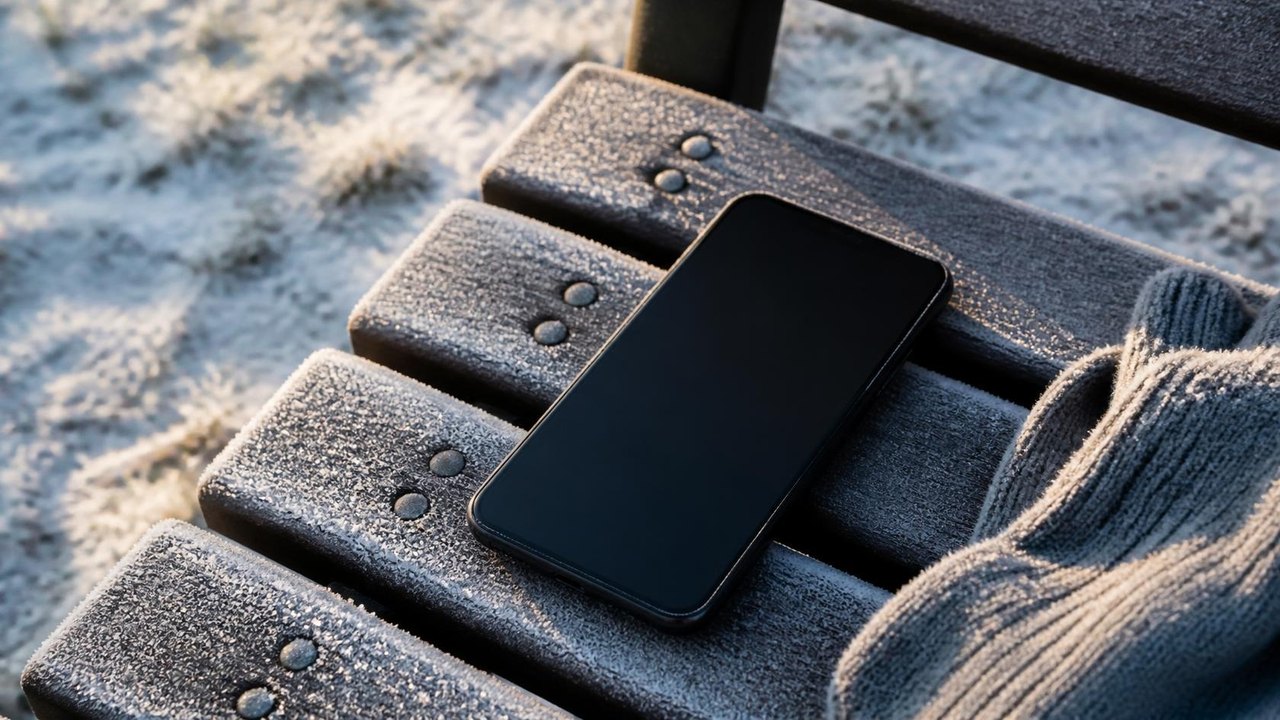
A phone's battery level usually drops in the cold because the chilled battery cannot deliver power quickly enough, rather than because the electricity has disappeared. Warming the phone often brings back a substantial part of the displayed charge.
Lithium ions slow down
A phone's lithium-ion battery supplies electricity as lithium ions move through the liquid inside it, called the electrolyte. As the temperature drops, that movement slows and the battery's internal resistance rises. When the phone draws power, its voltage then drops more sharply than usual. The further below freezing it gets, the bigger this effect becomes, and it shows most when the phone uses a lot of power at once, such as when you turn on the screen or take a photo.
Switching off is a protective response
If the voltage falls too low, the phone may display a lower remaining charge or switch itself off to protect the battery. For example, a phone at 30% may shut down after a few photos on a freezing street, then show a fairly high charge again after warming up indoors and restarting. Apple also says iPhones work best at 0–35°C and that battery life reduced by cold returns when the temperature recovers.
Does the cold ruin the battery?
After a trip out in the cold, it is easy to worry that your battery's lifespan has shrunk. But battery life lost from using a phone in the cold usually comes back once the temperature recovers. Lasting damage comes more from heat. Apple says leaving a device somewhere above 35°C can permanently damage battery capacity. A car dashboard in midsummer is worse for the battery than a winter street. Charging below freezing is a different story, though. Charging a lithium-ion battery below 0°C can deposit metallic lithium on the anode, causing a lasting loss of performance and safety.
Warming and charging
Gentle warming close to your body, such as in a coat's inside pocket, is enough. Rapid heating with a heater or hair dryer is not good for the battery. It is also better to avoid plugging it in while it is very cold. Charging may pause temporarily at very low temperatures, so connect it once it is closer to room temperature. On days when you will be outside for a long time, such as at a ski resort or on a winter mountain, keep your phone and power bank together in an inside pocket, and take your photos in one go before putting the phone straight back. It will switch off less often.
Related reads
The battery percentage lost in the cold is usually temporary. Warm the phone slowly close to your body, then check again.
Notes and references · Apple, ‘Maximizing Battery Life and Lifespan’ · Battery University BU-410. Based on guidance that the recommended iPhone operating range is 0–35°C, that reduced battery life in the cold is temporary, and that heat above 35°C can cause permanent damage. Lithium-ion batteries should not be charged below 0°C (BU-410). Differences can be large depending on the model and the battery's age.
Editorial standardsReport an error
Quick quiz