No. 17Science3 minviews 51
Published by GK Library Annex
Where do the droplets on a cold cup come from?
The outside of a cup gets wet even with the lid on. Follow where that water comes from.
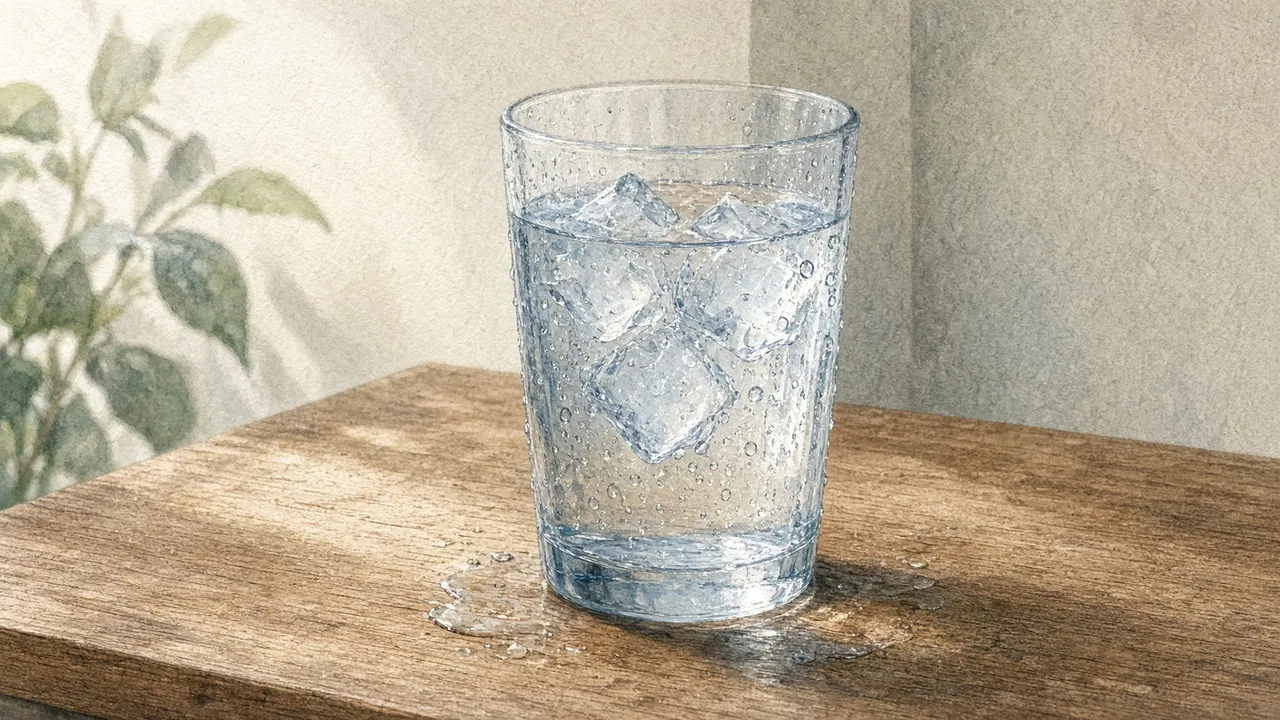
Set a glass of ice water on the table and its outside soon gets wet. The water inside did not push through the wall. Water vapor that was already in the air touched the cold surface and turned into droplets. Droplets that come back no matter how often you wipe them hide a story about weather and temperature.
It did not leak from inside
On a hot day, a can or iced cup from the fridge gets wet again soon after you wipe it. Some people wonder whether the cup is cracked, but a tightly capped bottle or an unopened can gets just as wet. A bottle of water fresh from the fridge soaking the books in your bag is the same thing.
You can even tell by taste. The water on the outside of a cola can is not sweet. It is plain water from the room air, not the drink inside. People often say a cup is sweating, but the cup is not giving off water; the air is setting water down.
Colder than the dew point, droplets form
How much water vapor air can hold depends on temperature. Warm air holds more, cold air holds less. So if you keep cooling air, it reaches a temperature where it can no longer hold all its vapor. That temperature is called the dew point.
For example, summer air at 30°C and 70% humidity has a dew point of about 24°C. The outside of a glass of ice water is far colder than that, so as the air touching it cools, the leftover vapor settles as droplets. Winter windows fogging up and the bathroom mirror clouding after a shower work the same way.
Weather forecasts use the dew point too. The higher it is, the stickier the air feels, and when the temperature drops to the dew point overnight, dew forms on the grass.
Keeping a cup drier
The same iced cup behaves differently with the weather. In a humid summer kitchen it is soon dripping, while in a dry, heated winter room it may barely get wet. Less vapor in the air means a lower dew point. The water running out of an air conditioner's drain hose is also this kind of condensation, collected on the cold coils of the indoor unit and carried outside.
If you dislike water rings on the table, a coaster is the simplest fix. Double-walled tumblers rarely get wet because their outer surface does not get cold enough to drop below the dew point. As the cup warms up, the droplets fade on their own.
Related reads
The water on a cup is not leaking drink. It is water vapor from the air turning into water on the cold surface.
Notes and references · USGS and NOAA · Condensation and dew point. USGS and NOAA: when air cools below its dew point, water vapor condenses into droplets. Air at 30°C and 70% humidity has a dew point of about 24°C. Unopened cans get wet outside too, and double-walled cups stay drier because their outer surface does not get cold.
Editorial standardsReport an error
Quick quiz