No. 143Science4 minviews 22
Published by GK Library Annex
Why Is It Still Light After Sunset?
Even after the sun drops below the horizon, the air high above still catches sunlight and scatters it down to us.
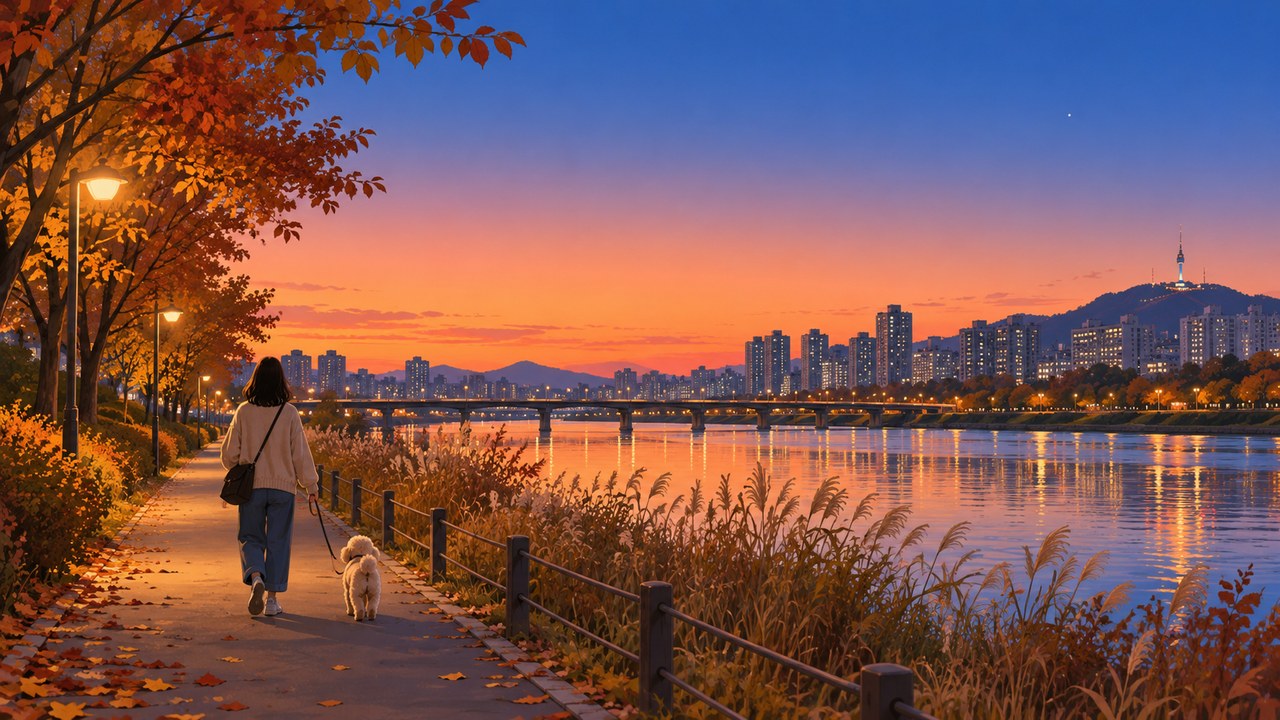
Sunset time has passed, yet it stays bright enough outside to read a book for a while. This leftover light is called twilight. The sun is already below the horizon, but the air high overhead is still in sunlight, and it scatters that light down toward the ground.
The sky shares the light like a mirror
Where you stand, the sun has set, but the air several kilometers up sits higher and keeps seeing the sun a little longer. Air molecules scatter sunlight in every direction, and some of it reaches the shaded ground below. That is why the whole sky glows like a soft lamp even when the sun is out of sight.
Things are different on the Moon, which has almost no air. With nothing to scatter the light, the sky turns black the moment the sun slips below the horizon, and it looks black even in daytime.
Air also delays sunset itself a little. It bends sunlight slightly, so for a few minutes the sun still appears to be up when it is actually just below the horizon.
Darkness arrives in three steps
Astronomers divide twilight by how far the sun has sunk below the horizon. Down to 6 degrees is civil twilight, when you can still work outdoors without lights; down to 12 degrees is nautical twilight, when the sea horizon is barely visible; and down to 18 degrees is astronomical twilight, just before the faintest stars appear.
In Seoul in autumn, civil twilight lasts roughly 25 to 30 minutes. Near the equator the sun drops almost straight down, so it is shorter, while places where the sun sets at a shallow angle, like Northern Europe in summer, may never get fully dark all night. Photographers call this bluish part of the evening the blue hour and often wait for it on purpose.
A useful thirty minutes
Many people assume it goes dark the instant the sun sets, so they plan walks or hikes to end right at sunset. In reality it stays bright enough to walk for about 30 minutes after sunset, then darkens quickly. In forests and valleys the sky is blocked and it gets dim much earlier, so it is wise to head down with time to spare.
This window is also a trap for drivers. It may still look bright to you, but other drivers and pedestrians may not see your car well. Korea's Road Traffic Act also treats the time after sunset as night and requires headlights to be on.
Related reads
After sunset, the air high above keeps scattering sunlight, so it stays bright for nearly 30 minutes. On the airless Moon, it goes dark the moment the sun sets.
Notes and references · Korea Astronomy and Space Science Institute: sunrise and sunset times. Explains the three stages of twilight and civil twilight times by region. Actual brightness varies with clouds, terrain, and fine dust.
Editorial standardsReport an error
Quick quiz