No. 74Time3 minviews 51
Published by GK Library Annex
Why do clock hands turn clockwise?
Mechanically, making them turn the other way is just as easy. So why do almost all clocks turn the same way?
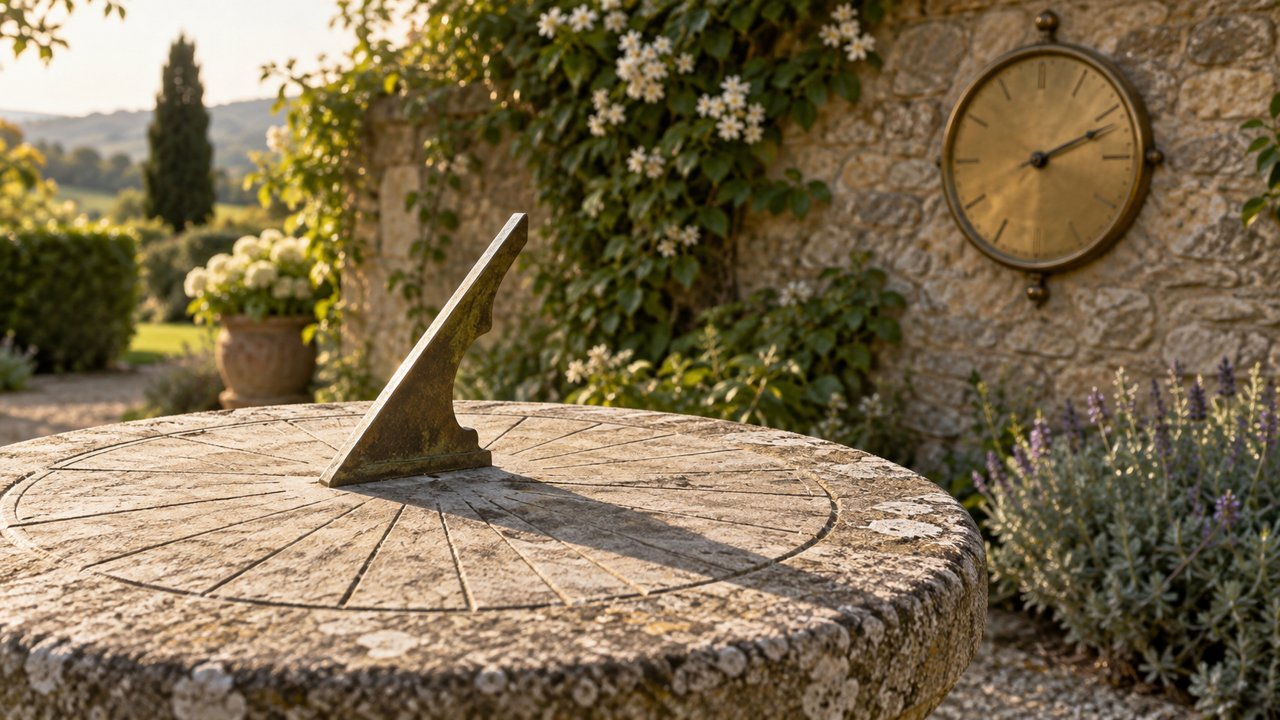
The most widely accepted explanation is that clock hands turn to the right because they copied a sundial's shadow. Gears can turn them to the left just as easily, so the direction was set by habit rather than machinery.
The path of a sundial's shadow
In the Northern Hemisphere, the sun rises in the east, crosses the southern sky, and sets in the west. So the shadow of the stick on a flat sundial points west in the morning, swings through north, and moves to the east by evening. Seen from above, that is exactly the direction clock hands turn today.
When mechanical clocks first appeared in 14th-century Europe, people were already used to sundials. The new clocks are thought to have turned their hands and laid out their numbers in the same direction the shadow moved. NASA's education material also mentions the claim that the word “clockwise” came about this way.
Southern clocks turn the same way
Some people think clocks in Southern Hemisphere countries turn the other way. In fact, clocks in Australia or Brazil turn in the same direction as ours. Mechanical clocks spread from Europe in the north, and that design became a worldwide convention.
In the Southern Hemisphere the sun crosses the northern sky, so a flat sundial's shadow turns the other way. If clocks had first been made in the south, the hands might have turned the opposite way.
Bolivia's clock of the south
In June 2014, Bolivia's government changed the clock atop its Congress building to turn to the left and reversed its numbers. It was a symbol of the country's identity as a Southern Hemisphere nation. In tropical places like Bolivia, though, a sundial's shadow can turn to the right for a few months of the year.
No old record directly stating the sundial origin has been confirmed either. There is also the objection that shadows on wall-mounted sundials turn the other way, so it is best seen as the most plausible explanation.
Clockwise lives on in words
The direction of clock hands has become a way of describing direction. Instructions like “turn clockwise to close” use it, and pilots or rescue teams treat straight ahead as 12 o'clock and give positions like “3 o'clock.” Saying a running track is circled “counterclockwise” also uses the clock as the reference for the other way. These words still work now that digital clocks are common because everyone pictures the movement of a round clock face the same way.
Related reads
Clock-hand direction appears to have inherited the path of shadows on Northern Hemisphere sundials.
Notes and references · NASA education page · NPR · AP. NASA, “The Sundial” (a stick's shadow moves clockwise in the Northern Hemisphere; mentions the claim that clock direction came from this). NPR and AP, June 2014 (Bolivia's Congress clock). ICT News (in the tropics, shadow direction changes with the season).
Editorial standardsReport an error
Quick quiz