No. 73Numbers3 minviews 41
Published by GK Library Annex
Why are phone and calculator keypads upside down from each other?
You use both number pads every day, but 1 is in a different place. Who decided that?
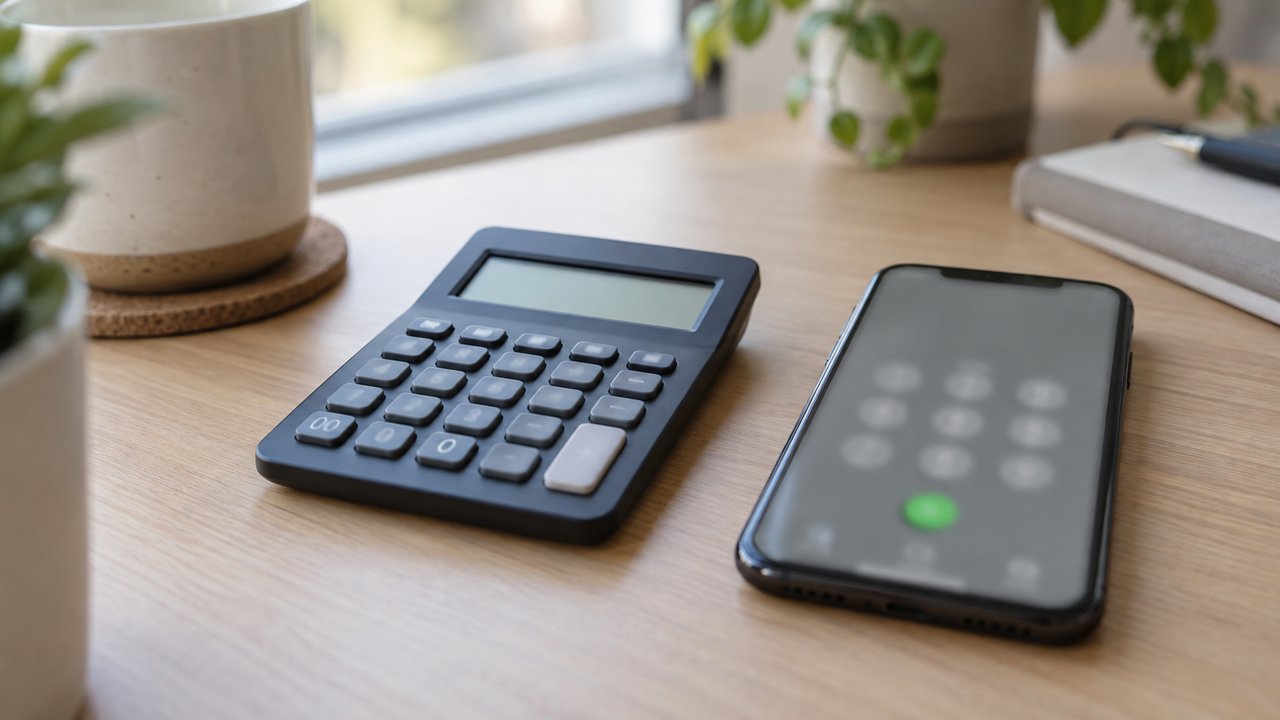
A phone keypad has 1-2-3 across the top, while a calculator has 7-8-9 on top. The two layouts were chosen separately, by different people at different times, and each one stuck.
The calculator came first
The layout with 7-8-9 on top came from mechanical calculators and cash registers, which existed before push-button phones. Clerks who entered numbers quickly were already used to it, and electronic calculators kept the same arrangement. The number keys on the right side of a computer keyboard use it too.
ITU-T E.161, the international standard for phone keypads, acknowledges this. For devices used mainly for entering data, it allows the calculator-style layout, with the first and third rows swapped, as an exception.
The phone layout was chosen by experiment
In the late 1950s, as Bell Laboratories in the US developed push-button phones to replace the rotary dial, it built 16 different layouts, including rows, circles, triangles, and even one shaped like a dial, and had people try them. In a study published in 1960, the differences in speed between layouts were very small, but the one with 1-2-3 on top was slightly faster and more popular. Starting at the top left, the way we read, felt natural.
Push-button phone service first launched in Pennsylvania in November 1963, and that layout has carried on to smartphone dial screens, door locks, and ATM keypads.
It wasn't flipped on purpose
Many people think phones deliberately flipped the calculator layout. But Bell Laboratories based its choice not on clerks who were used to calculators, but on ordinary people pressing number buttons for the first time. The result simply differed from the cash register tradition. There was no intent to make it the opposite.
A small bump on the 5
Even though the two layouts are flipped top to bottom, the 5 sits in the same spot in the middle. The ITU standard recommends a small raised dot on the 5 key so that blind and visually impaired people, or anyone dialing in low light, can find the buttons. If you run a fingertip over a phone or a keyboard's number keys, you can often feel a bump on the 5.
Switching between the two layouts can sometimes send your finger to the wrong spot. Remembering that only the top and bottom rows swap around the 5 makes it less confusing.
Related reads
Calculators inherited the layout of older calculating machines. Phones inherited a layout chosen through experiments with users.
Notes and references · Deininger, Bell System Technical Journal (1960) · ITU E.161. Bell Laboratories study comparing push-button phone layouts (16 layouts; small speed differences, preference weighed heavily). Standard layout, the raised dot on the 5 key, and the data-entry exception follow ITU-T E.161 (2001). First commercial service: November 18, 1963.
Editorial standardsReport an error
Quick quiz