No. 62Everyday life3 minviews 34
Published by GK Library Annex
Does bread go hard in a day just because it dries out?
Even bread in a tightly closed bag gets stiff after a few days. Moisture is not the only thing changing inside.
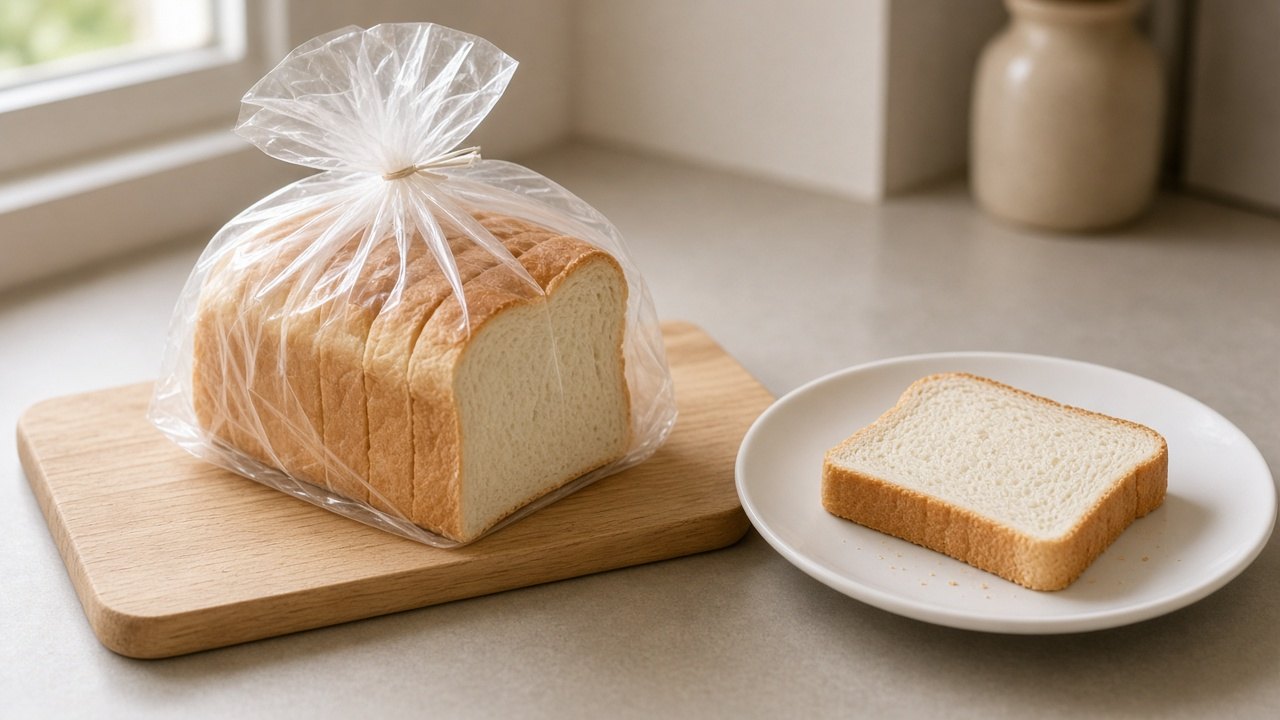
Two things make bread go hard. Moisture escapes into the air from the outside, while inside, starch that swelled during baking gradually packs together firmly again. A bag can only hold back the first process. The second depends on temperature.
What a bag can prevent
A tightly closed plastic bag quickly makes the air around the bread humid, so less moisture escapes. Bread left on a plate can become dry around the edges in just half a day, while bagged bread tends to stay soft for a day or two. A paper bag lets air through, so this effect is much weaker.
But if you bag freshly baked bread while it is still warm, steam condenses inside, the crust turns soggy, and mold grows more easily. It is better to let it cool until it feels just lukewarm to the touch before bagging it.
It hardens even with its moisture
Many people think bread hardens because it dries out, but in 1852 the French chemist Boussingault overturned that idea with experiments. He kept a warm slice of bread under a glass cover filled with moist air, and although it lost almost no weight over four days, it grew harder every day. In the other direction, when he put a large loaf that had gone completely stale over six days back into the oven, it became as soft as freshly baked bread. If drying were the cause, warming it could not have brought it back.
What a bag cannot prevent
During baking, starch absorbs water, swells, and softens. After the bread cools, the starch gradually packs together more tightly again and releases the water it was holding. So the inside stiffens even if that moisture is still in the bread. The same thing happens when cooked rice cools and hardens. Warming stale bread in a toaster softens it again because heat above about 60°C temporarily loosens the packed starch. Warmed bread hardens again soon after it cools, so warm it right before you eat it.
The freezer is better than the fridge
Starch packs together again fastest at refrigerator temperatures. So bread actually hardens sooner in the fridge than at room temperature. This process nearly stops in the deep cold of a freezer, so if you cannot finish bread within two days, it is better to freeze it in its bag and take out and warm only what you will eat. A closed bag is humid and also encourages mold, so it is best not to keep bread at room temperature for days on end.
Related reads
A bag only prevents moisture from escaping. Hardening inside depends on temperature, so bread you plan to keep longer is better stored in the freezer than in the fridge.
Notes and references · Gray and BeMiller (2003) · Boussingault (1852) staling experiments. This review identifies starch recrystallization as a main cause of bread staling. It is fastest at refrigerator temperatures and nearly stops when frozen. Boussingault showed that bread kept from losing moisture still stales and softens again when reheated.
Editorial standardsReport an error
Quick quiz