No. 32Everyday life3 minviews 25
Published by GK Library Annex
Do brown spots mean a banana has gone bad?
Yesterday the banana peel was yellow, and overnight it's spread with sesame-like specks.
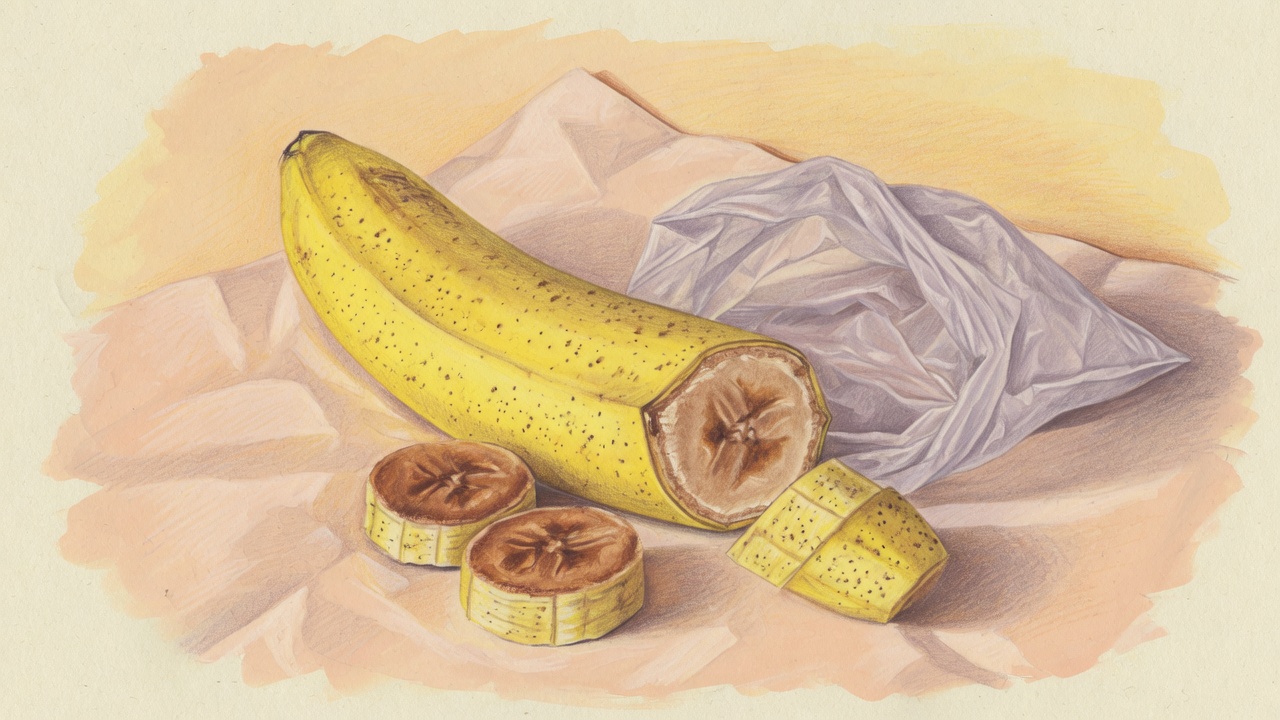
The brown spots on a banana peel are mostly a sign that it's nicely ripe, not that it's gone bad. They form as compounds in the ripening peel meet oxygen and turn brown, and by then the flesh has turned its starch into sugar and is at its sweetest.
Spots mean it's ripe
Even after harvest, bananas keep ripening on their own, giving off a gas called ethylene. As they ripen, the peel thins and its cells weaken, and near the end, phenolic compounds in the outer layer of the peel meet enzymes and oxygen and turn into brown pigment. These are the spots sometimes called sugar spots.
By this point most of the starch that filled the unripe banana has turned into sugar. That's why a spotted banana is sweeter and softer. Bananas meant for bread or pancakes are often used on purpose once they're well spotted.
Can a bag slow it down?
In 2004, researchers in Thailand found that when trays of bananas were covered with plastic wrap to lower the oxygen inside, spots hardly formed. Spotting needed more than roughly 5% oxygen.
But loosely tying the top of a plastic bag at home doesn't lower the oxygen that much. In fact, keeping bananas in a bag with ethylene-releasing fruit like apples or tomatoes makes them ripen faster. If you want to slow things down, hang them in a cool spot away from other fruit.
In the fridge the peel turns black
Kept below 13°C for long, bananas suffer chilling injury that damages the peel cells, and the peel turns dark. From the outside it looks spoiled, but the flesh ripens more slowly and actually keeps longer.
So it's fine to put a fully ripe banana in the fridge and eat it a few days later. Peeled, sliced, and frozen, it's handy for smoothies or baking. But if you put a green, unripe banana in from the start, it tends not to ripen properly and only the peel turns black.
Cut flesh browns first
The flesh of a banana cut in half turns brown quickly. Enzymes released from the cut cells meet the oxygen in the air right away. A little lemon juice or plastic wrap pressed against the surface slows the change.
Judge whether it's still good by smell and feel rather than color. If it smells sour or boozy, is so soft it's leaking liquid, or shows mold, it's best thrown out. Lots of spots alone is no reason to toss it.
Related reads
Brown spots on a banana usually mean it's fully ripe and sweet. Whether it has gone bad is better judged by smell and softness than by spots.
Notes and references · Choehom et al. 2004, Postharvest Biology and Technology. An experiment in which covering bananas with plastic wrap to lower oxygen almost prevented peel spots, showing that spotting needs more than roughly 5% oxygen. The variety used was a Thai banana, so results may differ from the bananas we usually buy.
Editorial standardsReport an error
Quick quiz