No. 108Money4 minviews 40
Published by GK Library Annex
Same snack price, but the bag feels lighter
The price tag did not change, yet the bag weighs less. Here is where the difference went.
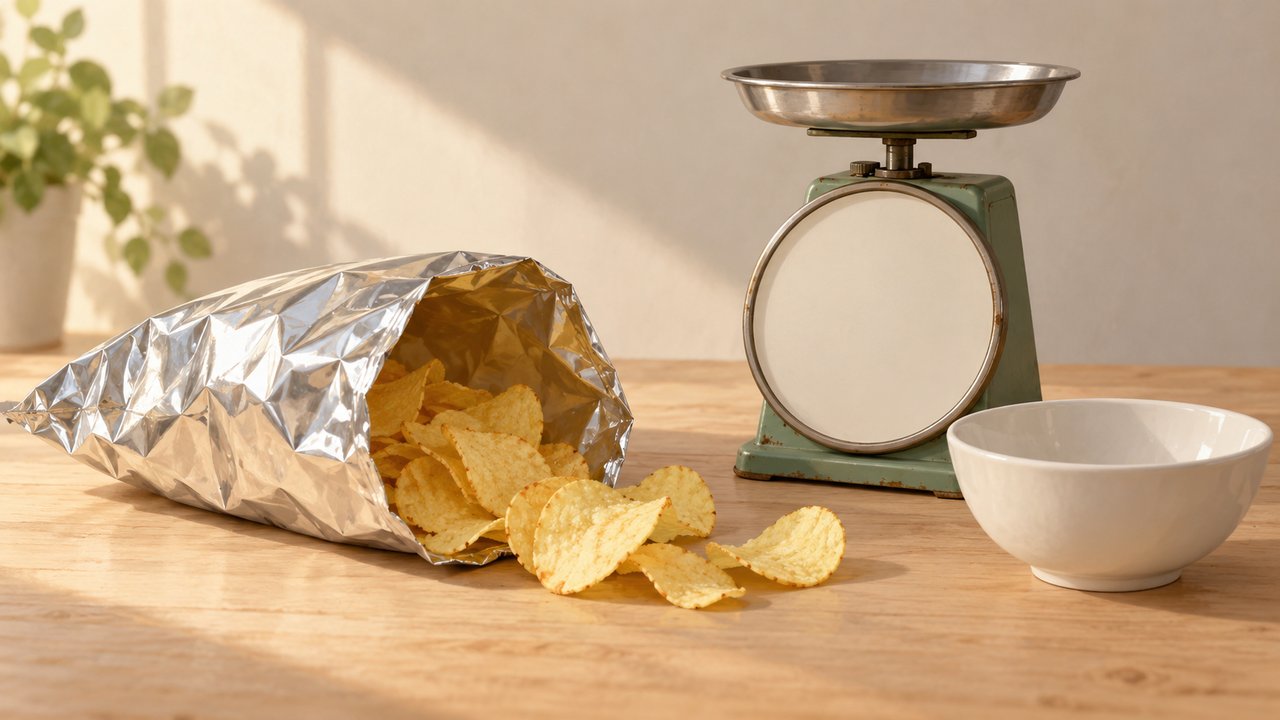
If a snack costs the same but you get less, you are not imagining it: the price may really have gone up. Instead of changing the price tag, the maker trims the amount, a practice called shrinkflation, from shrink plus inflation. Because the register total stays the same, it is even harder to notice.
The size changes, not the tag
When costs rise, a company has two main options. It can raise the price, or keep the price and sell less. Shoppers notice the number on a price tag, but few spot a bag going from 90 g to 85 g.
The US Bureau of Labor Statistics counts this change in inflation. If a 64-ounce tub of ice cream becomes 60 ounces at the same price, it records a 6.7% rise in the price per ounce. The total at the register is the same, but for your wallet the price went up.
Empty space is a separate issue
A common mix-up is thinking a puffy bag is itself the trick. The gas in snack bags is usually nitrogen. It pushes out oxygen so the oil goes stale and the chips go soft more slowly, and it is meant to keep chips from breaking in transit.
Korea also caps that empty space. Under Ministry of Environment rules, a gas-filled snack bag may not be more than 35% empty space. So the weight printed on the back tells you more than the size of the bag.
Shrinking must be announced
Since August 3, 2024, makers of 119 everyday items in Korea, such as milk, instant noodles, snacks and shampoo, must announce a size cut for at least three months on the package, their website or where it is sold. Before that, there was no specific duty to do so. Skipping that brings a fine.
There are exceptions: if the price drops too so the unit price stays the same, or the cut is 5% or less, no notice is needed. So small changes can still slip by quietly.
One number to check while shopping
The easiest check is the unit price. Price labels at large supermarkets show a small price per 100 g or per item. Use it to compare a big bag with a small one, or a buy-one-get-one bundle, and the cheaper option is clear right away.
For snacks you buy often, it also helps to remember the last weight. The Korea Consumer Agency lists downsized products on its Price Info site and takes shrinkflation reports.
Related reads
If the weight shrank while the register total stayed the same, the price went up. Compare the price per 100 g, not the size of the bag.
Notes and references · Korea FTC notice 2024 · US BLS 2023. Korea FTC notice revised May 3, 2024 (119 items, notice for 3+ months, cuts of 5% or less exempt), Ministry of Environment packaging rule (35% cap), BLS 2023. Some dispute that nitrogen prevents breakage.
Editorial standardsReport an error
Quick quiz