No. 33Money3 minviews 28
Published by GK Library Annex
Why does cash feel as if it disappears faster, even when you spend the same amount?
You spent the same amount, so why does a day of paying in cash feel like more of a loss?
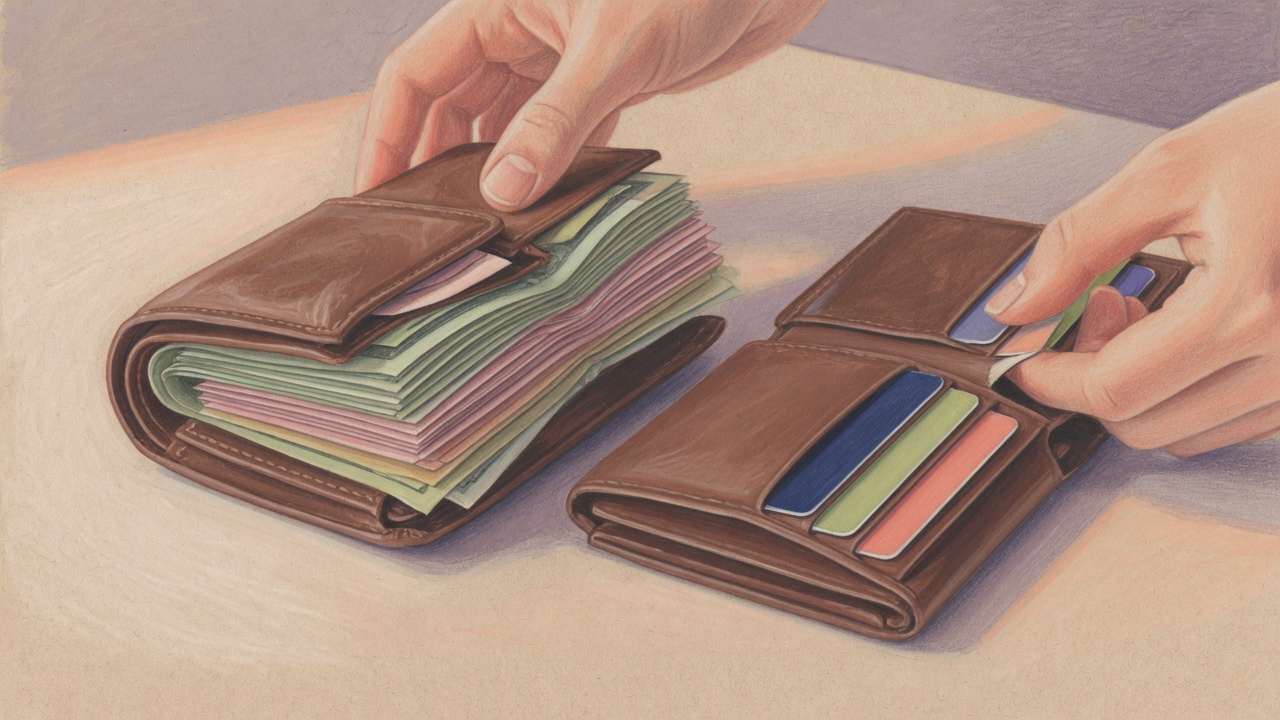
Pay 20,000 won in cash and your wallet gets noticeably thinner, but pay by card and the card goes right back into your wallet. Whether you see and feel the money leaving changes how much it seems to shrink, even for the same amount. Behavioral economists call this the pain of paying.
Bills go, the card stays
As you count out bills and take your change, you watch the money leave. When there are fewer bills and coins mixed in, even your fingertips can feel the difference.
A card is just as thick no matter how many times you use it. Payment is over the moment you insert or tap it, and you check how much you spent later as a number on a screen. So until you look at your statement in the evening, what you spent that day doesn't really stay with you. A debit card drains away as numbers on a screen too.
People bid more when paying by card
In 2001, Drazen Prelec and Duncan Simester at MIT auctioned tickets to a sold-out basketball game. Half the participants were told they'd pay in cash, and the rest were told they could pay only by card.
The average bid was about $28 on the cash side and about $61 on the card side, more than double. Payment was due by the next day, so installments or interest could hardly explain the gap. The researchers concluded that cards dull the pain of paying.
It isn't just about interest
Many people assume card spending goes up only because of math like installments or interest. But as this experiment showed, the gap appeared even when the bill had to be paid right away. Even with the same amount, simply feeling the moment the money leaves less sharply can change how much you spend. When the bill is pushed to next month, the pleasure of buying and the pain of paying drift further apart, and what you spent on what can blur even more.
That doesn't make cards bad. They leave a record and spare you the change, which are real advantages.
Holding on to the moment of payment
If you mostly use cards, turning on payment alerts makes you see the amount the moment you spend it. Link a debit card to an account holding a set week's living expenses, and what's left becomes as visible as the thickness of a wallet. When choosing something expensive, ask yourself how much you'd pay if you were handing over cash. The point is to bring the moment the money leaves back in front of your eyes.
Related reads
With cash, the moment money leaves stays in your hand; with a card, that moment gets pushed to later. That difference alone can make the same money feel different and even change how much you spend.
Notes and references · Prelec and Simester 2001; Prelec and Loewenstein 1998. An experiment in which people told they'd pay by card bid more than twice as much for the same tickets, and a theory that the pain felt when paying shapes spending. The experiment used business school students, so how big the effect is varies by person and situation.
Editorial standardsReport an error
Quick quiz