No. 42Everyday life2 minviews 30
Published by GK Library Annex
Why does ice stay afloat in a glass of water?
A stone sinks, but ice stays on top. How the same water changes when it freezes.
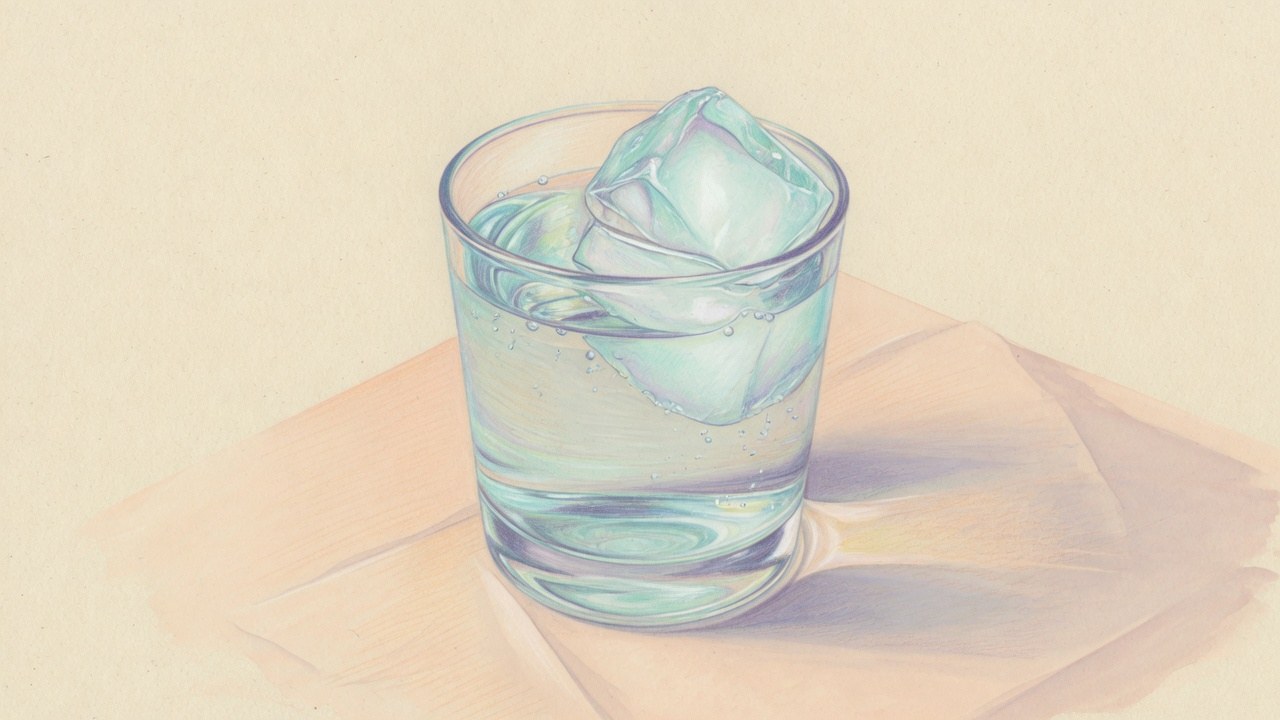
Ice in a glass stays on the surface instead of sinking. A pebble sinks while ice floats, so ice can look like a much lighter different material. It is not a different material. The same water takes up more space when it freezes.
Freezing spreads the space
When water freezes, molecules sit a little farther apart. The same amount of water occupies more space while the mass stays the same. Expansion is often near about 9 percent. Compared at the same size, ice is lighter than liquid water, so it rises.
Most substances sink as solids because the solid is denser than the liquid. Water floating while solid is unusual. Thinking ice is 「some other light stuff」 is a misconception. Fridge ice is the same substance as the water in the glass. Whiteness often comes from tiny air pockets inside; floating is not because of that color.
Melting rarely overflows
You can see it at home. Drop ice into a water glass and only the submerged part raises the water line. Not all of the ice goes under—a bit stays in the air.
When that ice melts, the glass often does not overflow. The part that was above water melts back into the volume it had displaced. If the glass is already brim-full and you add more ice, it can spill at the moment you add it. Drinks on the rocks float by the same rule. In salt water, liquid density changes so the floating height can shift a little.
Ponds freeze from the top
Winter pond ice follows the same story. Fresh water is densest near about 4°C. Cooler than that, it gets lighter, stays near the surface, and that layer freezes first. Ice stays on top instead of sinking, and deeper water stays relatively milder—easier for life to overwinter. Seawater, with salt, shifts this pattern.
Ice cubes chilling a drink work the same way. While they float, their cold faces touch the liquid. Once melted, that space is water again and sweetness cannothin a little.
Related reads
Ice floats because freezing expands water, so the same size is lighter than liquid water. The 4°C density anomaly also helps ponds freeze from the top.
Notes and references · USGS Water Density · NOAA JetStream sea water. Fresh water is densest near about 4°C and expands roughly 9% on freezing, becoming lighter than liquid water. USGS and NOAA explain this density anomaly and why ice floats. Unlike most substances, solid water is lighter than its liquid.
Editorial standardsReport an error
Quick quiz