No. 68Everyday life3 minviews 30
Published by GK Library Annex
Why do some eggs float in water?
Put them in the same bowl, and some eggs settle on the bottom while others rise to the surface.
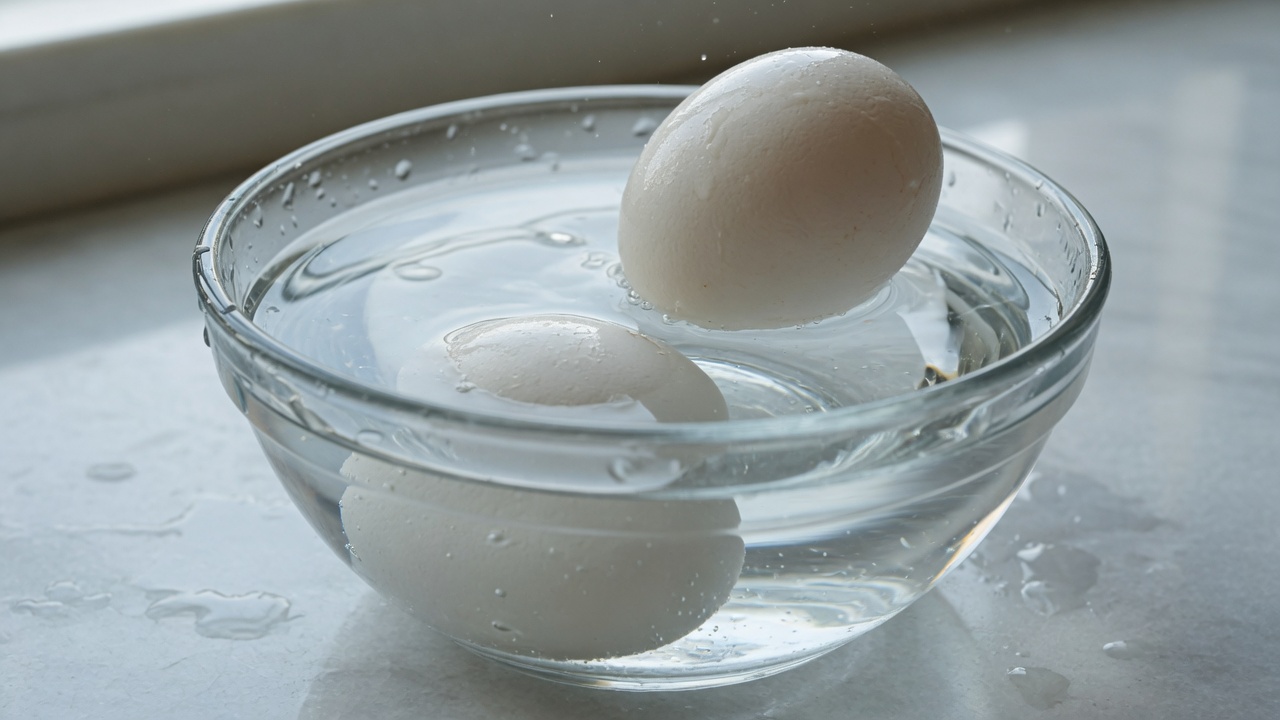
Fresh eggs sink when placed in water, while older ones are more likely to float. The amount of air that has collected inside the shell determines where they sit.
The eggs that sink
A freshly laid egg has almost no air pocket. It comes out at a little over 40°C, and as it cools, the contents shrink more than the shell, forming a small air pocket between two membranes at the blunt end. The whole egg weighs more than the same volume of water, so it settles gently on the bottom of the bowl. An egg lying still on its side usually does not yet contain much air.
The eggs that rise
As days pass, moisture and carbon dioxide gradually escape through tiny pores in the shell, and air enters the space they leave. As the air pocket at the blunt end grows, the egg becomes lighter without changing size. It may stand upright in water, or rise toward the surface when older. Floating does not always mean it is spoiled; it is more a sign of increased air inside.
Does sinking mean it's safe?
Some people read the water test the other way round, assuming an egg that sinks is safe. But all the test tells you is the size of the air pocket, that is, how old the egg is. The USDA says even clean, uncracked fresh eggs may contain Salmonella. The bacteria can get in while the egg is forming inside the hen. That is why even fresh eggs are safest cooked until both the yolk and white are firm.
Before you crack it
The water test is a household way of roughly judging an egg's age. Many households still fry or boil a floating egg if it has no smell when cracked. But if the shell is cracked or it smells strange, it is better to leave it unused even if it sank. Adding a lot of salt to the bowl can make a perfectly ordinary egg float, so the test should use plain water. In Korea, the first four digits on the shell tell you the day the egg was laid. This laying date has been printed since 2019, so 0823 means it was laid on August 23. Older eggs have their uses too. Over time the white becomes more alkaline and clings less to the shell membrane, so boiled eggs peel more easily.
Related reads
A floating egg is more a sign of increased air inside than a verdict that it is spoiled.
Notes and references · USDA FSIS, ‘Shell Eggs from Farm to Table’ · Korea's egg laying-date labeling. A freshly laid egg has no air pocket; it forms as the egg cools. A floating egg may still be safe, so the guidance says to crack it and check its smell and condition. The laying date is the first four of the ten characters printed on the shell.
Editorial standardsReport an error
Quick quiz