No. 39Nature3 minviews 23
Published by GK Library Annex
Why does a wet stone look darker?
It's the same stone, yet a little water makes it a shade darker. Did the water change its color?
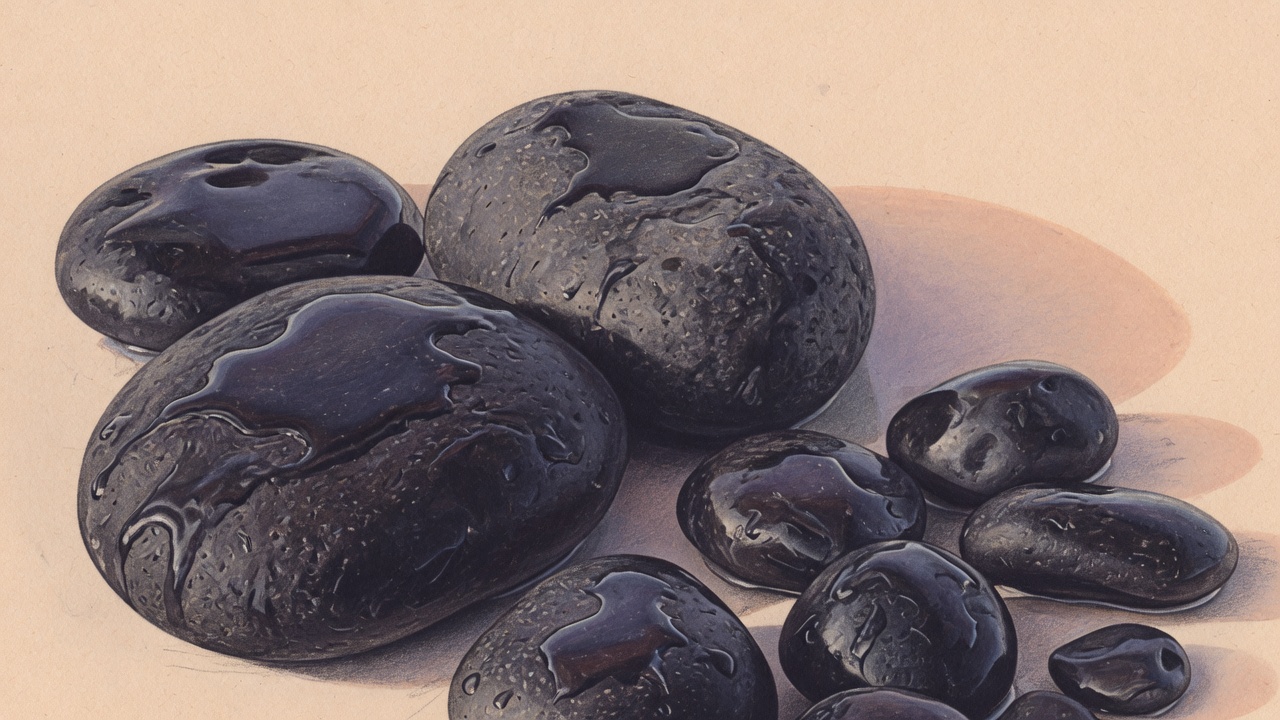
A wet stone looks darker not because its color changes, but because more of the light reaching it gets absorbed. The thin film of water on the surface sends light back toward the stone, and the water filling the tiny pits scatters light less, letting it travel deeper into the stone.
A dry stone scatters light
The surface of a dry stone is rough with tiny pits and grains. At every boundary where air meets stone, light bounces off in all directions, and quite a lot of it returns straight to your eyes before it can be absorbed. That's why a dry stone looks pale and washed out.
When water fills the pits, the boundary changes from air and stone to water and stone. Water and stone bend light more alike than air does, so light scatters less and goes deeper into the stone. Light that travels deeper has more chances to be absorbed by the stone's minerals.
A thin water film traps light
An idea put forward by Anders Ångström of Sweden in 1925 was refined with calculations in 1988 by John Lekner and Michael Dorf at Victoria University of Wellington in New Zealand. A rough stone sends light out at slanting angles in many directions, and light that hits the top surface of the water film at too steep a slant can't escape into the air and reflects back down. This is called total internal reflection.
The light sent back hits the stone again, and each time some of it is absorbed. After a few round trips, less light reaches your eyes and the stone looks darker. Calculations that included both effects matched real measurements well.
The water doesn't eat the light
It's easy to think water soaks up light and makes things darker, but a thin film of water absorbs almost no light. The stone itself does the absorbing; the water only keeps the light around the stone longer. That's why the original color comes right back once it dries.
For the same reason, the rougher the stone, the bigger the difference, while smooth surfaces like glass or polished stone barely change when wet. A smooth surface bounces light in one direction like a mirror, so little of it gets trapped in the water film.
Wet it to see the color
Wetting a surface cuts down the light that scattered off it as a whitish haze, so the color looks deeper and more vivid. A polished stone face looks darker for a similar reason: less light scatters at the surface. So when choosing paving stones or display stones, sprinkling a little water on them gives you a rough idea of how the color will look once polished.
The dark strip of sand where waves reach the beach, and the spot that turns darker where water splashes on a T-shirt, are the same thing. A darker patch that remains can also be a sign that the spot isn't fully dry yet.
Related reads
A wet stone looks darker because the stone absorbs more of the light trapped by the water film. The rougher the surface, the bigger the difference.
Notes and references · Lekner and Dorf 1988, Applied Optics; Twomey et al. 1986. A model that extends Ångström's 1925 water-film reflection idea and matches measurements. Another view gives more weight to water scattering light forward and sending it deeper.
Editorial standardsReport an error
Quick quiz