No. 132Language3 minviews 20
Published by GK Library Annex
Why does Korean read 3:30 as "se si samsip bun"?
The hour is "se si" but the minutes are "samsip bun." Here's why Korean has two sets of numbers.
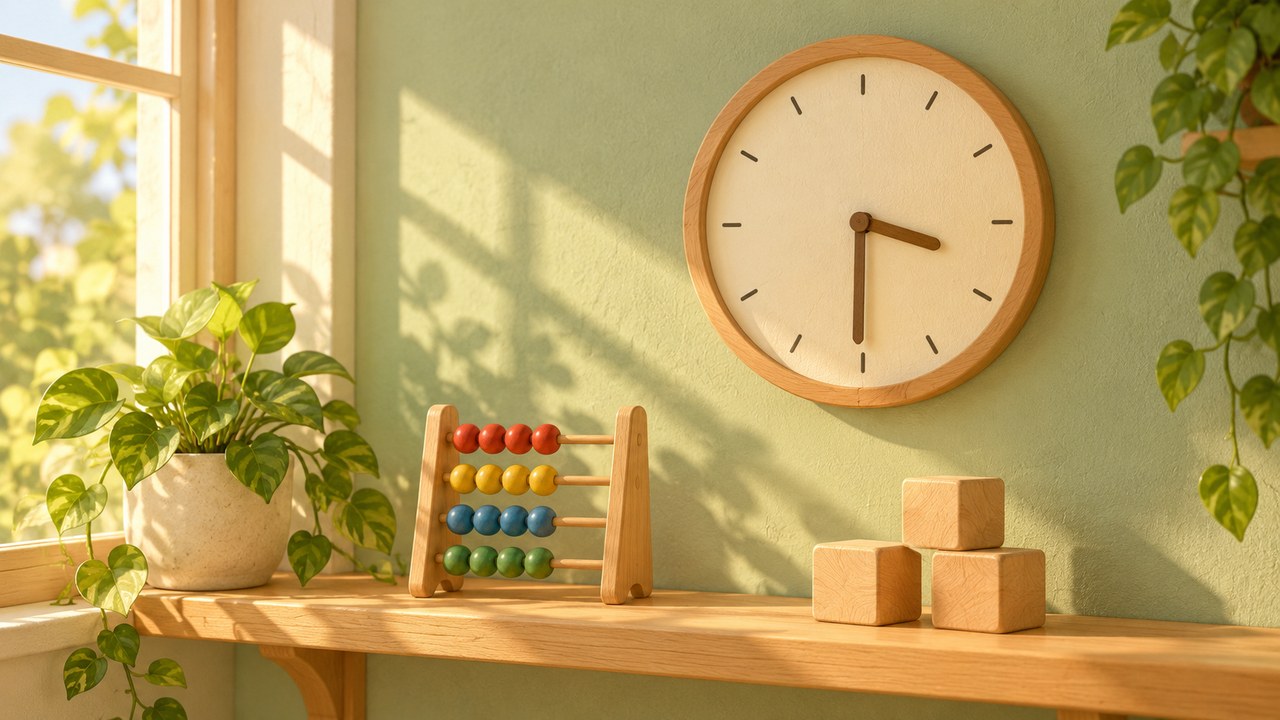
Korean has two sets of words for counting. One is native Korean numbers like hana, dul, set (one, two, three); the other is Sino-Korean numbers like il, i, sam. 3:30 is read 「세 시 삼십 분」 (se si samsip bun) because the habit of counting hours in native numbers and minutes in Sino-Korean numbers has become fixed.
Native Korean numbers stop at 99
Native Korean numbers count from hana (one) to yeol (ten), and the tens continue as seumul, seoreun, maheun, swin, yesun, ilheun, yeodeun, and aheun (20 to 90). So everything up to 99 can be counted in native Korean, as in 「아흔아홉」 (aheunahop, ninety-nine).
Beyond that, things change. Old Korean had 「온」 (on) for a hundred and 「즈믄」 (jeumeun) for a thousand, and jeumeun appears in 『Seokbo Sangjeol』, published in 1447. But these are hardly used as numbers today, so above 100 Koreans use Sino-Korean numbers such as 「백」 (baek, hundred) and 「천」 (cheon, thousand).
What you count decides it
Broadly, native numbers are used for counting how many, and Sino-Korean numbers for order, numbering, money, and measurements. 「세 명」 (se myeong, three people), 「두 개」 (du gae, two items), 「다섯 살」 (daseot sal, five years old), and 「한 시간」 (han sigan, one hour) use native numbers, while 「삼 층」 (sam cheung, third floor), 「오 월」 (o wol, May), 「천 원」 (cheon won, 1,000 won), 「이십 분」 (isip bun, 20 minutes), and phone numbers use Sino-Korean ones.
The same 1 can mean different things depending on how it's read. In 「1번 문제」 (question 1), 「일 번」 (il beon) points to a number, while 「한 번 더」 (han beon deo, one more time) counts times. So 「1번을 1번 더 풀어요」 only makes sense when read 「일 번을 한 번 더 풀어요」: "I'll solve question 1 one more time."
How hours and minutes split
A clock shows this difference at a glance. Hours are read in native numbers, as in 「한 시, 두 시」 (han si, du si, one o'clock, two o'clock), while minutes and seconds use Sino-Korean numbers, as in 「일 분, 십 초」 (il bun, sip cho, one minute, ten seconds). No explanation for why they split this way has been firmly established; it's closer to a long-standing speech habit than a grammar rule.
That's why 「삼 시 삼십 분」 (sam si samsip bun) or 「세 시 서른 분」 (se si seoreun bun) can be understood but sound awkward. Age works similarly. 「스무 살」 (seumu sal) uses native numbers and 「이십 세」 (isip se) uses Sino-Korean ones, and both mean "20 years old," but mixing them, as in 「이십 살」 (isip sal), sounds awkward.
Numbers that change shape
Native numbers sometimes change shape when a counter follows them. Hana, dul, set, net, and seumul become 「한 개, 두 개, 세 개, 네 개, 스무 개」 (han gae, du gae, se gae, ne gae, seumu gae: one to four items and twenty items), and some words keep older forms, like 「석 달」 (seok dal, three months) and 「넉 잔」 (neok jan, four cups).
Sino-Korean numbers have exceptions too. June and October are read and written 「유월」 (yuwol) and 「시월」 (siwol), not 「육월」 (yugwol) and 「십월」 (sibwol). These settled into easier-to-pronounce sounds, and Korean spelling follows those sounds. Even though the calendar shows 6 and 10, the final consonant drops out when you say them aloud.
Related reads
Korean reads counts and hours in native numbers, and numbering, money, minutes, and seconds in Sino-Korean numbers. Above 99, only Sino-Korean numbers remain.
Notes and references · Seokbo Sangjeol (1447) · Korean spelling rules · Korean numerals overview. Reading hours in native numbers and minutes in Sino-Korean ones is a convention with no settled explanation. On and jeumeun are Middle Korean numerals rarely used as numbers today.
Editorial standardsReport an error
Quick quiz