No. 4Language3 minviews 24
Published by GK Library Annex
How Hangul was designed: what do the letter shapes represent?
They copy where sounds are made, not pictures of meanings.
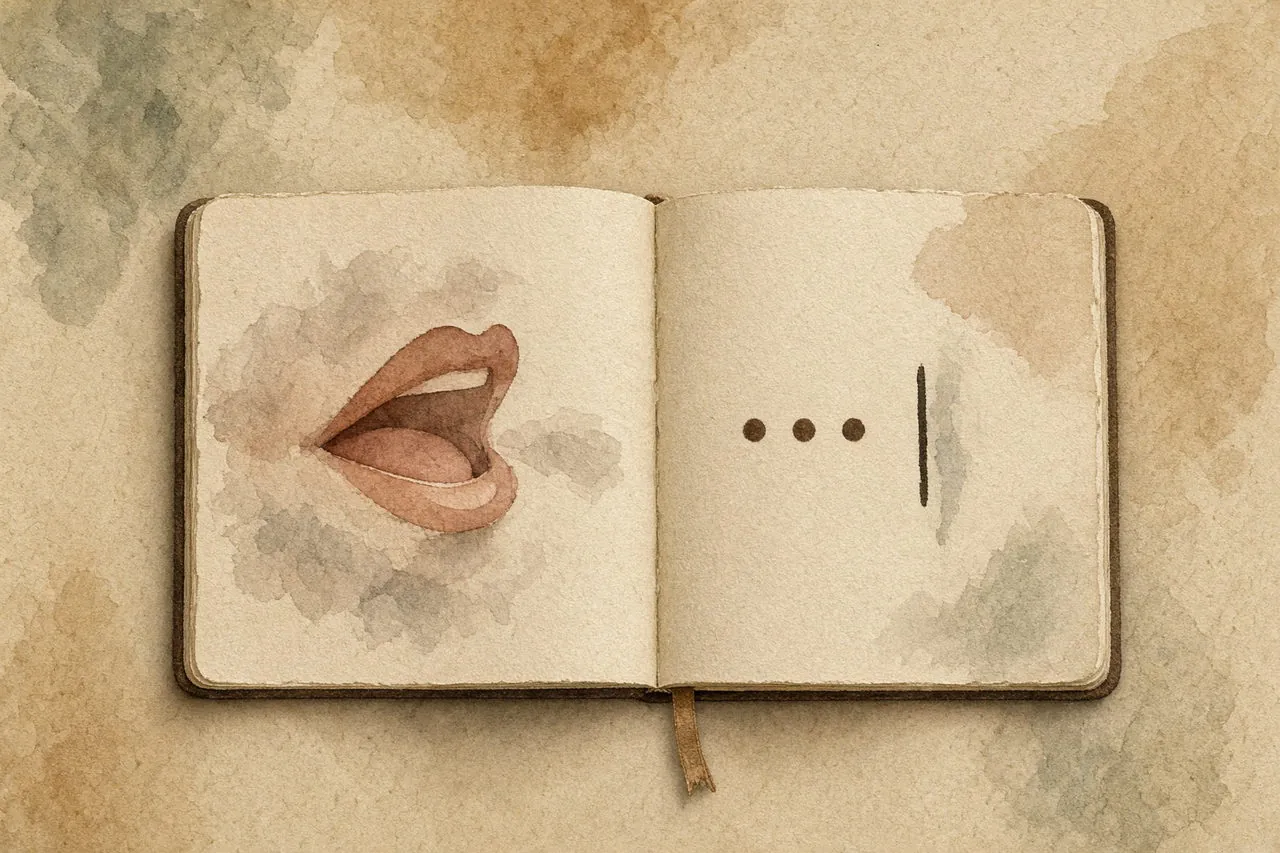
Before memorizing ㄱ, try bringing the back of your tongue toward your throat. The place where it closes looks like the letter. Hangul is not a set of pictures of meanings. Its letters copy the places where sounds are made.
Consonants show mouth shapes
ㄱ shows the back of the tongue blocking the throat. ㄴ shows the tongue touching the upper gums, ㅁ the lips, ㅅ the teeth, and ㅇ the throat. The Hunminjeongeum Haerye explains that the five basic consonants were shaped after these places of articulation.
Extra strokes mark stronger sounds. Adding a stroke to ㄱ makes ㅋ, and ㄴ leads to ㄷ and ㅌ in a similar way. Tense sounds are split by a related method. So your mouth often knows the basic consonants before you memorize them. If you think letters only draw meanings, consonants are easy to misunderstand—sound place comes first. Say ㄱ and ㅁ in front of a mirror and the difference is immediate.
Vowels use dots and lines
Vowels had three building blocks: a dot for heaven (ㆍ), a horizontal stroke for earth (ㅡ), and a vertical stroke for a person (ㅣ). Many of what once looked like dots have become short strokes today.
ㅏ places heaven beside the person; ㅗ places heaven above the earth. The explanation may sound philosophical, but the result is practical. Just a few shapes can write almost all speech sounds. The claim that Chinese characters carry meaning while Hangul carries only sound is only half right. Hangul drew the places of sound, and those sounds then write meanings. Stacking consonants and vowels also fits a design that builds many sounds from few parts.
Between creation and proclamation
The Annals of King Sejong record that 28 letters were made in 1443 (gyehae) and that Hunminjeongeum was published in 1446. Time between creation and proclamation went into writing the explanations. It is closer to making, refining, and attaching a guide than to finishing the letters in a single day.
In daily life, just touch your tongue and lips once when you say ㄱ, ㄴ, and ㅁ. Treat them as what the mouth does, not as symbols to memorize, and the letters feel much closer. Phone keyboards use the same shapes, so the principle stays in your hands every time you type. When teaching a child, showing the mouth shapes first often makes memorizing far easier.
Related reads
Hangul consonants show the mouth shapes that make sounds, while vowels combine a dot, a horizontal stroke, and a vertical stroke.
Notes and references · Hunminjeongeum Haerye and the Annals of King Sejong. Basic consonants represent places of articulation; vowels are explained through heaven, earth, and person. Creation in 1443 and proclamation in 1446 come from the Annals of King Sejong.
Editorial standardsReport an error
Quick quiz