No. 85Nature3 minviews 28
Published by GK Library Annex
Why can a clear morning be foggy?
After a cloudless night, the riverside is covered in white. Why does this happen in fine weather?
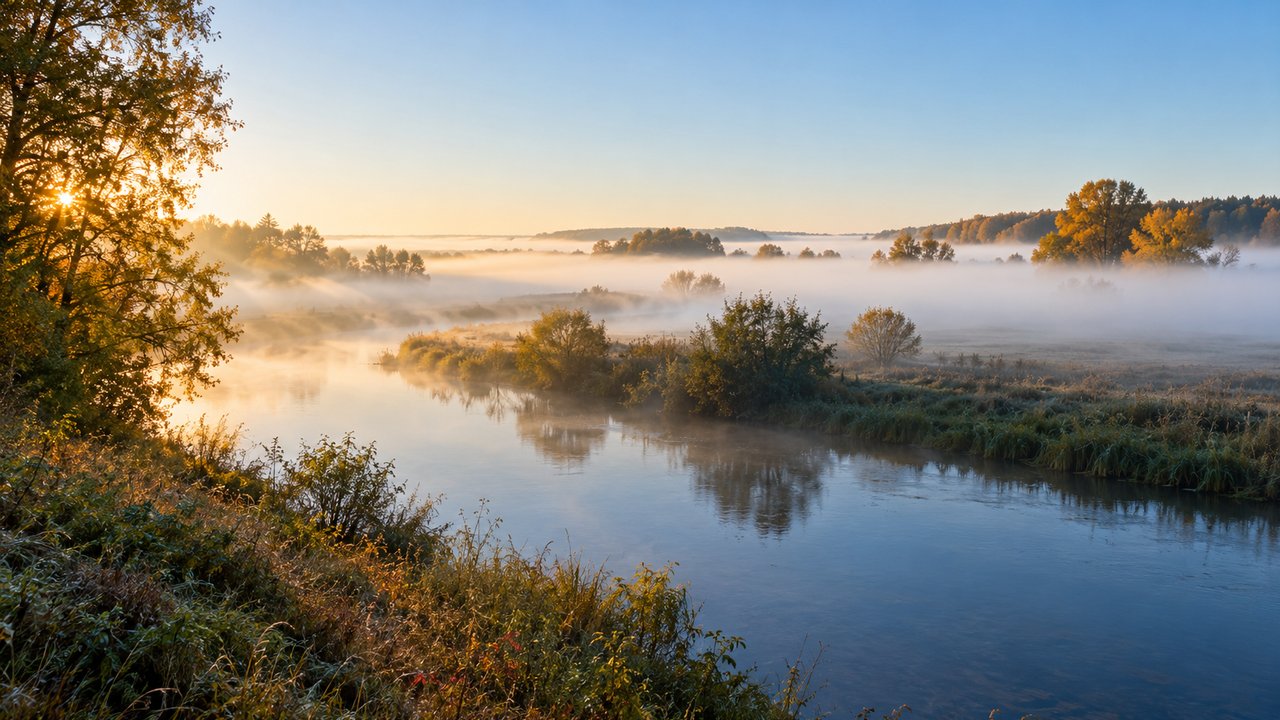
Clear nights create autumn morning fog. Without clouds, the ground loses heat to the sky overnight and cools down. The air just above it cools too, turning its water vapor into tiny droplets.
A cloud at ground level
You can think of fog as a cloud at ground level. The UK Met Office calls it fog when water droplets reduce visibility to less than 1,000 meters, and mist when you can see farther than that. When it gets so thick that you can't see 100 meters ahead, it can seriously disrupt travel.
Warmer air can hold more water vapor. When the same air cools, some of the vapor it can no longer hold becomes droplets. It is like droplets forming on the outside of a cold glass, but happening in the air.
Cloudy nights produce less of it
On a cloudy night, clouds hold in the ground's heat like a blanket, so the ground cools less. The wind has to be just right, too. The Met Office explains that if the wind is too light, dew forms instead of fog, and if it's too strong, the cold air mixes with the air above and the temperature doesn't drop as much. That is why fog forms readily on mornings after clear, calm nights.
It is especially thick beside rivers and in valleys because heavier cold air flows downhill and pools in low areas, and there is plenty of water vapor near water. When the air holds a lot of moisture, even a small drop in temperature produces droplets.
Is a hazy morning caused by fine dust?
A hazy morning can make you think the fine-dust pollution is bad, but fog is made of water droplets. When the air looks hazy because extremely small, dry particles are floating in it, that is called haze.
The two aren't completely unrelated. The Met Office says the thickest fogs tend to occur in industrial areas, where more pollution particles help water droplets merge and grow. Still, a foggy day isn't necessarily a day with bad air, so if you want to know about air quality, checking the fine-dust forecast is more reliable than looking at the color of the sky.
On a foggy morning road
This kind of fog usually clears soon after sunrise, because the sun warms the ground and the droplets turn back into vapor. In valleys where cold air pools, though, it can linger on windless days.
If you'll be driving along a riverside road or across a bridge the morning after a clear autumn night, expect fog. When visibility is poor, slow down, leave plenty of distance from the car ahead, and use your low beams. High beams scatter off the droplets and make the view ahead look even whiter.
Related reads
When the ground cools on a clear, calm night, water vapor in the air above it turns into droplets, creating morning fog.
Notes and references · Met Office, ‘What is fog?’. The 1,000-meter line between fog and mist, the conditions of clear skies, suitable wind and moisture, valley fog, pollution particles and dense fog, and the difference from haze follow the UK Met Office. This article covers only radiation fog, which forms as the ground cools overnight.
Editorial standardsReport an error
Quick quiz