No. 138Nature4 minviews 50
Published by GK Library Annex
Can frost form on the grass on a 3°C morning?
Forecast temperatures are for air about 1.5 m up. On clear, calm nights, grass gets several degrees colder.
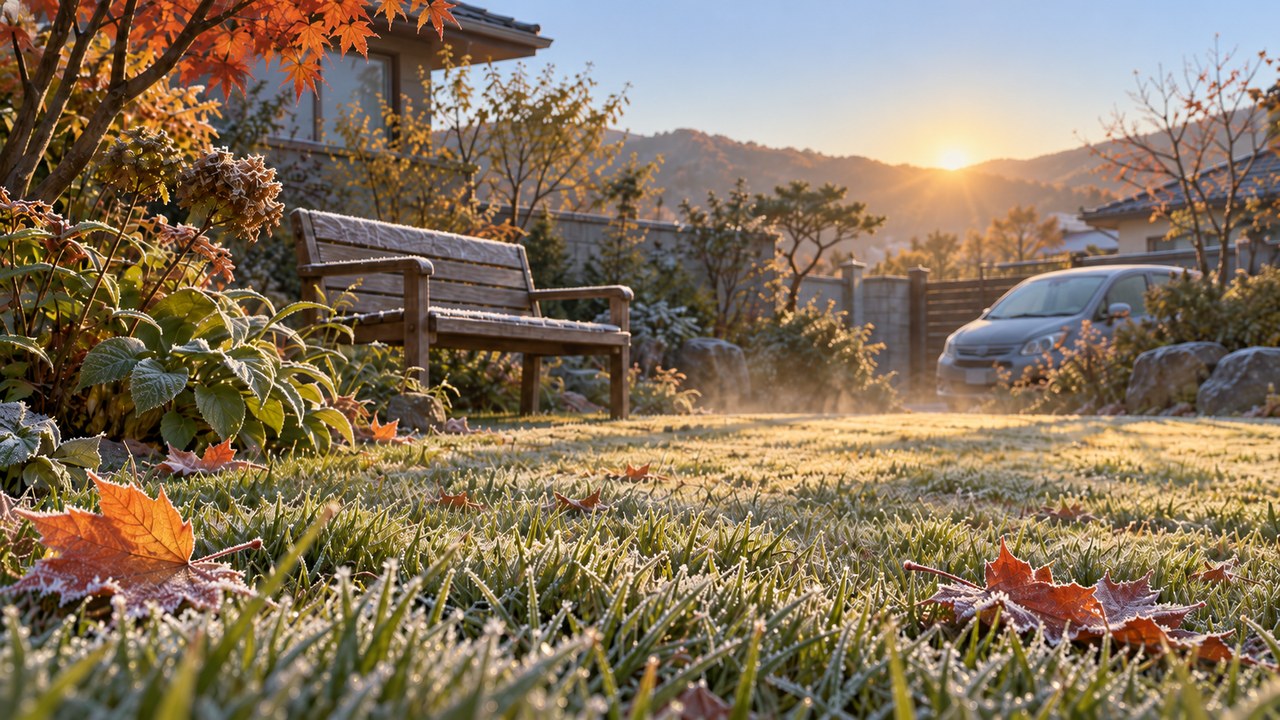
Sometimes the forecast low is above freezing, yet in the morning the grass and car roofs are coated white. Frost can form even when the morning temperature is above zero. The temperature a weather station reports is not for the ground but for the air about 1.5 m above it, and frost forms on grass and other surfaces that have become much colder than that air.
Where is temperature measured?
At Korea Meteorological Administration stations, the thermometer sits inside a louvered shelter or radiation shield above a lawn, 1.2 to 1.5 m off the ground. The idea is to measure air that is not heated directly by sunlight or by the ground. The low you hear on the news is really the temperature of the air at about an adult's chest height.
At night, the temperature at that height and at ground level can differ quite a lot. That is why the agency also measures the temperature just above the grass with a separate grass-minimum thermometer. On clear early mornings, that reading often comes out several degrees lower than the air temperature.
Grass cools before the air does
After sunset, the ground, grass and car roofs cool by sending the heat they took in during the day up to the sky as invisible light. Without clouds, that heat escapes freely, and without wind, the less-cold air above cannot mix down. So on clear, calm nights, the air stays above zero while only the surfaces drop below 0°C.
When water vapor in the air touches those cold surfaces and sticks as ice crystals, that is frost. Many people think frost is just frozen dew, but the Korea Meteorological Administration describes it as water vapor turning straight into ice without becoming droplets first. Up close, you can sometimes see crystals shaped like needles or feathers.
How to guess frost ahead of time
If the evening sky is clear, the wind has died down and the forecast low is around 2 to 3°C, it is worth expecting frost the next morning. On cloudy nights, the clouds send heat back down, so frost rarely forms. Even in the same yard, spots under trees or eaves are shielded from the sky and cool less.
That is also why a car parked under a roof can have a clear windshield while a car parked outside is coated white. If you have a vegetable patch, simply covering the plants with cloth or newspaper in the evening keeps more heat from escaping. The seasonal term Sanggang (霜降, "frost descends"), which falls around October 23 each year, also marks the time when frost begins to appear.
Related reads
Frost forms when surfaces, not the air, drop below 0°C. On a clear, calm night, grass can turn white above freezing.
Notes and references · KMA surface observation guide and frost-day data notes. Thermometer height (1.2–1.5 m above ground), grass-minimum readings, and frost as vapor depositing as ice. The surface-air gap varies with sky, wind and terrain.
Editorial standardsReport an error
Quick quiz