No. 7Science3 minviews 22
Published by GK Library Annex
Why can't we see the Moon's far side from Earth?
It did not stop turning. Its turning time matches its orbit.
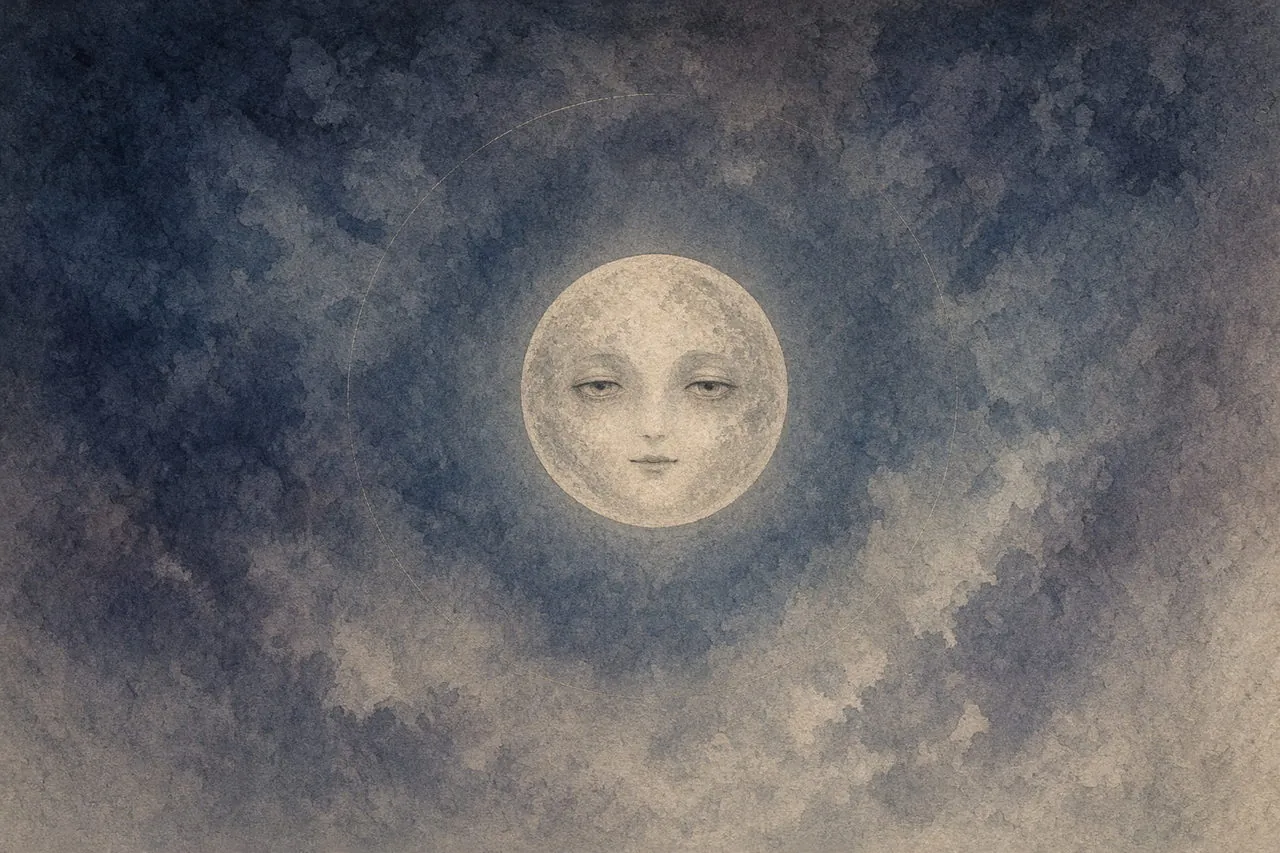
The stains on a full Moon look the same as yesterday, and they will next year too. The Moon did not stop turning. The time it takes to spin once nearly matches the time it takes to go once around Earth.
Walk in step, see one cheek
Imagine a friend walking on your left. If they take one step whenever you do, you keep seeing the same cheek the whole way. They did not freeze; they matched your pace.
The Moon works the same way. Going once around Earth takes about 27.3 days, and spinning once on its axis takes almost the same time. So from here we always see the same face. Large moons often end up 「in step」 like this. It is less a fluke than a state that shows up after long mutual pulls. The Moon did not deliberately stop spinning to face only Earth. It keeps turning; the beat simply matches.
We see a little past the edge
It is not locked perfectly still. The Moon travels a slightly squashed path, so its speed wobbles, and we peek a little past the rim. Watch long enough and the stains can seem to shift slightly.
The far side is real. People sometimes call it the 「dark side,」 but that side also has day and night. We just cannot see it with the naked eye from Earth. Luna 3 first photographed it in 1959, and later probes mapped it in far more detail. Even if a walking friend sped up half a step, you still would not see the back of their head.
Why we keep finding the same stains
At night the pattern that looks like a 「rabbit」 or a 「face」 sits in nearly the same place. Because we only see one face, that map is easy to learn. It is not because the far side is hidden away; it is because the turning times match.
A telescope can show a little more of the rim than usual, but still not the back of the head. You do not need to decide that 「only one side of the Moon is bright.」 The side we cannot see is bright when the Sun hits it and dark in shadow. Remember only why we keep seeing the same stains from Earth. If the next full Moon puts that pattern in the same place again, that is a Moon walking in step.
Related reads
The Moon did not freeze to show us one face. Its spin time and its trip around Earth became the same.
Notes and references · NASA Science · Luna 3. The Moon's spin and orbit periods nearly match, so Earth sees one face. Luna 3 first photographed the far side in 1959, and that 「dark side」 also has day and night.
Editorial standardsReport an error
Quick quiz