No. 44Nature3 minviews 31
Published by GK Library Annex
Why do dry fallen leaves crunch underfoot?
Once the water is gone, thin crisp leaves push air out of their gaps when you step.
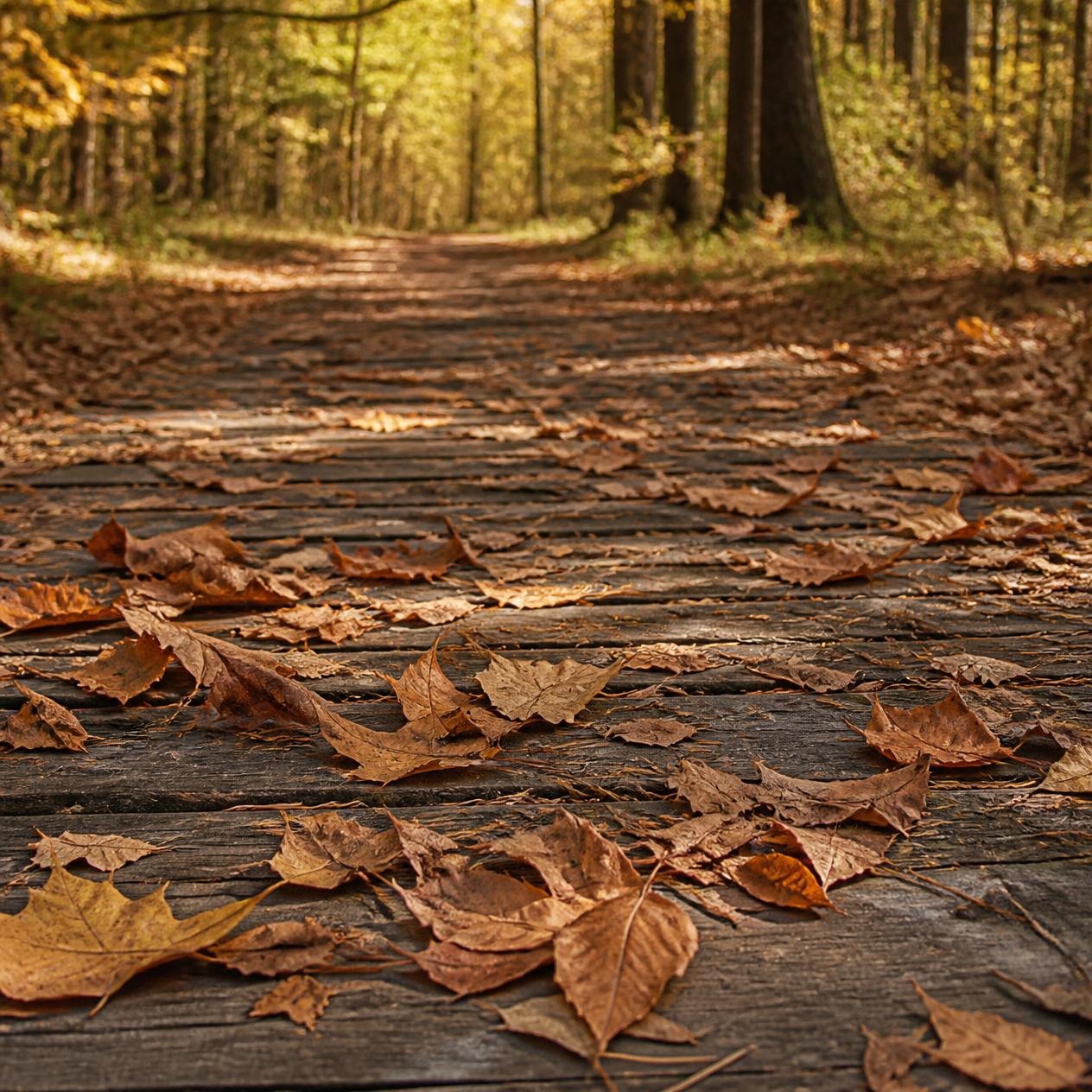
Dry leaves crunch not because their color changed. Water left, the leaf thinned, and when you step it crumples so air in the gaps rushes out in short sounds. Wet leaves on the same path stay much quieter.
Dry out, then turn crisp
A fresh leaf is full of water, so it bends without tearing easily. In autumn that water leaves, and what remains is a thin film with empty pockets—much like a cracker after drying. Observations show cells shrink and spaces between them grow as leaves dehydrate. Color change and sound often coincide, but the sound comes after the water is gone. Even a yellow leaf goes quieter once rain soaks it, so pigment alone is not the cause.
A step collapses the gaps
When your foot lands, dry leaves crumple in layers. Air in the gaps escapes at once, and thin films snap in a series of short sounds—that is the crunch. It is similar to crumpling wrapping paper. One leaf is soft; a pile stacks the sounds. Rubbing with a shoe also lets films scrape and lengthen the noise a little. Stiffer dry leaves also send more energy into sound when they flex.
Wet leaves stay quiet
After rain, fallen leaves take water back in and soften. They crumple without snapping, and gaps filled with water release less bursting air. So the same path sounds different on a clear day and after rain. The idea that bugs inside move all at once is a myth—dry leaves crunch when you crumple them with no insects at all. Try it by hand: only the dry ones shatter with sound.
On an autumn walk
After a few dry days before rain, park paths rustle especially loudly. Leaves that soak and dry over and over can crumble into mulch and dull the sound. Pick up a dry handful, crumple it, then walk the same spot after rain—the difference is obvious. You do not need to treat color alone as 「the sound of autumn」. Sweeping a pile is loud on dry days and mostly slippery and quiet when wet.
Related reads
The crunch is not about color—it is dry leaf gaps collapsing underfoot.
Notes and references · Sancho-Knapik et al. 2011 J Exp Bot; Yokoi 2022. Cell shrinkage and larger intercellular spaces in dehydrating leaves (Sancho-Knapik et al.) and stiffer dry leaves with different sound (Yokoi) inform the background. Everyday crunch is mainly crumpling and fracture noise.
Editorial standardsReport an error
Quick quiz