No. 124Health3 minviews 34
Published by GK Library Annex
Why does your foot tingle after sitting cross-legged?
After sitting a long time, your foot feels like someone else's, then starts to prickle. 「The blood stopped」 is only about half right.
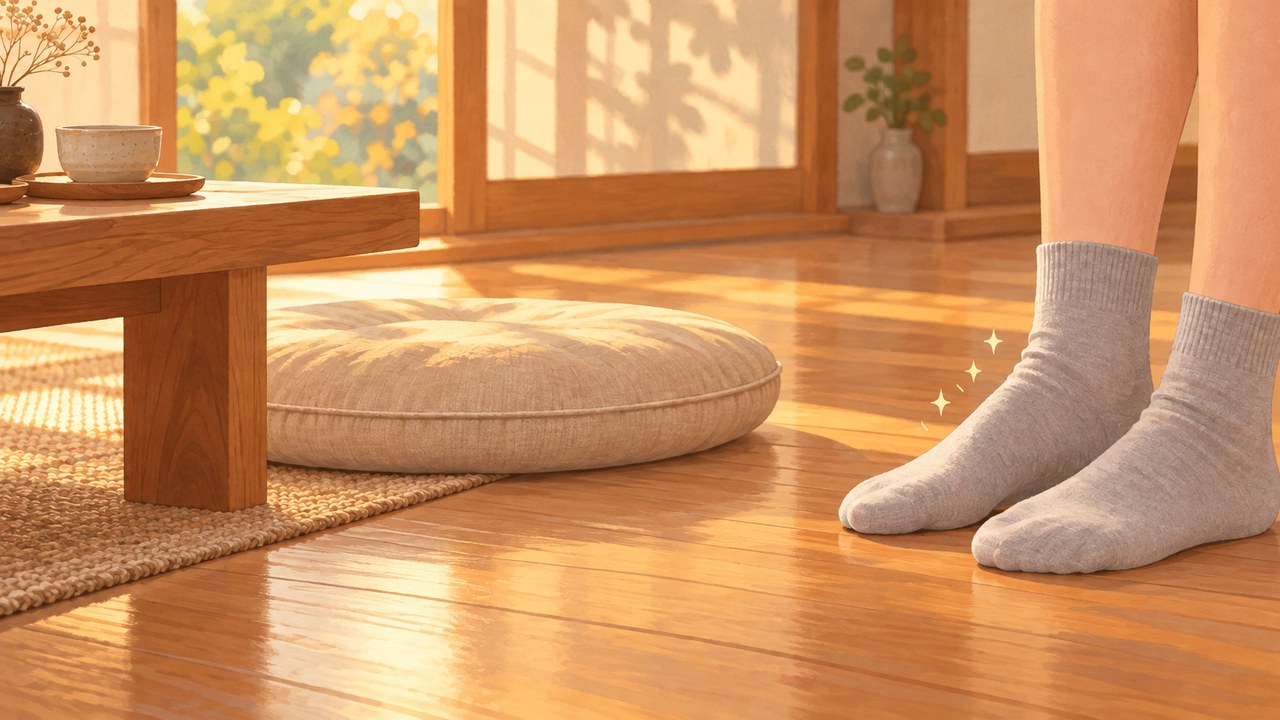
When your foot tingles after sitting cross-legged for a long time, it is less that blood stopped flowing through your whole leg and more that a nerve squeezed by your body weight briefly can't send its signals properly. Once the pressure is gone, the nerve wakes up again, and a pins-and-needles feeling lasts for a few minutes.
What happens where it is pressed
In thin spots such as the back of the knee or the outside of the ankle, nerves run close to the skin. When your weight presses there for a long time, both the nerve and the tiny blood vessels that feed it get squeezed, so the signals carrying feeling from your foot to your brain keep cutting in and out. That is why the foot first goes dull, as if it belonged to someone else.
The UK's National Health Service (NHS) explains it as the blood supply to the nerves being cut off, while a Harvard Medical School health blog points to pressure on the nerves. They describe the same scene from two sides, and in neither case has blood stopped in the whole leg.
Why standing up tingles more
When the pressure lifts, blood flows again, and the nerves that had gone quiet fire off a flood of signals all at once. Your brain reads them as prickling or a ticklish buzz. In English we say 「my foot fell asleep」, yet the uncomfortable part is really the moment it wakes up.
The zing that runs to your little finger when you bang your elbow on a corner is similar. A nerve passes right under the skin there, so a single hard knock sends signals shooting out.
Not the same as 「jwiga natda」
Many Koreans describe a tingling leg with 「jwiga natda」 (literally 「a mouse came out」, the everyday phrase for a cramp), but the dictionary defines 「jwi」 as a muscle in part of the body suddenly contracting so it briefly stops working. If a calf that knots up hard and hurts is a cramp, tingling is the side where feeling goes dull and prickly.
There is also a saying that you should dab saliva on the tip of your nose when your leg goes numb, but there is no evidence that saliva helps the nerve recover faster. It only seems to work because it lines up with the few minutes it takes to pass on its own.
Sitting and standing with less tingling
When you sit on the floor for a long time, stretching your legs out now and then or shifting position keeps the same nerve from staying pressed.
If your foot has already gone numb, don't jump up. Stay seated, roll your ankles and wiggle your toes, and stand once the feeling comes back. Stepping down on a foot you can barely feel makes it easy to twist an ankle. The NHS suggests getting the cause checked if the tingling happens often or lasts a long time regardless of position.
Related reads
A tingling foot is a signal from a squeezed nerve. Change position often, and if it tingles, loosen your ankles first and stand up slowly.
Notes and references · NHS · Harvard Health · Cleveland Clinic. Based on the NHS page 「Pins and needles」 (reviewed 2024), a Harvard Health blog post (2020), Cleveland Clinic's 「Paresthesia」 page, and the Standard Korean Dictionary entry for 「jwi」. Sources differ on whether they stress blood or nerves.
Editorial standardsReport an error
Quick quiz