No. 113Psychology4 minviews 32
Published by GK Library Annex
Glance at a clock and the second hand seems to stop
The clock is fine, yet that first second feels oddly long. There is a reason.
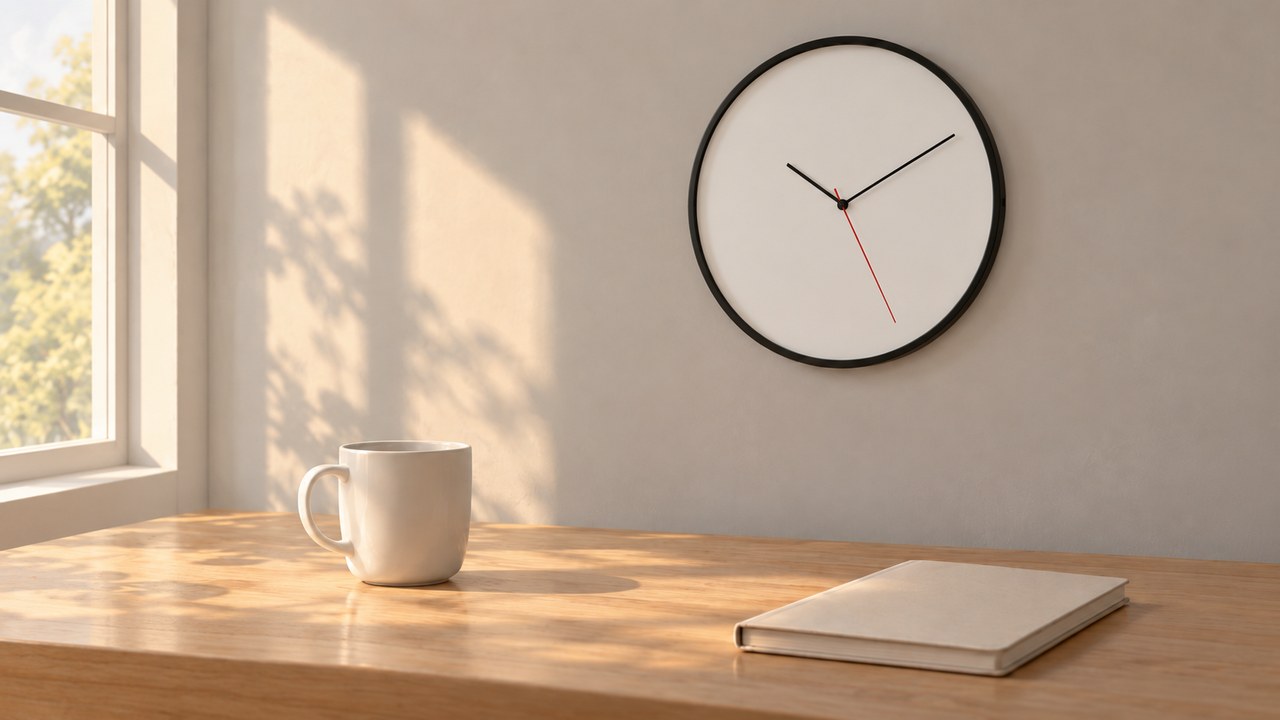
When you glance at an analog clock and the second hand seems to pause, it is not the clock but an illusion made by your brain. The brain fills in the brief moment while your eyes move to the clock, so the first second you see feels longer than it really is.
The gap while your eyes move
Our eyes do not glide; they hop from one spot to the next. Each jump takes only about a tenth of a second, and the brain mostly erases the blurry view during it. That is why the world does not smear when you move your eyes.
But the brain does not leave that gap empty. It pastes in the view at the landing spot as if you had been seeing it since the moment your gaze set off. When you look at a clock, that extra time is added to the first second of the second hand, so it feels unusually long.
Measuring the illusion
In 2001, a team at University College London published measurements of this illusion in Nature. Participants moved their eyes to a digit display, and the researchers found when the first digit felt as long as the one-second digits that followed.
Even when the first digit was shown for only 0.8 to 0.9 seconds, people felt it lasted a full second. When the eyes traveled farther and took longer, the illusion grew by about the same amount. The team explained that this happens every time we move our eyes, but we notice it only when something like a second hand gives us a time reference.
Is it the battery?
When the second hand seems to stop, it is easy to think the clock battery has died or that you zoned out for a moment. Neither is true. If anything, it is a sign that your eyes moved just as they normally do.
Something similar happens with hearing. If you wait for a phone to ring through, get distracted, and then listen again, the silence before the next tone can feel so long that you think the line is dead. In 2002, a British team showed in experiments that this illusion appears when attention shifts from one ear to the other.
Checking it properly
If you want to know whether a clock has really stopped, skip the first tick and watch two or three more. From the second tick on, the illusion is gone and the hand moves at its usual pace. If you had been looking at the clock from the start without moving your eyes, even the first tick looks normal.
To feel it for yourself, keep a clock with a second hand at the edge of your view, look elsewhere, then flick your eyes to the clock. The seconds digits on a phone screen can give a similar feeling.
Related reads
The first second that seems frozen is an illusion: the brain fills the gap while your gaze moves. To see whether the clock really stopped, watch two or three more ticks.
Notes and references · Yarrow et al. 2001, Nature. What is seen right after an eye movement feels longer (0.8-0.9 s felt like 1 s, more for longer moves). Hearing version: Hodinott-Hill et al. 2002. Varies by person.
Editorial standardsReport an error
Quick quiz