No. 58Everyday life3 minviews 37
Published by GK Library Annex
Why does a kettle get quieter just before it boils?
A kettle is not loudest at a full boil. What changes inside the water when the sound eases?
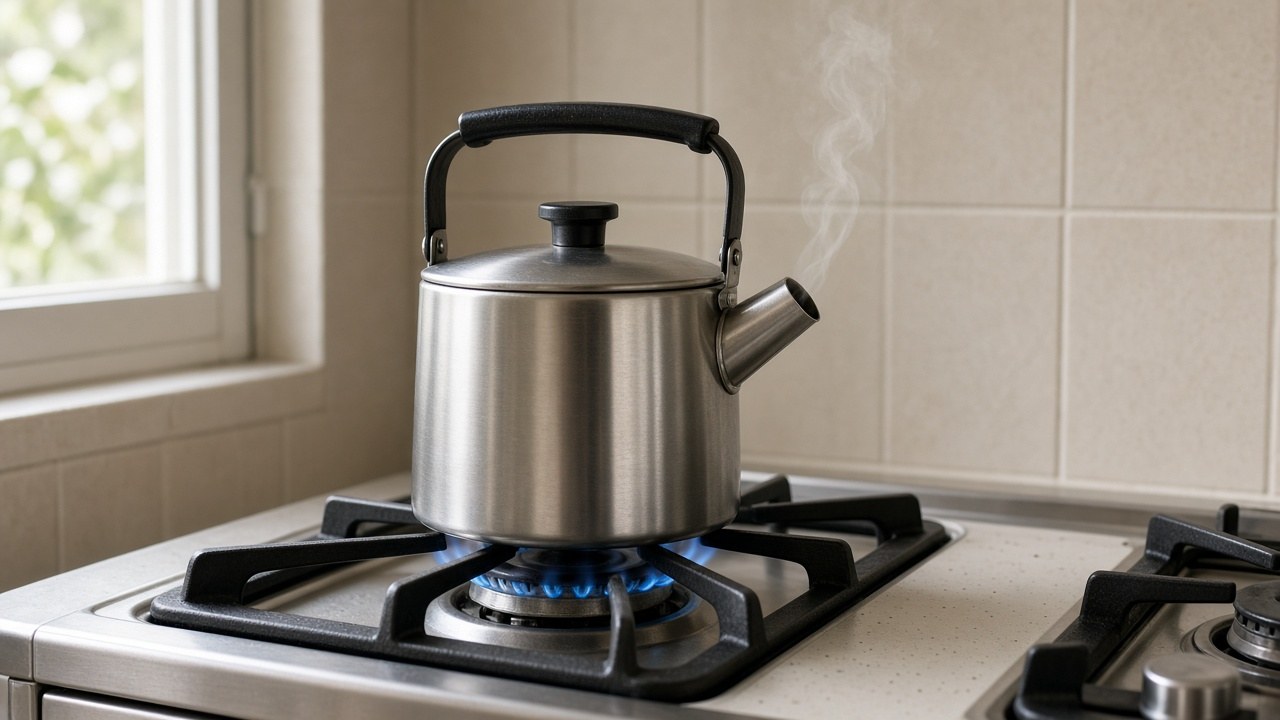
A kettle is loudest a little before the water reaches a full boil. Steam bubbles from the bottom collapse as soon as they meet cooler water above, making noise. When all the water nears boiling point, the bubbles no longer collapse on the way up, and the sound subsides.
What makes the hiss
The bottom over the flame soon exceeds 100°C, turning the nearby water to steam and forming small bubbles. But the water those bubbles rise into is still lukewarm. When the steam inside cools and instantly turns back into water, each bubble sharply collapses inward. These small shocks make the kettle walls ring, producing a hissing sound.
It is easy to think the lid is rattling or the flame is beating the bottom. Studies found that much of the noise comes from steam bubbles forming and collapsing together with the vessel ringing. As bubbles collapse one after another, those vibrations stack and sound louder.
When the sound subsides
As the water heats evenly and the upper water nears boiling point, bubbles no longer disappear on their way up. Larger bubbles reach the surface and burst, making a much softer sound than collapsing underwater. The sharp hiss therefore fades and changes into a low bubbling sound.
A quieter kettle does not mean the flame has weakened. It is closer to a signal that the water has almost boiled. You can use that change in sound as a cue to turn off the gas or lift the kettle. Even with an electric kettle that shuts off on its own, you may notice a similar brief quieter stretch right before it clicks.
The first tiny silvery bubbles
The tiny silvery bubbles that cling to the bottom when heating begins are air that was dissolved in the water. They quietly rise and disappear, contributing almost nothing to the noise. The really loud stretch comes later, when steam bubbles keep collapsing in lukewarm water.
Tap water and distilled water can also differ in how loud they get. The vessel's shape and how much water you pour change the resonance too, so it is not strange if every home kettle has a slightly different tone. If you only remember “louder means closer to boiling,” you can miss the moment it goes quiet.
Related reads
A quieter kettle signals that steam bubbles are no longer collapsing underwater and are reaching the surface instead.
Notes and references · Aljishi and Tatarkiewicz (1991), American Journal of Physics. The paper reports that much of a kettle's noise comes from steam bubbles forming and collapsing together with the vessel's resonance. Loudness varies with the vessel's shape and the water used, such as tap or distilled water.
Editorial standardsReport an error
Quick quiz