No. 163Nature4 minviews 9
Published by GK Library Annex
Where Does That Awful Smell Under Ginkgo Trees Come From?
It's not the leaves but the soft outer coat of seeds on female trees.
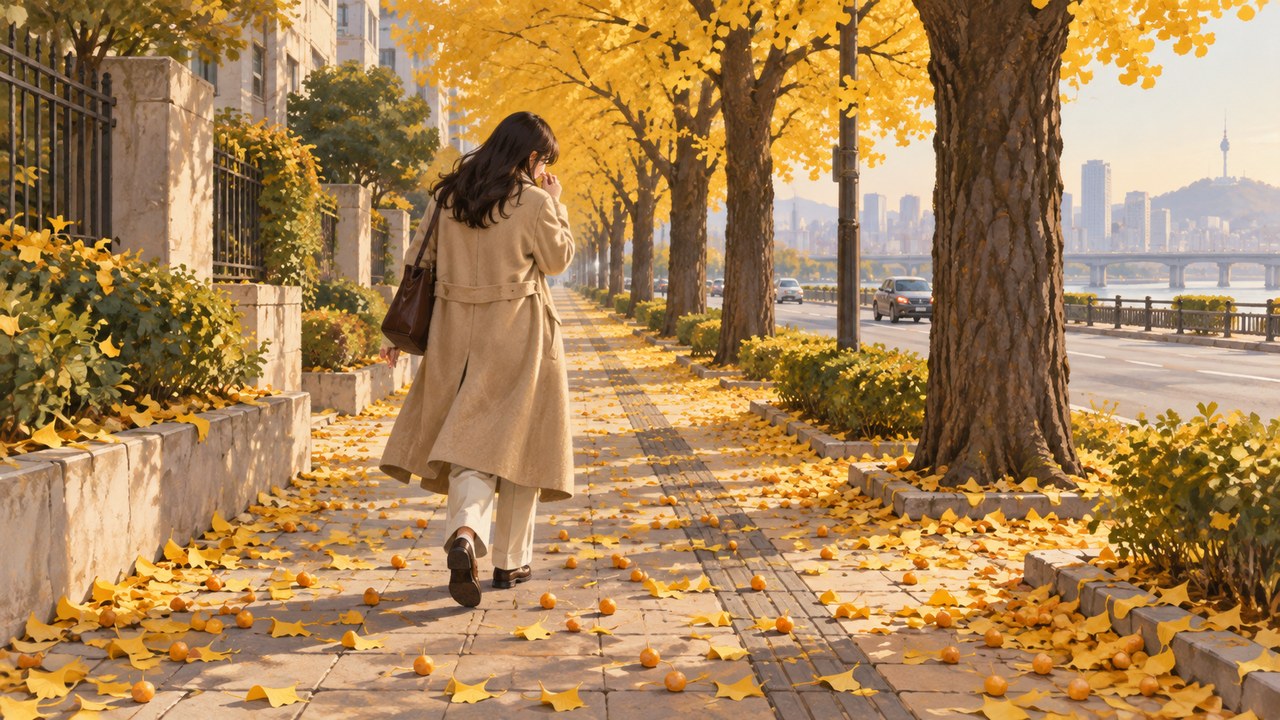
The foul smell along ginkgo-lined streets in autumn comes from the soft outer coat of the ginkgo seeds that have fallen to the ground. It's caused by substances in that coat called butyric acid and hexanoic acid, and butyric acid is the same compound behind the smell of rancid butter and smelly feet. The leaves that turn yellow give off no such smell.
Ginkgo "fruit" isn't fruit
The round balls people often call ginkgo fruit are actually seeds. The ginkgo is a gymnosperm, a plant whose seeds sit exposed like a pine's, so it doesn't make a true fruit that wraps its seeds the way apples or persimmons do. The soft yellow part is the seed's outer coat, and if you crack the hard white shell inside, you find the greenish kernel that people roast and eat.
The smell is much stronger once the seeds fall to the ground and get stepped on and burst than while they hang on the tree. When the coat is crushed, the smelly compounds spread into the air all at once.
Only female trees smell
Ginkgo trees come as separate female and male trees, and seeds grow only on the females. That's why, on the same street, the ground under one tree can reek while the spot under the tree right next to it stays clean. The catch is that a tree usually takes more than 15 years to start bearing seeds, so it's hard to tell a young tree's sex just by looking at it.
For this reason, Korea's National Institute of Forest Science developed a way to tell the sexes apart from leaf DNA, and some local governments now choose male trees for new street plantings or replace female trees. There's still no settled answer on why the smell evolved. One explanation is that it drew animals that liked the smell to eat the seeds and carry them off, but that hasn't been confirmed.
Good to know before picking them up
The outer coat also contains substances that can make bare skin itchy, red, and swollen. Wear gloves when you pick up or clear away the seeds, and rinsing the bits stuck to your shoe soles with water keeps the smell from following you home. You don't need to avoid the trees just because of the smell. Ginkgos resist exhaust fumes and pests and live a long time, so they've been widely planted as city street trees, and under male trees only yellow leaves fall all autumn, with no smell.
The kernel can also make you sick if eaten raw or in large amounts at once. Children in particular have had symptoms like vomiting or seizures after eating less than an adult would, so it's best to eat them cooked and only a few at a time.
The ginkgo smell comes from compounds like butyric acid released when the outer coat of female trees' seeds bursts.
Notes and references · National Institute of Forest Science ginkgo sex DNA test. The main odor compounds in the ginkgo seed coat are butyric and hexanoic acid. Why the smell evolved remains open, with only competing hypotheses.
Editorial standardsReport an error
Quick quiz