No. 122Everyday life3 minviews 38
Published by GK Library Annex
Why do cut apples turn brown so fast?
Lunchbox apple slices often look different by noon. Spoiled—or something else?
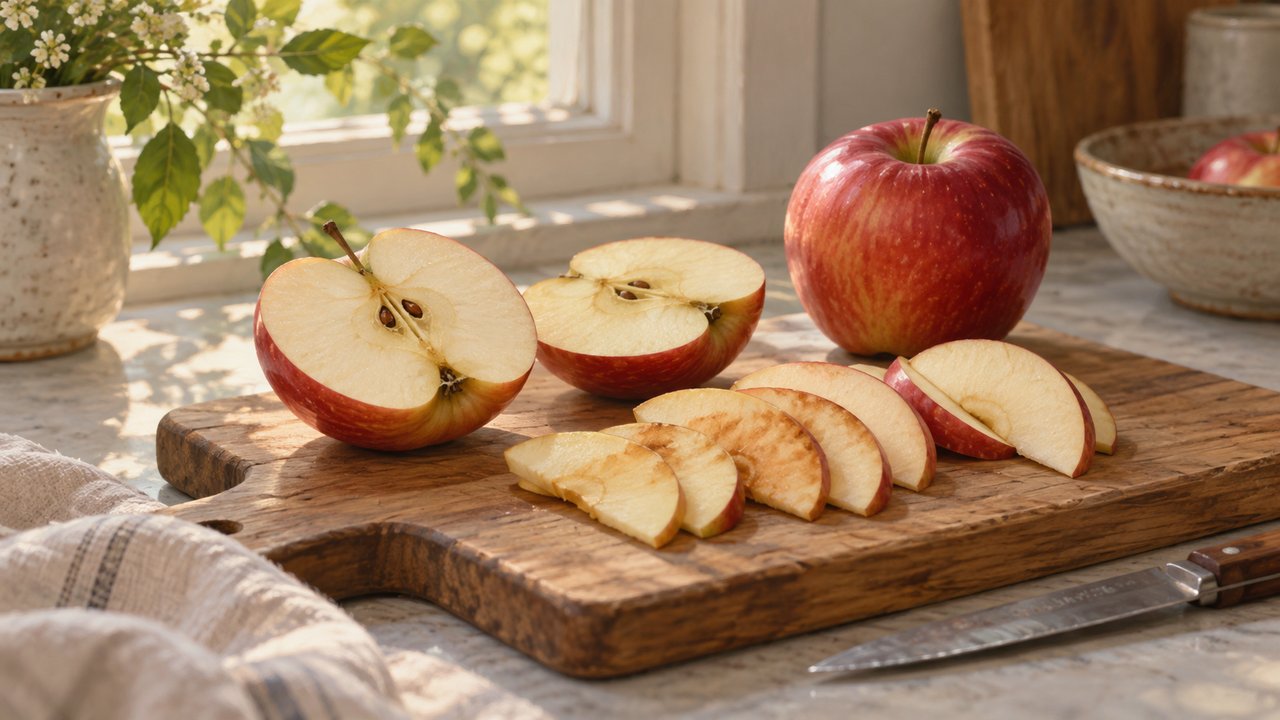
Cut apples turn brown because oxygen in the air meets an enzyme already inside the fruit. When cells break open, the enzyme and related compounds meet oxygen and make brown pigments. That is why the surface starts to look dull and yellowish. It is not spoilage at first—just color forming where air touched the flesh.
When oxygen meets the enzyme
Slicing or biting an apple breaks cells. Then an enzyme called polyphenol oxidase meets oxygen from the air and reacts with phenolic compounds in the apple. Food scientists call this enzymatic browning. As the reaction continues, brown pigments similar to melanin build up on the surface—the color we know. Varieties brown at different speeds because enzyme and compound levels differ. Even on one apple, a bruise darkens first because that spot meets oxygen sooner.
Brown does not mean spoiled
This browning itself is not harmful. Texture can soften and the look may be less appealing. Lunchbox slices that brown by noon are often still fine to eat if they were stored safely. 「Changed color」 is not the same as 「gone bad.」 If the smell is off or the flesh is mushy, throw it out. Browning is mostly a surface change, not instant decay.
Lemon juice and cold slow it down
A common home fix is a light coat of lemon juice. Higher acidity lowers enzyme activity, and vitamin C reacts with oxygen first, delaying browning. Soaking in water or wrapping to limit air also helps. The fridge slows the reaction because lower temperature means a slower rate. That is handy when you cut apples ahead for a picnic. Strong lemon can taste sharp, so a short dip in diluted juice works well too.
Bananas and pears follow a similar path
The same kind of enzyme reaction shows up in pears, bananas, potatoes, and more. Brown spots on a peel or a dark cut face share that pattern. In tea and coffee, browning can even help flavor. On apples it often looks unwelcome, but the principle is the same meeting of oxygen and enzyme. So the feeling that 「air touches it, color shifts」 shows up across many foods.
Related reads
Brown on a cut apple is oxygen meeting an enzyme; lemon juice, chilling, and less air slow it down.
Notes and references · UMaine Extension · Illinois Extension. University of Maine Cooperative Extension Fruit Science “The Brown Apple Project” (polyphenol oxidase + oxygen → melanin) and Illinois Extension “Tips for Preventing Apples from Turning Brown” (lemon juice / vitamin C slow browning).
Editorial standardsReport an error
Quick quiz