No. 83Money3 minviews 33
Published by GK Library Annex
Can a banknote left in your pocket survive the washing machine?
Notebook paper falls apart quickly when it gets wet, but banknotes are a different story.
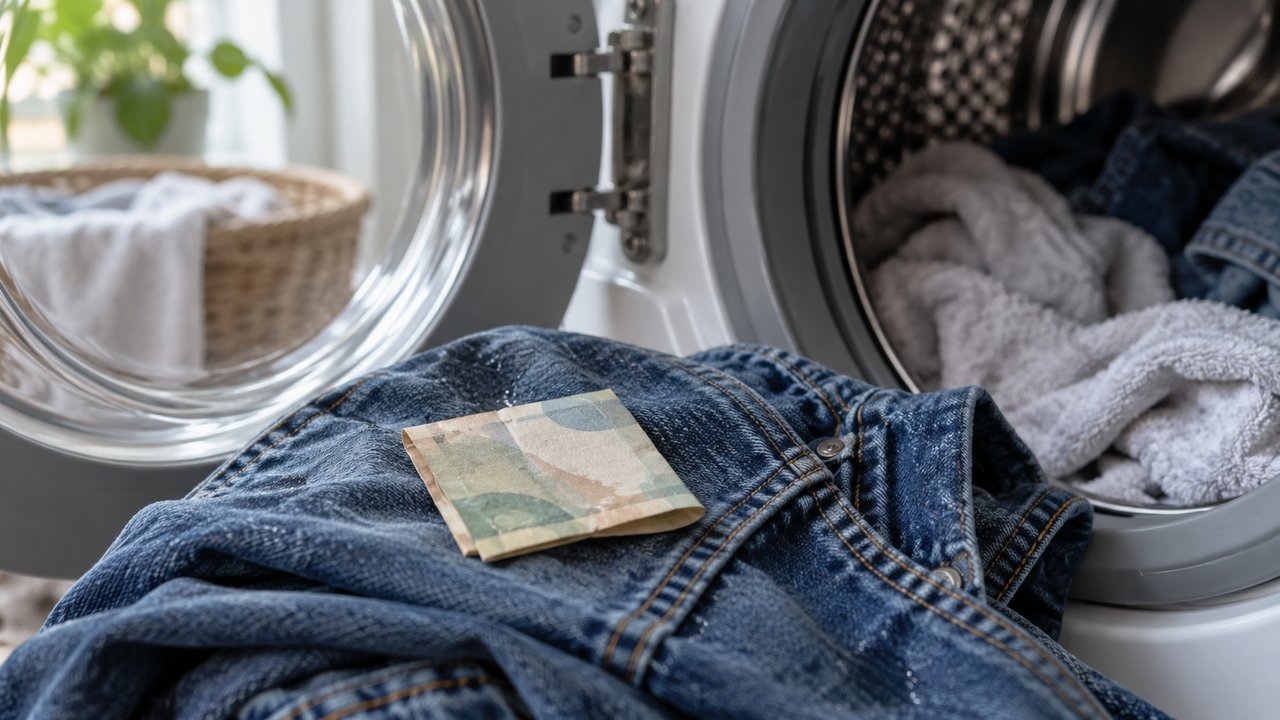
A banknote usually comes out fine after one trip through the washing machine. That's because Korean banknotes aren't made from wood-pulp paper but from cotton fiber, and in fact from 100% cotton paper.
Banknotes are closer to fabric
Notebook and copy paper are made of short wood fibers pressed together, so when they get wet the fibers easily come apart. According to the Bank of Korea, Korean banknotes are printed on pure cotton paper, with long, tough fibers tangled together like the clothes we wear. That's why they don't tear easily when wet and hold up through many hands over time.
Cotton is soft yet strong, doesn't get dirty easily, and absorbs ink well. The US and the UK sometimes blend linen into the cotton, and in 1988 Australia introduced the first plastic polymer banknotes.
A washing machine experiment
The JoongAng Ilbo once worked with Korea Exchange Bank to put banknotes from six countries through a washing machine. When the notes were washed gently in a mesh bag with water only for 50 minutes, they came out a little wrinkled, but the printing was intact.
When laundry, detergent, and bleach were added, though, the printing on some cotton notes changed slightly, and part of the shiny holograms on the 10,000-won note and the euro washed off and blurred. The plastic Australian note looked almost the same as before.
Getting wet once doesn't ruin it
It's easy to think a wet or crumpled banknote can't be used, but a note is rarely ruined by one wash. Don't force a wet banknote flat; just leave it on a flat surface to dry. Repeated detergent and friction can fade and wear it, though, so turning your pockets out before doing laundry is the surest habit.
If it's torn, what's left counts
The Bank of Korea exchanges badly damaged banknotes free of charge. For a note with both its front and back, if at least three-quarters of the original area remains, you get the full value; if at least two-fifths remains, you get half; anything less is void. When a note is in pieces, only pieces that can be seen as parts of the same note are added together.
Notes that are easy to judge can also be exchanged at a nearby bank, including Nonghyup, Suhyup, and post offices. So don't throw away any pieces; bring them all.
Related reads
Banknotes are made from cotton fibers, so they don't easily fall apart when wet. Detergent can still damage the printing and holograms, though.
Notes and references · Bank of Korea · damaged-currency rules · JoongAng Ilbo. Banknote material (pure cotton) and the introduction of polymer notes follow the Bank of Korea's article on changing ideas about paper money; exchange rules follow the Bank of Korea's damaged-currency guide. Washing results come from a JoongAng Ilbo and Korea Exchange Bank test and vary with washing conditions.
Editorial standardsReport an error
Quick quiz