No. 256Health4 minviews 182
Published by GK Library Annex
What is the white half-moon at the base of your nail?
Clear on the thumb but barely visible on the little finger, this half-moon is actually a peek at the place where your nail is made.
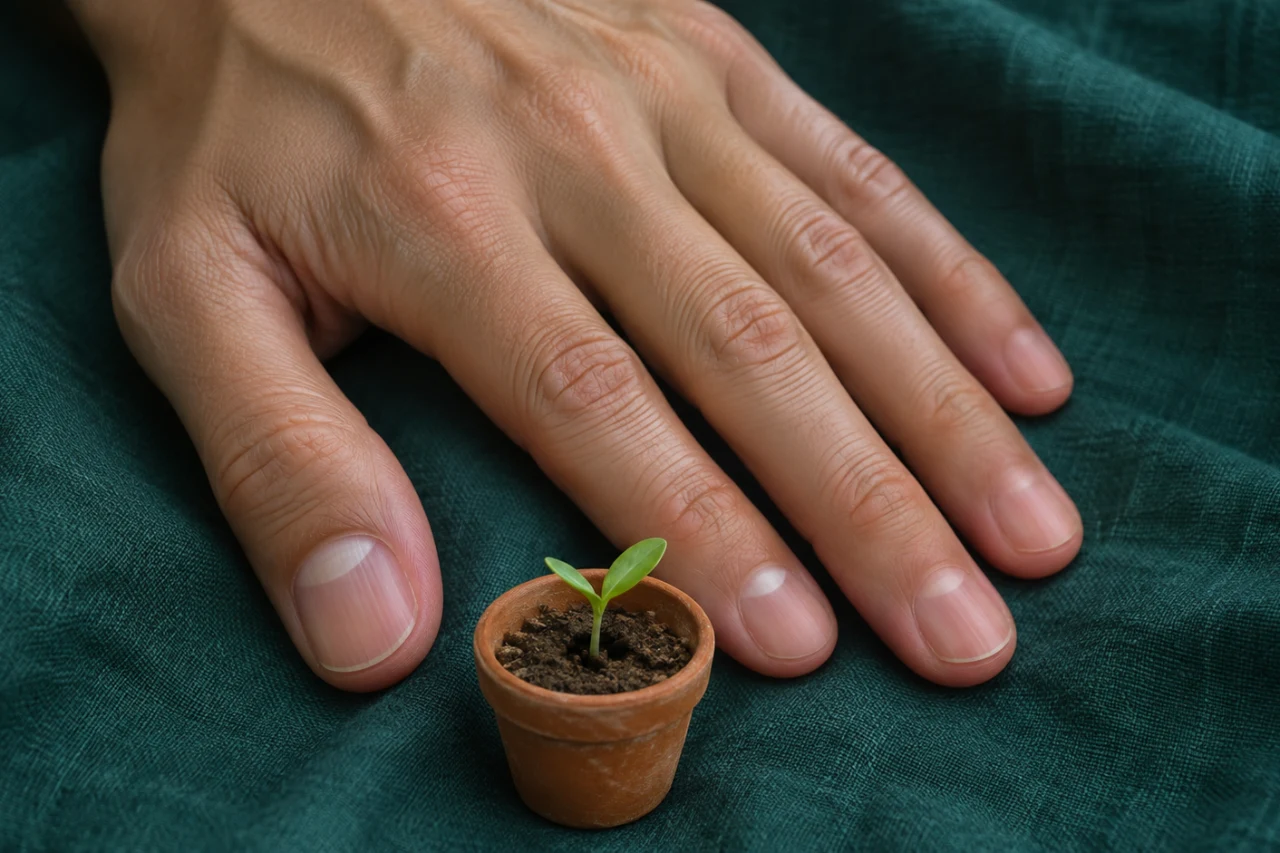
Look closely at your fingernails and you may spot a milky half-moon near the base. It is clear on the thumb but hard to see on the little finger, and its size varies from person to person. This half-moon is not a pattern on top of the nail; it is the part where the nail is made, peeking out slightly. It is called the lunula, Latin for "little moon," and in Korean it is commonly called 손톱 반달 ("nail half-moon") or 조반월.
Where nails are born
Nails are made in the nail matrix, which lies hidden under the skin. New cells form there nonstop, harden into a tough plate of keratin and are pushed forward little by little. Most of the matrix is tucked under the skin that covers the base of the nail, and the spot where its front edge shows through the nail plate is the half-moon.
Cleveland Clinic in the United States describes the lunula as the only visible part of the matrix. Pushed out from here, fingernails grow about 3 mm a month and toenails about 1 mm. That is why a serious injury to the half-moon area, that is, the matrix, can leave grooves or ridges in the nail that grows back, or in severe cases keep part of it from growing back at all.
Why does it look white?
Most of the nail looks pink because the pink nail bed, rich in blood vessels, shows through the transparent nail plate. The cells that make up the nail plate have lost their nuclei and hardened flat, so light passes through them easily.
The half-moon is a different story. Researchers point to several reasons at once. First, the cells here have not fully hardened and still keep their nuclei, so they may scatter light and look cloudy. Second, the outer layer of the matrix is thick, so less of the red from the capillaries below shows through. There is also an explanation that the nail plate is thinner here and less firmly attached underneath, so light reflects at that boundary. Rather than a single cause, several factors may work together.
It is fine if you cannot see it
The half-moon is easiest to see on the thumb, the index finger and the big toe, and it often gets smaller or disappears entirely toward the little finger. According to Cleveland Clinic, everyone has lunulae, but they can be hidden under the cuticle and the skin at the base of the nail, and they may also shrink with age. In a 2014 study, 6 of 168 healthy people examined for comparison (about 3.6%) had no visible half-moon on any of their ten fingers.
Not seeing the half-moon does not mean something is wrong with your health. If you have no other symptoms, there is usually no need to worry. However, if the half-moon noticeably turns red, blue or brown and you also have other symptoms, it is better to see a doctor rather than guess from the color alone.
The nail half-moon is the part of the nail matrix, where nails are made, that shows through the nail plate. Many people cannot see it, and on its own it is usually nothing to worry about.
Notes and references · Cleveland Clinic, Half-Moon Nails (Lunulae). A resource explaining that the lunula is the visible part of the matrix and may not be visible depending on the cuticle and age. StatPearls on nail anatomy and histology and the study by Gahalaut et al. (2014) were also consulted.
Editorial standardsReport an error
Quick quiz