No. 257Numbers4 minviews 139
Published by GK Library Annex
Why does a piano have 88 keys?
The first pianos had only 54 keys. A history of widening range, plus the limits of our hearing, produced the number 88.
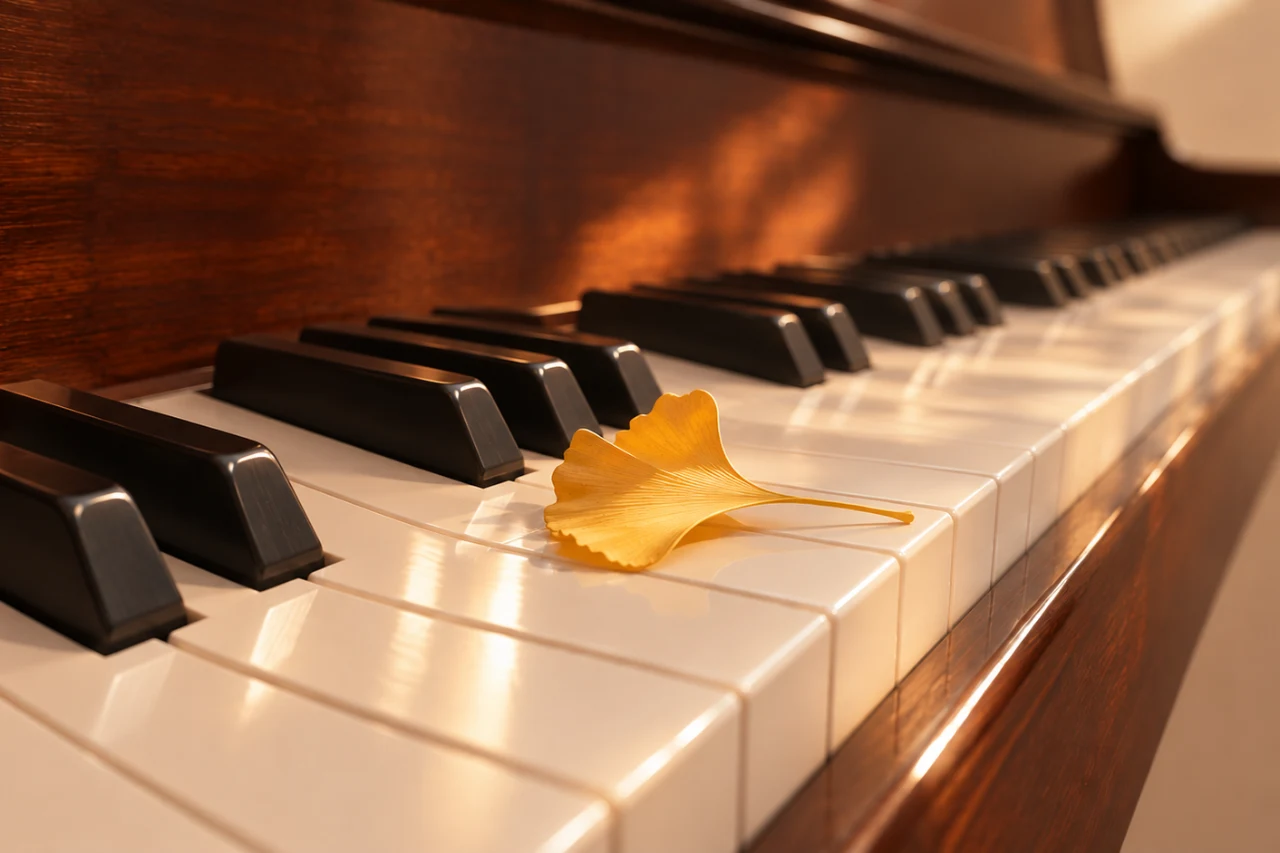
Sit down at a piano and you will find 52 white keys and 36 black keys, 88 in all, lined up side by side. Yet the very first pianos were much shorter than this. Why the keys gradually multiplied and then stopped at 88 has to do with both changes in music and the human ear.
It started with 54 keys
The piano was first built around 1700 by Bartolomeo Cristofori, an instrument maker in Florence, Italy. The oldest piano that survives today is a 1720 instrument owned by the Metropolitan Museum of Art in the United States, and it has only 54 keys. A record from 1700 also describes his instrument as having a range of four octaves.
Even in the late 18th century, when Mozart was active, the typical piano had a range of about five octaves. Placed beside a modern piano, it would look as if a good chunk of the low notes on the left and the high notes on the right had been cut off.
A range that grew octave by octave
As the 19th century began, composers and performers wanted lower and higher sounds, and makers gradually added keys at both ends. It also helped that piano bodies became sturdy enough to hold strings pulled at much greater tension.
An 1827 piano by the English firm Broadwood, held by the Metropolitan Museum of Art, has a range of six and a half octaves. Then, in 1868, the American firm Steinway & Sons made the "Style 2" grand piano, the company's first to have the now-standard 88 keys. After that, 88 keys gradually spread and became today's standard.
Why it stopped at 88
On an 88-key piano, the lowest note is A (A0), which vibrates about 27.5 times per second, and the highest is C (C8), which vibrates about 4,186 times per second. That spans seven octaves plus a few keys. Sounds lower than this tend to come across as a rumbling hum rather than a clear pitch, and higher sounds end so quickly that they are hard to hear as melody. That is why the fact that extra keys would almost never be used in real pieces is often cited as the reason for stopping at 88.
There are exceptions. The "Imperial" by the Austrian maker Bösendorfer has 97 keys, a full eight octaves. According to the company, it began in Vienna in 1900, when the composer Ferruccio Busoni, while transcribing Bach's organ works for piano, felt he needed lower notes. The added low strings are said to resonate even when other keys are played, enriching the sound.
Piano keyboards started at 54 keys and kept widening their range, and around Steinway in 1868, 88 keys took hold as today's standard.
Notes and references · The Metropolitan Museum of Art, notes on its piano collection. We checked the 54-key 1720 Cristofori piano, the five-octave range of the late 18th century, the six-and-a-half-octave 1827 Broadwood, and Steinway's first 88-key piano in 1868. We also consulted Bösendorfer's description of the 97-key Imperial.
Editorial standardsReport an error
Quick quiz