No. 92Everyday life3 minviews 48
Published by GK Library Annex
Does turning on a fan lower the room temperature?
On a hot afternoon, sometimes a fan is enough to make things bearable.
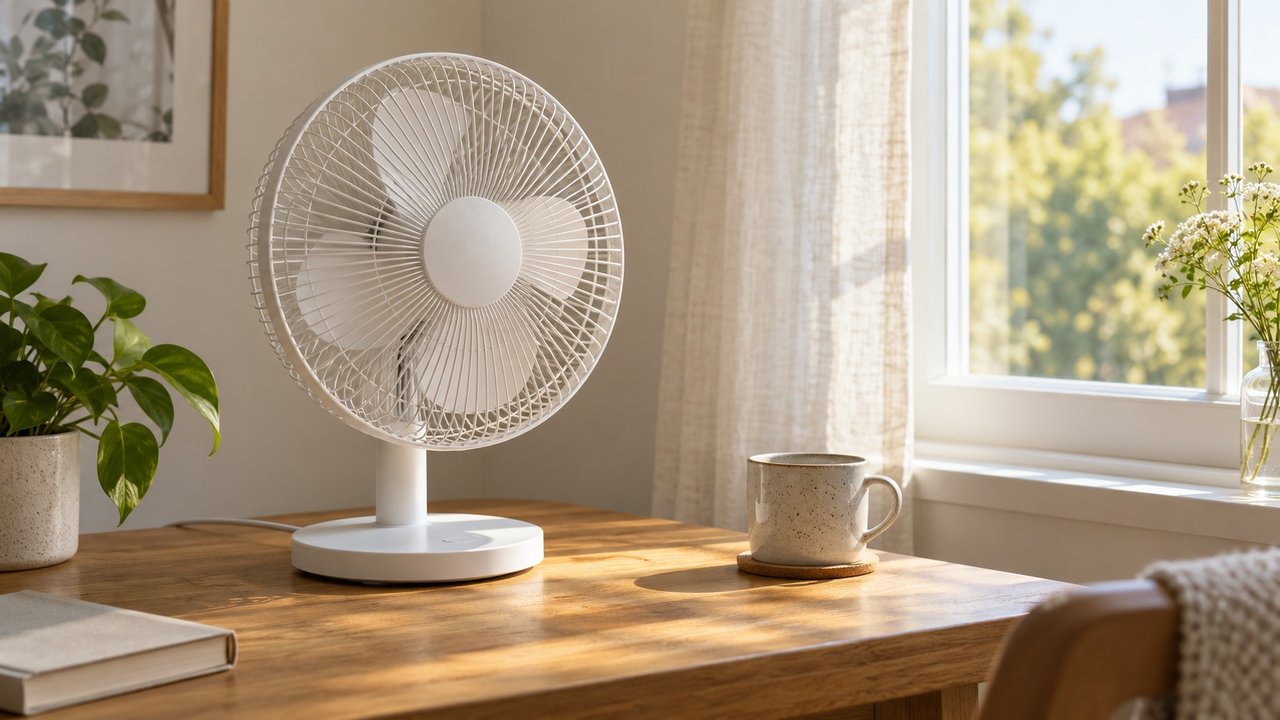
A fan barely lowers the temperature of the air in a room. You feel cooler because the breeze pulls heat away from your body faster. The U.S. Environmental Protection Agency (EPA) also explains that fans don't cool the air; they move it around and help your sweat evaporate.
It pushes away warm air next to your skin
When you sit still, a thin layer of air warmed by your body stays right next to your skin. A fan's breeze sweeps that layer away, and when the room's less-hot air brushes your skin, heat escapes more easily. That's why the same room feels much less stuffy once the breeze reaches you. A fan doesn't chill air like an air conditioner; it swaps out the air touching your body. Put a thermometer in front of it and the reading barely changes.
Sweat dries faster
When sweat turns from water into vapor, it takes heat from your skin. As the breeze pushes away the damp air beside your skin, evaporation keeps going and your body cools faster. It's like blowing on hot soup to cool it quickly. But when humidity is high, sweat doesn't dry well and the same breeze feels less cooling, and when the air is much hotter than your skin, a breeze can only do so much.
In an empty room, it only uses power
Many people leave a fan running when they go out, expecting the room to be cool when they get back. ENERGY STAR says fans cool people, not rooms, and recommends turning them off when no one is there. The electricity the motor uses ends up as a little heat in the room anyway. Fans are more useful alongside air conditioning. A University of Florida guide says running a ceiling fan lets you raise the thermostat by 4°F (about 2°C) without feeling warmer, and raising it by just 2°F (about 1°C) can cut cooling costs by at least 4 to 6%.
Very hot days call for something else
The U.S. Centers for Disease Control and Prevention (CDC) advises using fans only when the indoor temperature is below 90°F (about 32°C). Above that, the hot air blowing on you can actually raise your body temperature. In a heat wave, it says a cool shower or time in an air-conditioned place works better. Older adults, young children and people with heart disease should be especially careful. The EPA also advises against using a fan in a closed room, and suggests placing it to push hot air out or bring cooler outside air in.
Related reads
A fan doesn't cool the room; it pulls heat off your body. Turn it off in an empty room, and use other ways to cool down in a heat wave.
Notes and references · ENERGY STAR, U.S. CDC, EPA. Based on ENERGY STAR's ceiling fan usage tips, the University of Florida IFAS guide "Energy Efficient Homes: Ceiling Fans," the CDC's "About Heat and Your Health" and the EPA's guidance on extreme heat and indoor air.
Editorial standardsReport an error
Quick quiz