No. 242Health4 minviews 140
Published by GK Library Annex
Why do your ears feel blocked when you go up high?
The air pressure on the two sides of your eardrum stops matching. That is also why swallowing makes it clear.
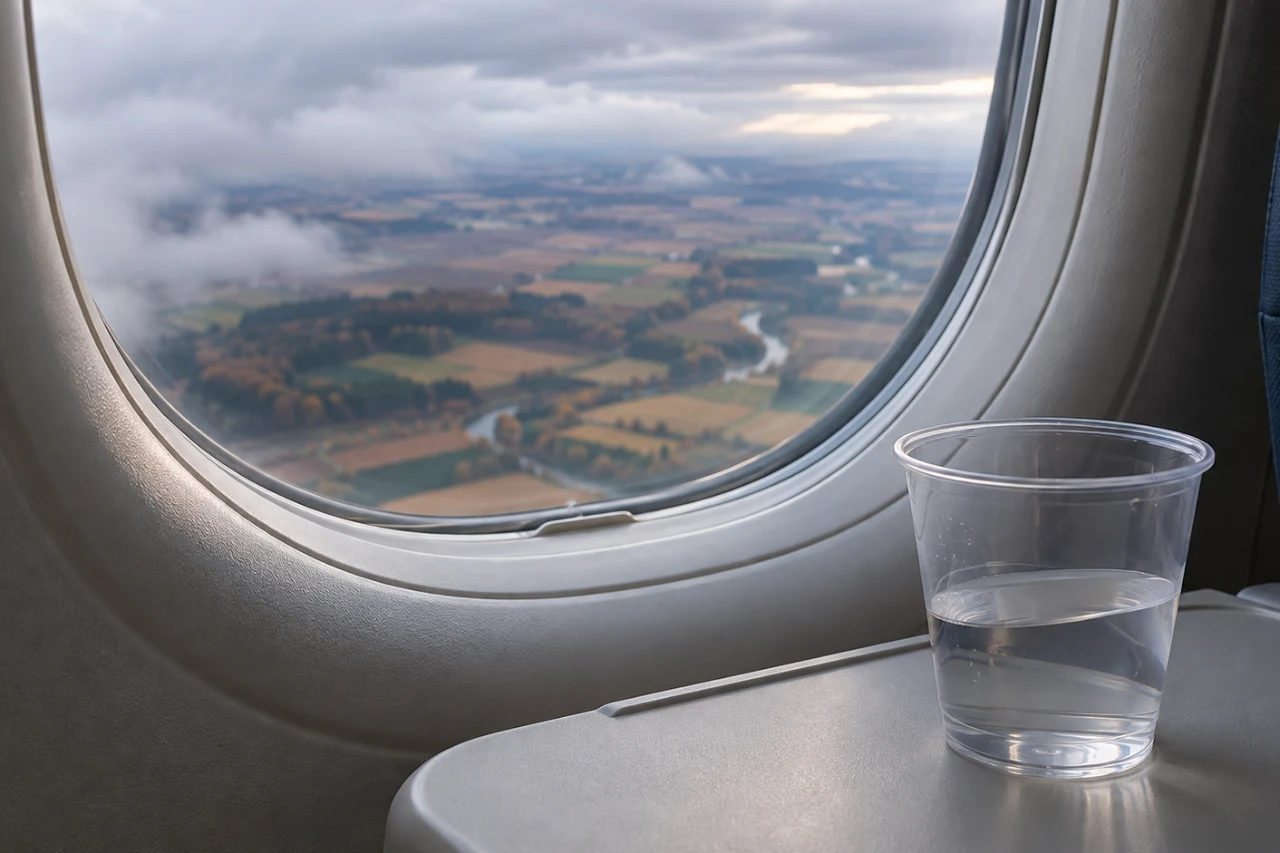
On a plane coming in to land, in the elevator of a tall building, or on a train passing through a long tunnel, your ears can suddenly feel plugged. Sounds seem far away, and then you swallow and something goes "pop." Did something suddenly block your ears? In fact, it happens because the air pressure inside and outside your ear stops matching for a moment.
Pressure on both sides of the eardrum
The ear is divided into the outer ear, the middle ear, and the inner ear. At the far end of the ear canal sits a thin membrane called the eardrum, and behind it the middle ear is a small space filled with air. The eardrum vibrates most naturally, passing sound along, when the air pressure on both sides is the same.
But air pressure changes with height. The higher you go, the less air there is pressing down from above, so the pressure drops; at about 1,000 m above sea level it is a little more than 10% lower than at the seaside. When you go up or down quickly, the outside pressure changes right away, but the air inside the middle ear stays as it was. The eardrum is then pushed slightly toward the side with lower pressure and pulled tight, so it cannot vibrate well and sounds become muffled. That is what the blocked feeling really is.
A small tube linking ear and nose
The middle ear is not a sealed room. A narrow tube connects it to the back of the nose and throat, called the Eustachian tube. It usually stays closed, but when you swallow or yawn, the muscles around it move and it opens briefly. In that moment air flows in or out, the pressure in the middle ear matches the outside again, and the eardrum springs back into place with that "pop" feeling.
Airplane cabins are pressurized, but not to the same level as the ground. They are usually kept at a pressure similar to a mountain about 1,800 to 2,400 m high. That is why your ears feel the change every time the plane takes off and lands.
Why coming down is harder
Many people find their ears feel more blocked and painful when a plane descends than when it climbs. On the way up, the air in the middle ear is at a higher pressure than the outside, so it easily pushes the tube open and escapes on its own. On the way down, outside air has to be let into the middle ear, but the tube does not open easily in that direction. So you have to open it on purpose by swallowing or yawning.
If the inside of your nose is swollen from a cold or rhinitis, the tube also opens poorly, and the blocked feeling and pain can get worse. Around landing, try not to fall asleep; chewing gum or sipping water makes you swallow often, which helps. Babies cannot clear their ears by themselves, so giving them a bottle or a pacifier during descent helps. If the blocked feeling or pain lasts more than a few days, see an ear, nose and throat doctor.
Blocked ears come from mismatched air pressure on the two sides of the eardrum. Swallowing or yawning opens the Eustachian tube and evens it out again.
Notes and references · Mayo Clinic, Airplane ear. Medical information explaining the pressure difference between the middle ear and the outside, the role of the Eustachian tube, why landing hurts more, and remedies such as swallowing and yawning.
Editorial standardsReport an error
Quick quiz