No. 241Nature4 minviews 151
Published by GK Library Annex
Why Don't Spiders Get Stuck in Their Own Webs?
They step on the non-sticky threads, touch lightly with hairy legs, and their leg surface resists glue.
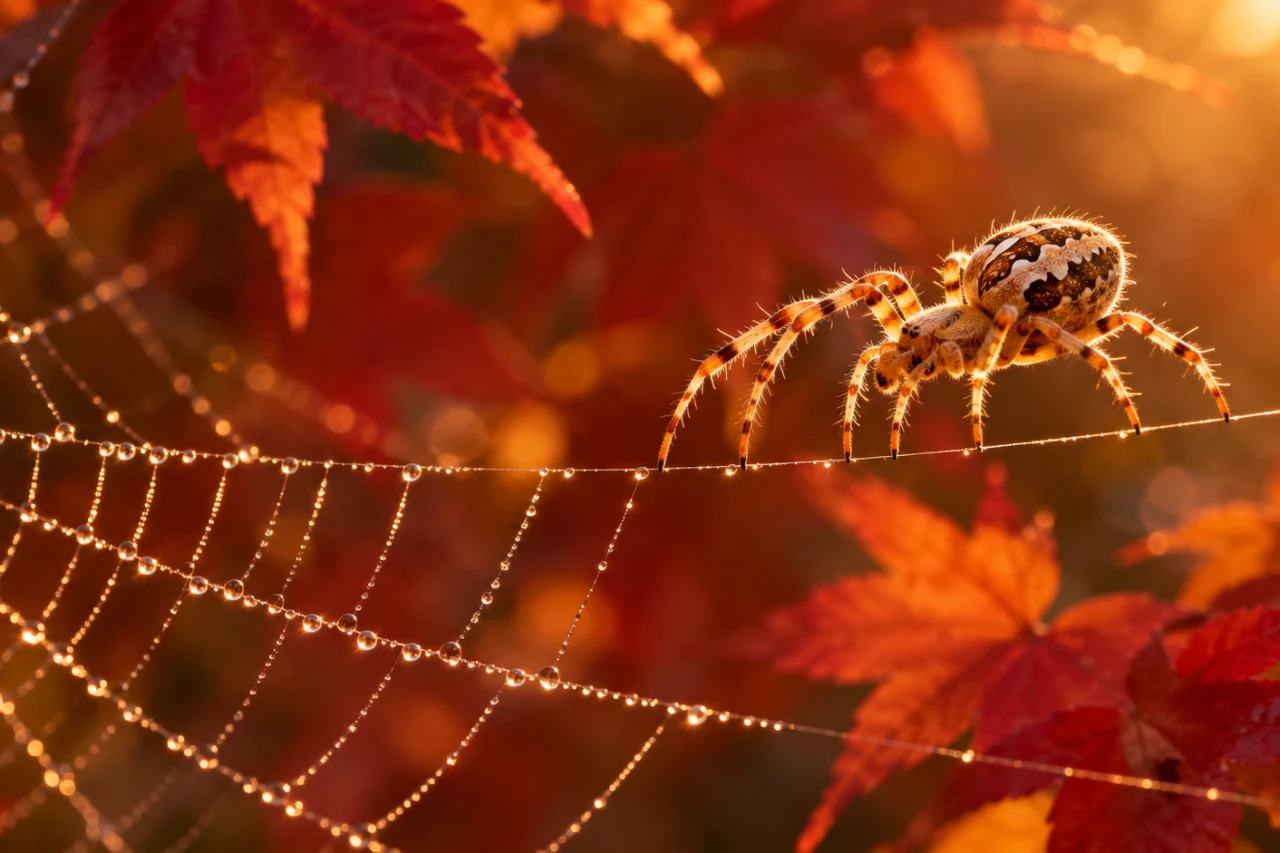
Once a small insect flies into a dewy morning web, it can rarely break free. Yet the spider that spun it strolls across the very same web. Is there one special secret hidden in a spider's legs? When researchers took a closer look, the answer turned out to be more than one thing. The structure of the web, the way the spider uses its legs, and the nature of the leg surface all work together.
Not every thread is sticky
Look closely at the round web of an orb-weaver and you'll see two kinds of silk. The radial threads that spread from the center like the spokes of a bicycle wheel, along with the outer frame, are dry silk and not sticky. What catches insects is the spiral thread wound on top of them, and this thread carries rows of tiny glue droplets strung like beads.
When a spider moves across its web, it mostly steps on the non-sticky radial threads. While waiting for prey in the middle of the web, it often stays in the central hub, which has no glue. But that doesn't fully explain it. When the spider goes to wrap its prey, or builds and repairs its web, it can't avoid touching the sticky spiral threads.
A light touch
In 2012, researchers Briceño and Eberhard closely observed how the golden silk orb-weaver, a spider of the Americas, handles sticky silk while building its web. The spider moved its legs carefully, reducing both the area and the time of contact with the sticky threads. Rather than gripping a thread with the whole leg, it briefly touched only where it needed to.
The dense hairs on its legs help too. These hairs branch into several tips at the end, so glue droplets can't spread over the leg's skin and instead cling only to the tips of a few hairs. It's similar to how tape comes off far more easily when you touch it with a fingernail tip than when you press it with your whole palm. The fewer the contact points, the easier it is to pull free.
Legs that resist sticking
The research team also ran an experiment. After washing spider legs with a solvent and touching them to sticky silk, the washed legs stuck much more readily than unwashed ones. This means the leg surface is covered with some chemical that keeps glue from sticking well. However, the study could not identify exactly what that substance is.
In short, spiders choose the non-sticky threads to step on, use hairs and movements that reduce contact, and have leg surfaces that don't stick easily. These three things combined let them move freely across their own webs. Since washed legs stuck to the silk more, it seems that without this coating, even a spider wouldn't be entirely free on its own silk.
Spiders avoid sticking to their own webs by stepping on non-sticky threads, using branched hairs and careful movements, and having a leg surface that resists glue.
Notes and references · Briceño & Eberhard (2012), Naturwissenschaften. A study that observed the leg movements and branched hairs of the golden silk orb-weaver and compared whether solvent-washed legs stuck more to sticky silk.
Editorial standardsReport an error
Quick quiz