No. 212Money4 minviews 83
Published by GK Library Annex
When Korea's 500-won coin shook Japan's vending machines
The 500-yen and 500-won coins were the same size, but one was worth about ten times more
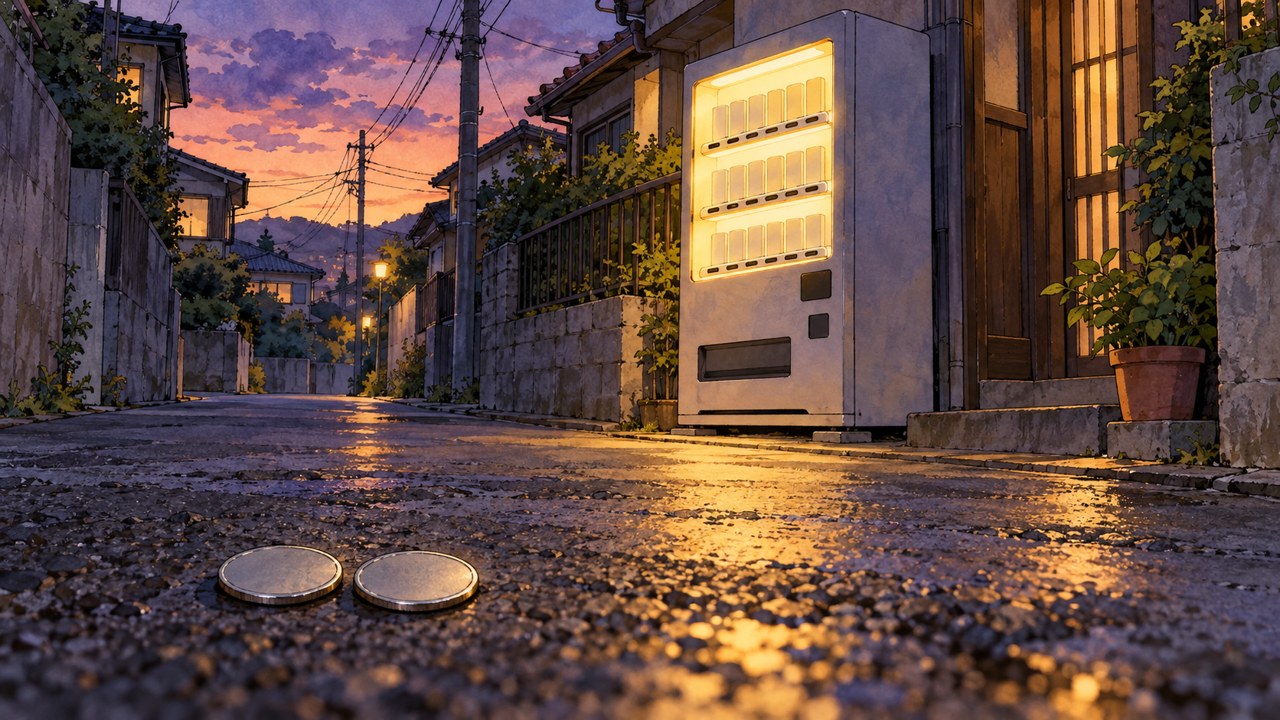
South Korea's 500-won coin and Japan's 500-yen coin have exactly the same diameter: 26.5 mm. In the late 1990s, people in Japan took advantage of this by slightly shaving 500-won coins, feeding them into vending machines, and pulling out real 500-yen coins. The scheme spread widely, and Japan eventually changed what its 500-yen coin was made of.
Two coins born like twins
Both coins first appeared in 1982. They weren't just the same size; they were also made of the same cupronickel, a mix of 75% copper and 25% nickel. Their designs differed, but vending machines at the time didn't look at the pictures. They checked things like a coin's diameter, thickness, weight, and how its metal responded electrically to decide whether it was genuine.
The difference was weight. The 500-won coin was about 0.5 g heavier. So if someone ground down the surface or drilled a small hole to match the weight, the machine mistook it for 500 yen.
Ten times the money with one press of the return lever
The trick was simple. You inserted an altered 500-won coin, bought nothing, and pressed the return lever, and the machine handed back a real 500-yen coin it had inside. Around 1999, 500 won was worth a little over 40 US cents while 500 yen was worth more than 4 dollars, so each try gained roughly ten times the value.
The Wall Street Journal, citing figures from Japan's National Police Agency, reported that about 490,000 altered 500-won coins were found in vending machines in the first nine months of 1999 alone. In 1997 in Nagano, 773 of them turned up at once in 60 vending machines near the train station. As the damage grew, about 70% of Japan's roughly 5.5 million vending machines stopped accepting 500-yen coins altogether.
A new metal ended the trouble
In August 2000, Japan's Ministry of Finance released a new 500-yen coin. It kept the same size and thickness but added zinc, turning the coin into nickel brass. A different metal conducts electricity differently, so vending machines could easily filter out 500-won coins. Machines that return the exact coin you just inserted when you press the return lever also appeared.
In 2021, the coin changed again to a two-color coin with different metals in the center and the outer ring. But the size is still the same, so news stories still occasionally report shops in Japan mistakenly accepting a customer's 500 won as 500 yen. That's also a good reason not to mix leftover coins from a trip to Japan with your Korean change.
Because the 500-won and 500-yen coins shared the same size and metal, the won coin was used to cheat Japanese vending machines, and Japan stopped it by changing the coin's metal.
Notes and references · Web Japan 2000; Wall Street Journal 1999; Japan Times 1997. The new 500-yen metal and the 70% of machines refusing the coin are from Web Japan; the 490,000 figure is from a report citing Japan's National Police Agency; the 773 coins are from a report on a Nagano police announcement. Exchange rates are rough figures for that time.
Editorial standardsReport an error
Quick quiz