No. 213Technology4 minviews 79
Published by GK Library Annex
The tiny hole in an airplane window, explained
The window has three layers, and the hole is there on purpose. It shifts the load onto the outer pane
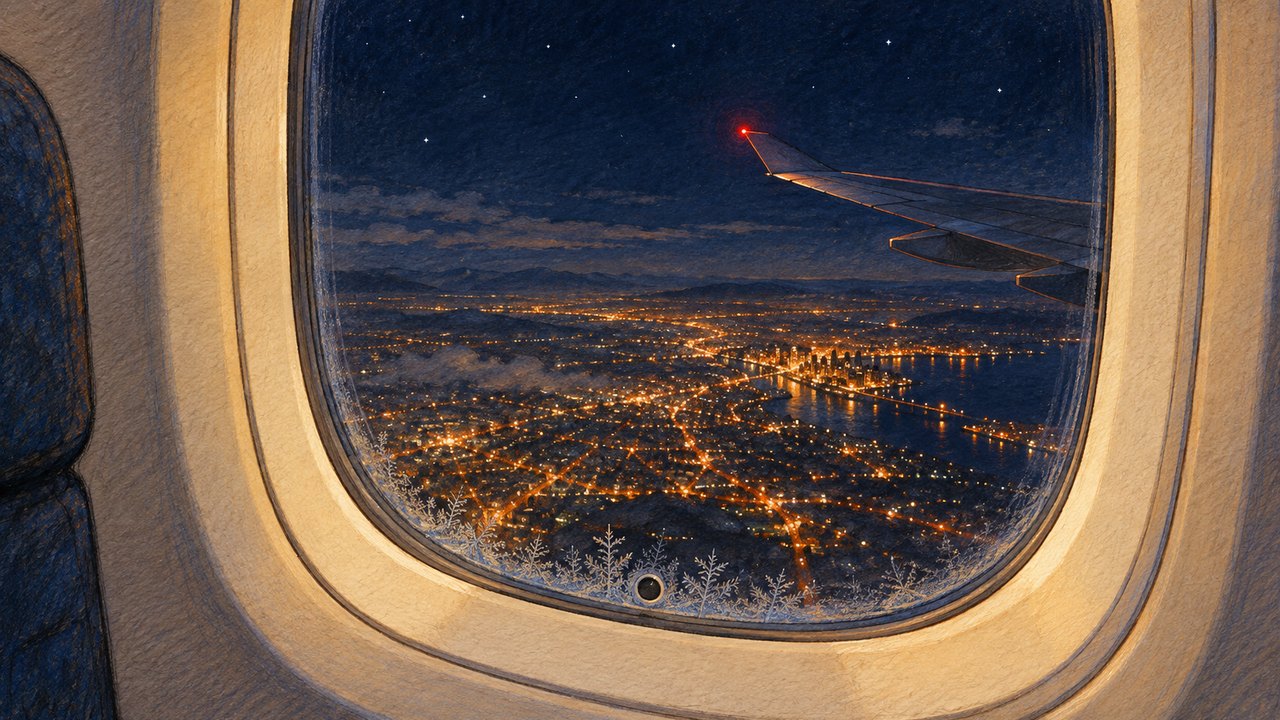
If you look closely at the window from a plane's window seat, you'll see a hole about the size of a pinprick near the bottom. It isn't a crack, and it isn't a manufacturing flaw. Airplane windows are made of several layers, and this hole is drilled deliberately because of that design.
The window actually has three layers
A passenger jet window is usually made of three clear panes of a plastic such as acrylic. The innermost pane, the one you can touch, is more like a thin cover that protects against scratches and fingerprints. Behind it are the middle pane and the outer pane. Those two are the ones that actually hold up against the forces of the sky.
The hole is in the middle pane. Because there's a small gap between the innermost pane and the middle pane, it simply looks to passengers as if there's a hole in the window.
The hole shifts the load onto the outer pane
The higher a plane climbs, the thinner the outside air gets, but the cabin is kept at a higher pressure so people can breathe comfortably. So during flight, a force pushes on the window from the inside out.
When cabin air flows in and out through the hole in the middle pane, the pressure in the gap between the middle and outer panes becomes the same as in the cabin. That means the pressure difference is carried by the single outermost pane. A technology director at window maker GKN Aerospace described the hole's purpose this way. The middle pane is also strong enough to withstand that force on its own, so if the outer pane were ever to break, it would take over. A little air would then leak through the hole, but reportedly no more than the cabin pressurization system can easily handle.
Frost patterns, and why windows are round
The hole also gives moisture trapped between the panes a way out. A Boeing engineer explained that, thanks to this, fog and frost mostly don't form. Still, outside air at cruising altitude can drop below minus 50 degrees Celsius, so on long flights a small pattern of frost sometimes blooms around the hole. It's water vapor in the cabin air freezing when it touches the cold window.
Pressure is also why the windows are round rather than square. Sharp corners concentrate force at a single point, while rounded shapes spread it out evenly. After British Comet airliners broke apart in midair one after another in 1954, the investigation pointed to metal fatigue cracks that started near the corner of an opening cut into the fuselage.
The tiny hole is drilled on purpose to put the pressure load on the outer pane and let moisture out, while the middle pane serves as a backup.
Notes and references · Slate 2015; Smithsonian How Things Fly; US patent US5884865A. The three-layer design, pressure and moisture: a Slate article quoting GKN Aerospace and Boeing staff. Round windows: Smithsonian Air and Space Museum explainer. Frost: a US patent document. Comet: summary of the 1954 accident investigation.
Editorial standardsReport an error
Quick quiz