No. 258Science4 minviews 320
Published by GK Library Annex
Why does the sea come in twice a day?
Because the Moon’s pull raises a bulge of ocean water on both sides of Earth
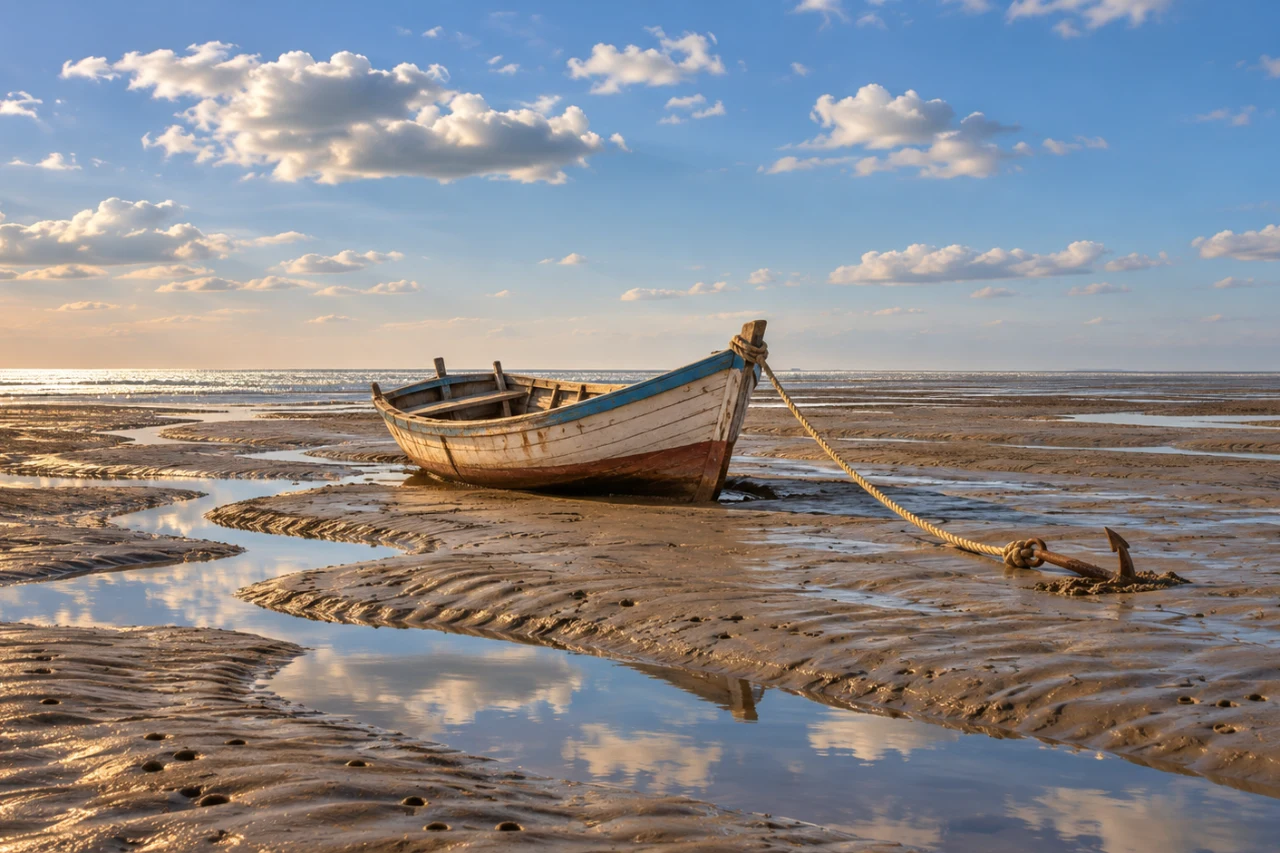
Spend a whole day by the sea and you will see the water drain away and fill back in twice. According to the U.S. National Oceanic and Atmospheric Administration (NOAA), most coasts get two high tides and two low tides every 24 hours and 50 minutes. There is only one Moon, so why twice and not once? And why is it not exactly 24 hours, but 50 minutes longer?
Two bulges: one facing the Moon, one opposite
The Moon’s gravity pulls on every part of Earth, but not with the same strength. NASA explains that the point closest to the Moon is pulled the hardest and the point farthest away is pulled the least. Because of this difference, ocean water bulges up in two places: on the side facing the Moon and on the exact opposite side.
It may seem strange that the far side bulges too. NASA explains that the water is not simply flung outward; instead, the difference in pull pushes and squeezes the water around the globe until bulges form on both the near and far sides. The seas between the two bulges are lower by that much.
Passing two bulges a day
These bulges stay roughly pointed toward the Moon while Earth turns beneath them. So a single spot on the coast passes through two bulges and two troughs in turn over a day. Passing a bulge brings high tide, and passing a trough brings low tide.
According to NOAA, high tides come 12 hours and 25 minutes apart, and it takes about 6 hours and 12.5 minutes for the water to go from its highest to its lowest. One cycle lasts 24 hours and 50 minutes rather than 24 hours because the Moon orbits in the same direction that Earth rotates. While Earth makes one turn, the Moon moves a little ahead, so a given spot must turn for about 50 more minutes to come back directly under the Moon. That is why the tides arrive about 50 minutes later each day.
The Sun helps, and the land gets involved
The Sun pulls on ocean water too. According to NASA, the Sun has about 27 million times the mass of the Moon but is about 390 times farther away, so its tide-generating force is a little less than half the Moon’s. Around the full moon and new moon, when the Sun, Moon and Earth line up, the two forces add together and produce spring tides, when the water comes in and goes out unusually far; around the first and last quarter, when the Sun and Moon are at right angles, the difference is small and we get neap tides.
Still, not every sea behaves like the textbook. NOAA explains that the presence of the continents, regional geography and features on the seafloor make real tides more complicated. Some places have two high tides of very different heights (a mixed tide), and some get only one high tide and one low tide a day (a diurnal tide). Even one location can switch patterns over the course of a month.
Because the Moon raises bulges of ocean water on both sides of Earth and Earth turns beneath them, most coasts get two high tides every 24 hours and 50 minutes.
Notes and references · NOAA National Ocean Service · NASA Science “Tides”. Summarized from NOAA’s “Frequency of Tides - The Lunar Day” and “How many high tides are there per day?” and NASA Science’s “Tides.”
Editorial standardsReport an error
Quick quiz