No. 234Technology3 minviews 56
Published by GK Library Annex
Why traffic lights are red, yellow, and green
Railroad color rules moved onto roads; yellow came later as speeds rose.
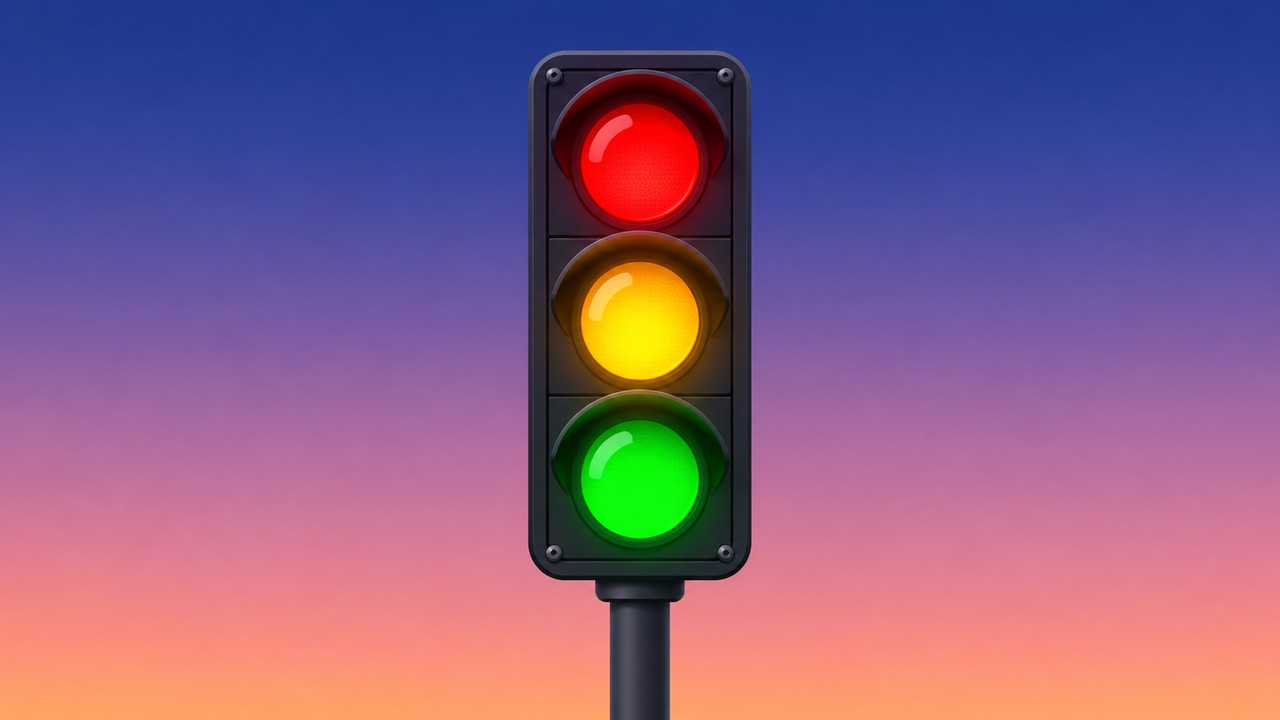
Traffic-light colors are not a palette invented just for cars. Stop-and-go meanings used on railroads long ago carried onto streets, and a middle yellow caution light was added as vehicles got faster.
Railroads used them first
Red was easy to read as danger or stop. It shows up well at a distance and feels like a warning, closer to fire or blood. In 19th-century British railways, red often meant danger, white meant clear or safe, and green often meant proceed with caution.
White lights were the weak spot. If a colored glass filter cracked or fell off, any lamp could look white—so a stop signal might be read as clear. Railroads dropped white, shifted green toward “go,” and later used yellow for caution. Ships also long used red and green as familiar port and starboard guides. The road pairing of stop and go, though, tracks more clearly to railroad practice.
Yellow was added later
Early street signals often had only red and green. London tried a gas-lit signal (with daytime semaphore arms) in 1868, and around 1914 Cleveland records an electric system by James Hoge. Officers sometimes blew a whistle to warn that the light was about to change.
As cars got faster, drivers needed a middle cue that a change was coming. Detroit police officer William Potts is often credited with a three-color, four-way signal using amber caution around the late 1910s to 1920. The Henry Ford museum also presents a 1920 example. Sources disagree a little on who was first and when, so it helps to say the three-color pattern settled widely in that period.
Position carries meaning too
Some people struggle to tell red from green. On vertical signals, red is usually on top, yellow in the middle, and green at the bottom. Reading position with color makes the meaning clearer.
In the United States, 1930s guidance aligned road signs and signal colors, locking in red, yellow, and green as the standard. Lamp shapes and arrow styles vary by country, but top-for-stop and bottom-for-go is a common habit. Looking up at a crosswalk and seeing red first is part of that same convention.
The three colors grew from railroad habits; yellow plus top–middle–bottom position teach stop, ready, and go.
Notes and references · Smithsonian · Henry Ford · Mental Floss · LoC. Railroad colors (red stop; early white/green meaning shifts), London 1868, Cleveland 1914, Potts ~1920 three-color—timelines differ by source. Ship red/green mark sides, not a 1:1 map to road stop/go.
Editorial standardsReport an error
Quick quiz