No. 233Everyday life3 minviews 112
Published by GK Library Annex
Does brain freeze mean your brain is freezing?
No. Cold on the palate and behind the nose briefly triggers a headache signal.
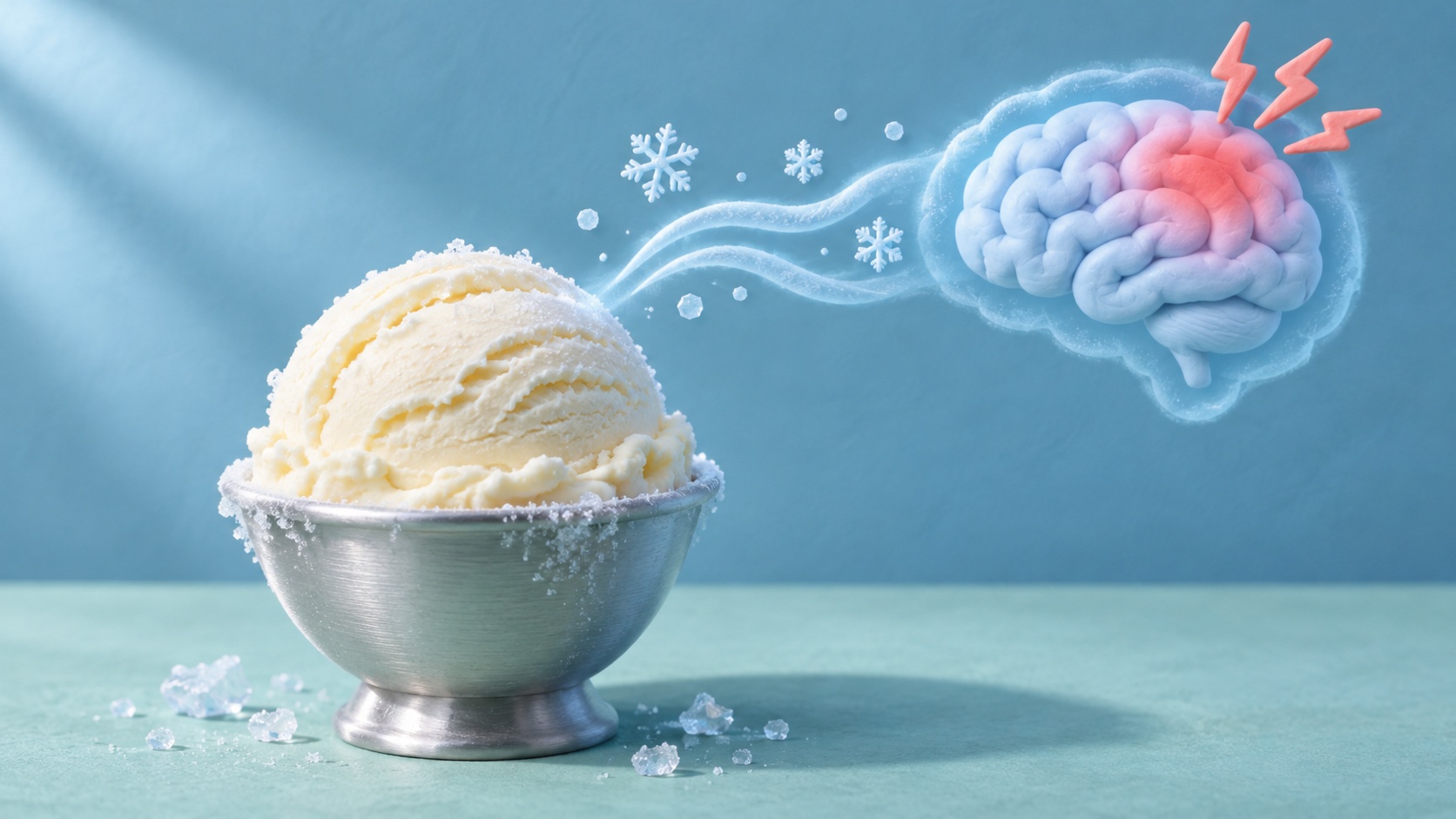
That sharp forehead pain after gulping ice cream or shaved ice is not your brain freezing. Sudden cold on the palate and behind the nose makes blood vessels and nerves send a headache signal—a cold-stimulus headache. It usually fades within minutes.
Mouth vessels react fast
Mayo Clinic neurology notes say eating something very cold too quickly makes vessels in the mouth and back of the throat shrink, then widen, which turns on pain receptors. A rapid size change can send a strong pain signal nearby.
Cleveland Clinic describes the same brief pain as the body trying to warm a suddenly chilled mouth. People call it brain freeze, but brain tissue is not freezing or getting damaged. Ice cream, shaved ice, and slushy drinks that chill the palate quickly are common triggers. The same cold drink is milder when sipped slowly.
Why the forehead hurts
Near the palate and behind the nose runs a pathway tied to the trigeminal nerve and the sphenopalatine ganglion. Many explanations treat the signal as referred pain felt in the forehead or temples. That is why a cold mouth can feel like a thud at the front of the head.
NINDS headache guidance also notes that the brain itself does not feel pain well; signals from nearby pain nerves can seem to come from deep inside the head. NINDS does not have a page only about brain freeze—its note is about headache pathways in general.
It usually passes quickly
Cleveland Clinic says it often lasts only a few seconds to about two minutes. The international headache classification (ICHD) frames it as a short headache that settles within ten minutes after the cold stimulus is removed. That pattern differs from longer headaches.
Eating slowly keeps the mouth from chilling all at once, and clinic guides also mention warming the palate lightly with the tongue. Details differ on whether vessel size change or nerve stimulation matters more. Unlike the feel of cold metal on skin, this is a short headache from cold food.
The thud is not a frozen brain—it is a sudden cold signal from the palate and behind the nose.
Notes and references · Mayo Clinic·Cleveland Clinic·NINDS. Based on Mayo Clinic News (cold-stimulus headache; vessel size change), Cleveland Clinic (seconds to ~2 minutes; sphenopalatine name), and NINDS general headache guidance (brain feels little pain). NINDS has no brain-freeze-only page; mechanism wording varies.
Editorial standardsReport an error
Quick quiz