No. 207Everyday life4 minviews 128
Published by GK Library Annex
Why does a pot of ramen boil over more easily than plain water?
Starch released from the noodles makes the foam tough
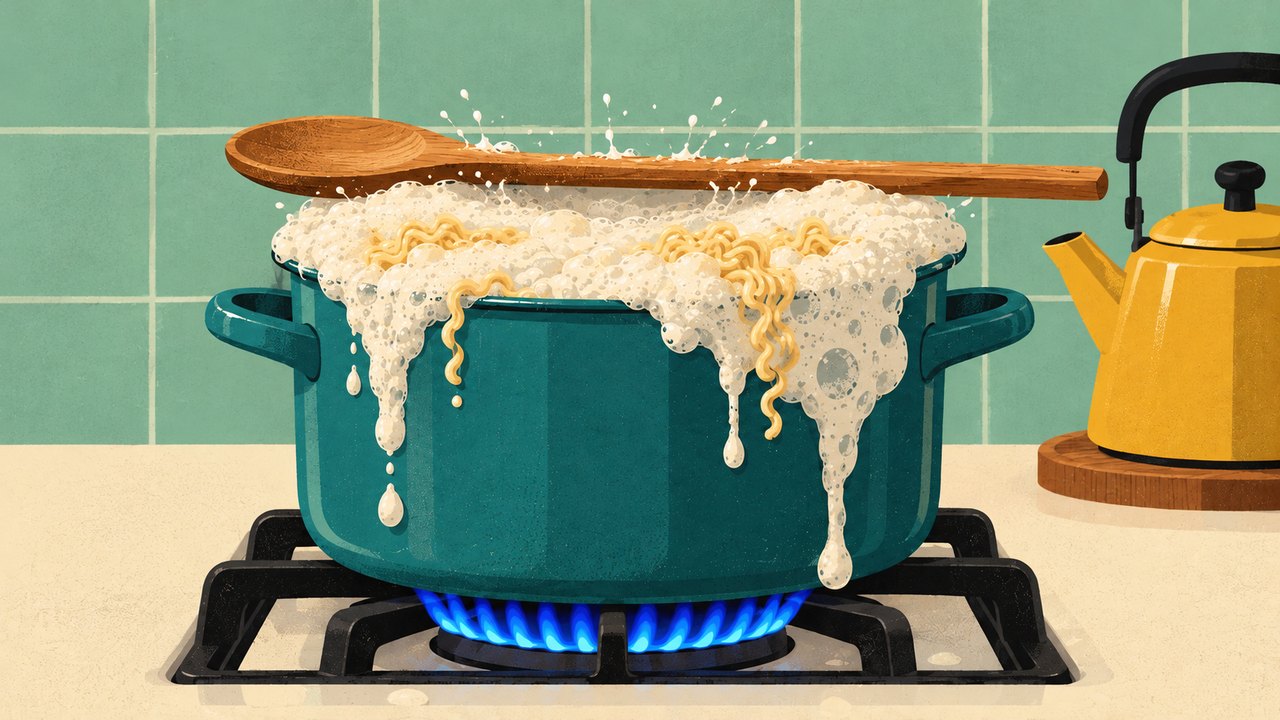
Plain water can boil hard without spilling over the pot, but once you add ramen or pasta, white foam quickly climbs up and overflows. The culprit is starch that comes off the noodles into the water. The starch holds the bubbles together so they don't pop easily.
Bubbles in plain water pop right away
When water boils, bubbles of steam form at the bottom of the pot and rise. In plain water, each bubble pops as soon as it reaches the surface, and only the steam escapes. Water on its own can't keep a thin film going for long.
Adding noodles changes that. Starch on the surface of wheat noodles dissolves into the hot water, making it slightly sticky, and this starch coats the bubbles and strengthens their film. New bubbles keep piling on top of the ones that haven't popped, so a heap of foam creeps up the side of the pot. Milk boiling over works in a similar way, except that milk proteins form the film.
A wooden spoon only works for a while
People say that laying a wooden spoon across the pot keeps it from boiling over. It does help. Dry wood doesn't conduct heat well, so it stays cooler than the foam, and its surface is full of tiny pores. When foam touches the cool spoon, the steam inside the bubbles cools back into water, and the porous surface disrupts the film, so the bubbles pop.
But the effect doesn't last long. Once the spoon heats up and gets soaked with starchy foam, it no longer pops bubbles well. That's why some people say they tried it and it didn't work. Metal spoons are said to work for an even shorter time because they heat up quickly.
Turning down the heat works best
If you lower the heat a little when the foam starts rising, fewer new bubbles form and the foam soon settles. A lid traps heat inside and makes the foam rise faster, so after adding the noodles it's better to leave the lid slightly open.
Using plenty of water and a wide pot also helps. More water dilutes the starch, and in a wide pot the foam spreads sideways before it can pile up, giving it more room to pop. Stirring once with a spoon or blowing gently on the rising foam also makes it go down, because your breath cools the steam inside the bubbles.
A ramen pot boils over because starch makes the foam tough, and turning down the heat is the surest fix.
Notes and references · The Conversation (CQUniversity): wooden spoons, boil-overs. Explains that starch and milk proteins coat bubbles so they pile up. A wooden spoon works only while it is cool and dry; once hot and wet, the effect fades.
Editorial standardsReport an error
Quick quiz