No. 237Health3 minviews 88
Published by GK Library Annex
Why does pineapple make your mouth tingle?
The sweet fruit briefly ‘digests’ your tongue.
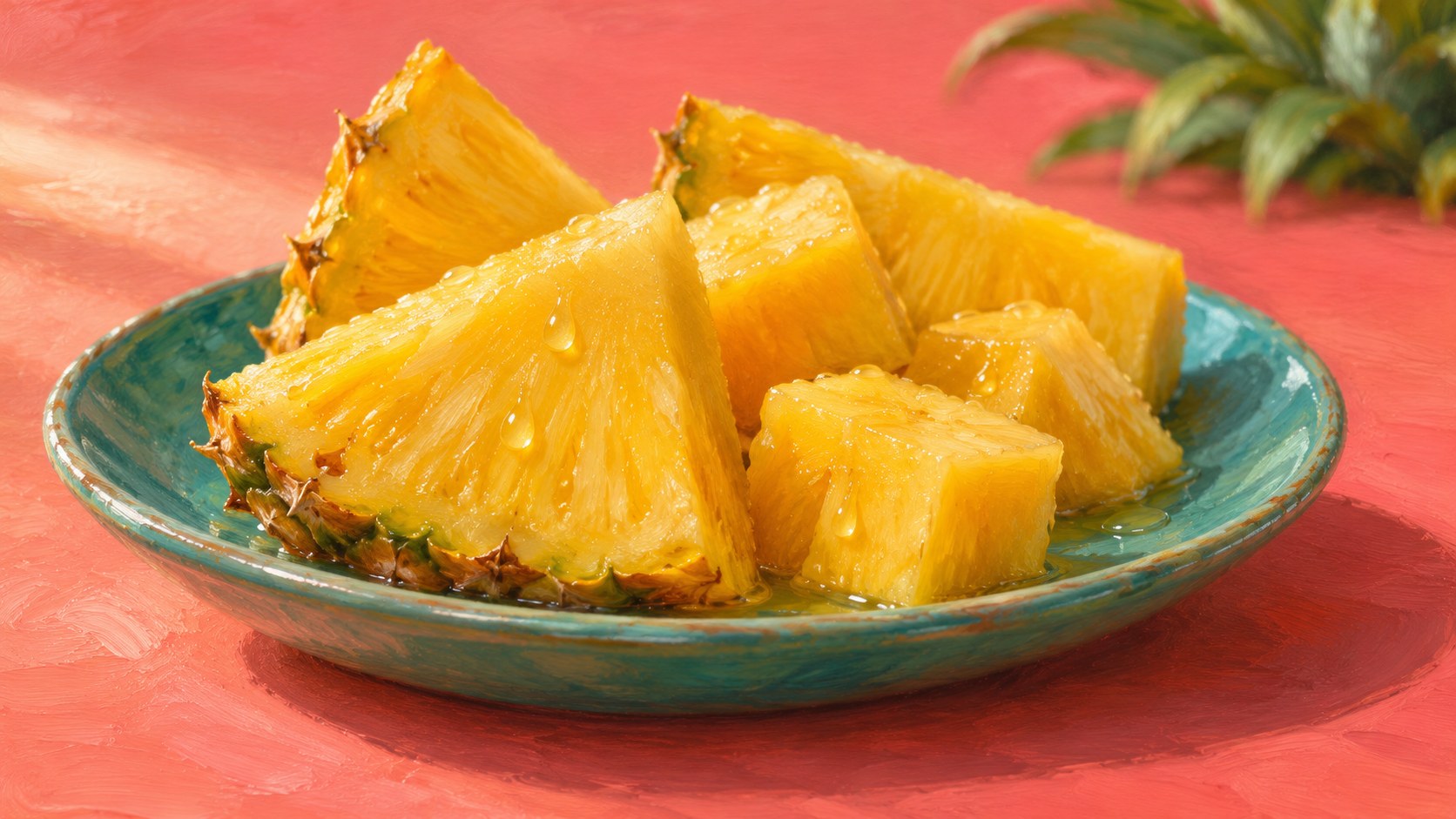
When fresh pineapple makes your mouth tingle, it is because an enzyme in the juice briefly breaks down the lining inside your mouth. A protein-cutting enzyme called bromelain weakens the mucin proteins that protect your tongue and cheeks, and then the fruit’s acidity irritates the exposed tissue. It is not a burn from fire—the sweet fruit is gently ‘digesting’ your tongue for a moment.
Bromelain cuts proteins
Fresh pineapple contains bromelain, a protease enzyme complex. That is also why cooks use pineapple to tenderize meat: it snips tough proteins such as collagen. Leave meat in a pineapple marinade too long, though, and it can turn mushy.
Something similar happens in your mouth. The mucus that coats your tongue and cheeks includes proteins like mucin, and bromelain can weaken that protective film. Some cooking notes say the core often holds more bromelain—one reason the inner flesh can sting more than outer pieces.
Enzyme and acid work together
Pineapple acidity alone (roughly pH 3–4) does not explain the tingle. After the enzyme loosens the protective lining, acid irritates the exposed tissue, and the sting grows sharper. Live Science and food-scientist accounts frame it as a partnership of enzyme plus acid.
Papaya has related proteases too, but usually stings less; pineapple’s acidity is one reason it feels stronger. The sensation is temporary, and your mouth repairs itself. At ordinary eating amounts, guides generally do not treat it as dangerous.
Heat or canning softens the sting
Heat denatures bromelain and shuts down its activity. Grilled, cooked, or canned pineapple processed around 70–80°C or higher barely stings. Raw pineapple can keep gelatin from setting; canned pineapple usually does not—same enzyme story.
A folk tip says a saltwater soak helps. Some research finds little drop in activity, or at most about a 25% cut, so it is hard to call a proven fix. Treat it as curious kitchen lore, not a sure cure.
Fresh pineapple tingles because bromelain and acid together briefly irritate the mouth lining.
Notes and references · Live Science · Science Meets Food · eatright. Summarized from Live Science (tingle mechanism; Annals of Allergy letter 2019 mention; Colletti), Science Meets Food (bromelain food chemistry), Academy of Nutrition and Dietetics / eatright.org All About Pineapple (tenderizer; canning destroys the enzyme), and Inverse / food scientist Karen Schaich (mucous lining + acidity; heat around 70–80°C). Saltwater-soak evidence is limited.
Editorial standardsReport an error
Quick quiz