No. 231Health3 minviews 91
Published by GK Library Annex
Drifting Specks and Strands in the Sky Are Shadows Inside Your Eye
Fibers inside the eye's jelly-like fluid cast shadows on the retina
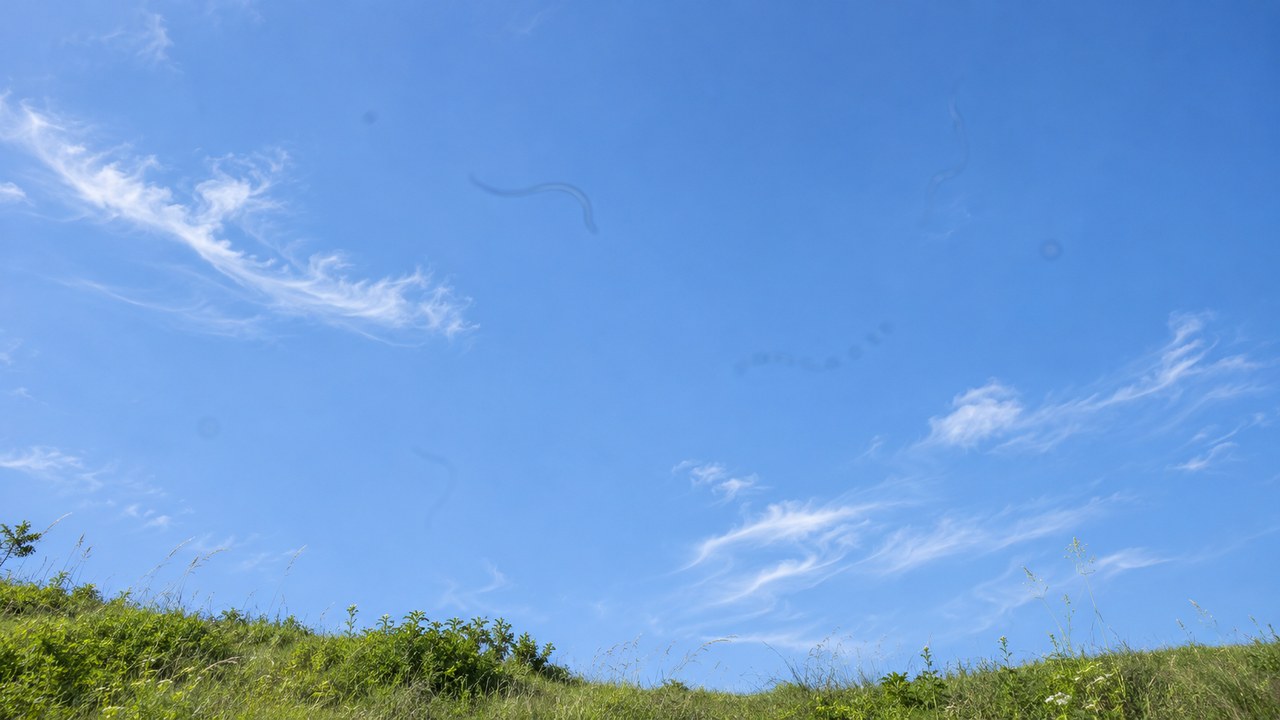
When you look at a clear sky or a white wall and see specks or threads drifting in front of you, that is called floaters (muscae volitantes). They are not dust outside your eye but shadows that fibers inside the vitreous, the jelly-like substance in your eye, cast on the retina.
There are fibers inside the eye's jelly
The inside of the eye is filled with a clear, jelly-like substance called the vitreous. According to older guidance from the U.S. National Eye Institute (NEI), the vitreous fills about 80% of the eye and helps it keep its round shape. It is mostly water, mixed with fibers of a protein called collagen.
As you age, the vitreous gradually thins and shrinks, and the fibers clump into thin strands or lumps. When these pieces block a little light, they cast tiny shadows on the retina (the thin layer at the back of the eye that receives light), and we see those shadows as drifting specks or thin lines. Because the shadows form inside the eye, blinking or wiping the surface of your eye does not make them go away.
They dart away when you look at them
According to Mayo Clinic, floaters look like black or gray specks, strings, or cobwebs. They are especially easy to see against a bright white background. Johns Hopkins Medicine says they are most obvious when you look at something white. That is why you notice them against a clear sky or a white monitor screen.
When you move your eyes to look at one directly, the shadow seems to dart away. The NEI explains that these shadows do not follow your eye movements exactly and drift slowly once your eyes stop. Because they are pieces floating in the jelly, they do not follow right away as your eyes move.
Usually harmless, but not if they suddenly increase
Floaters are mostly a natural change that comes with age. According to the NEI, vitreous detachment, when the vitreous pulls away from the retina, usually happens after age 50. The NEI says it mostly does not threaten sight and needs no treatment. If there is no serious problem, you often notice the floaters less after a few months.
However, if the specks suddenly increase all at once, if you see flashes of light, or if a curtain-like shadow covers part of your vision, the retina may have torn or detached. The NEI advises going to an eye doctor or the emergency room right away if you have these symptoms.
The specks and strands you see against the sky are shadows of fibers inside your eye. If they suddenly increase, see an eye doctor right away.
Notes and references · U.S. National Eye Institute (NEI), Mayo Clinic. Based on the NEI's guidance on floaters and vitreous detachment, Mayo Clinic, and Johns Hopkins Medicine. The figure that the vitreous fills about 80% of the eye comes from older NEI guidance.
Editorial standardsReport an error
Quick quiz