No. 172Health3 minviews 91
Published by GK Library Annex
Do Lots of Mandarins Really Turn Hands Yellow?
How mandarin pigment shows through your palms, how to tell it from jaundice, and how long it takes to fade
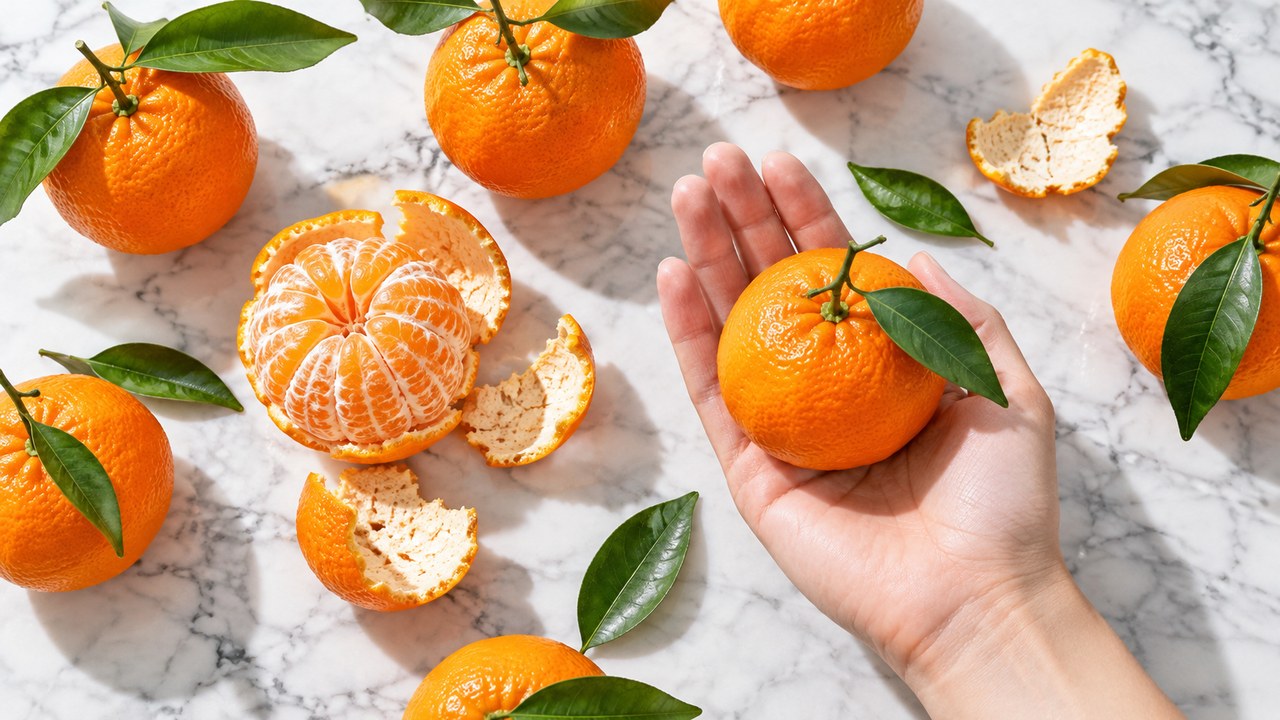
People who keep peeling mandarin after mandarin often say their palms have turned a little yellow. It really can happen. The pigment that gives mandarins their orange color builds up in the body and shows through the outer layer of the skin, a condition doctors call carotenemia.
The yellow is mandarin pigment
The orange color of mandarins, carrots, pumpkins and sweet potatoes comes from pigments called carotenoids. The body turns some of these pigments into vitamin A, but it does so slowly, so when you eat a lot at once the leftover pigment circulates in the blood and builds up in the skin.
Seoul National University Hospital's medical information explains that this can happen when people take in more than 30mg of beta-carotene a day. That is why, in winter when mandarins are in season, people who keep a box of them nearby and snack on them all day for a few weeks report that their hands turned yellow first. Many assume the color simply rubbed off the peel, but the soles of the feet, which never touch a mandarin, turn yellow too, which shows the pigment you ate has spread through the body.
Why the palms go yellow first
These pigments dissolve well in fat and build up in the stratum corneum, the outermost layer of the skin. The palms and soles have an especially thick layer, so the color shows there first and most strongly. It also tends to appear on the forehead, the tip of the nose and the folds beside the nose.
It is often confused with jaundice, but there is an easy way to tell them apart. Jaundice turns even the whites of the eyes yellow, while the yellow from mandarins does not appear on the whites of the eyes or inside the mouth. Those areas have no outer layer for the pigment to collect in. If your hands look yellow, check the whites of your eyes in a mirror first.
It fades when you eat less
According to Seoul National University Hospital, this yellowing is a benign condition that causes no other toxicity, so it needs no special treatment. When you cut back on pigment-rich foods like mandarins, the pigment in the blood drops, and skin color usually returns to normal after 30 to 60 days. The same thing can happen from often drinking carrot juice or eating pumpkin porridge instead of mandarins.
It is a different story, though, if your skin turned yellow without eating many mandarins, or if the whites of your eyes are yellow too. It could have another cause, such as an underactive thyroid or liver or kidney disease, so in that case it is a good idea to see a doctor. If you enjoy mandarins all winter, rather than being alarmed by yellow palms, it is enough to take a look at how many you eat a day.
When mandarin pigment builds up in the skin's outer layer your palms can turn yellow, but the whites of your eyes stay white and it fades when you eat less.
Notes and references · Seoul National University Hospital: Carotenemia. Based on its explanation of intake above 30mg of beta-carotene a day, yellowing of palms, soles and nose tip, no change in eye whites or mucous membranes, and recovery 30 to 60 days after cutting back. How yellow skin gets varies by person.
Editorial standardsReport an error
Quick quiz