No. 193Health3 minviews 93
Published by GK Library Annex
Pins and needles after sitting: a signal from your nerves
It happens when a nerve gets too little blood. Here is why it fades within minutes and how it differs from a cramp
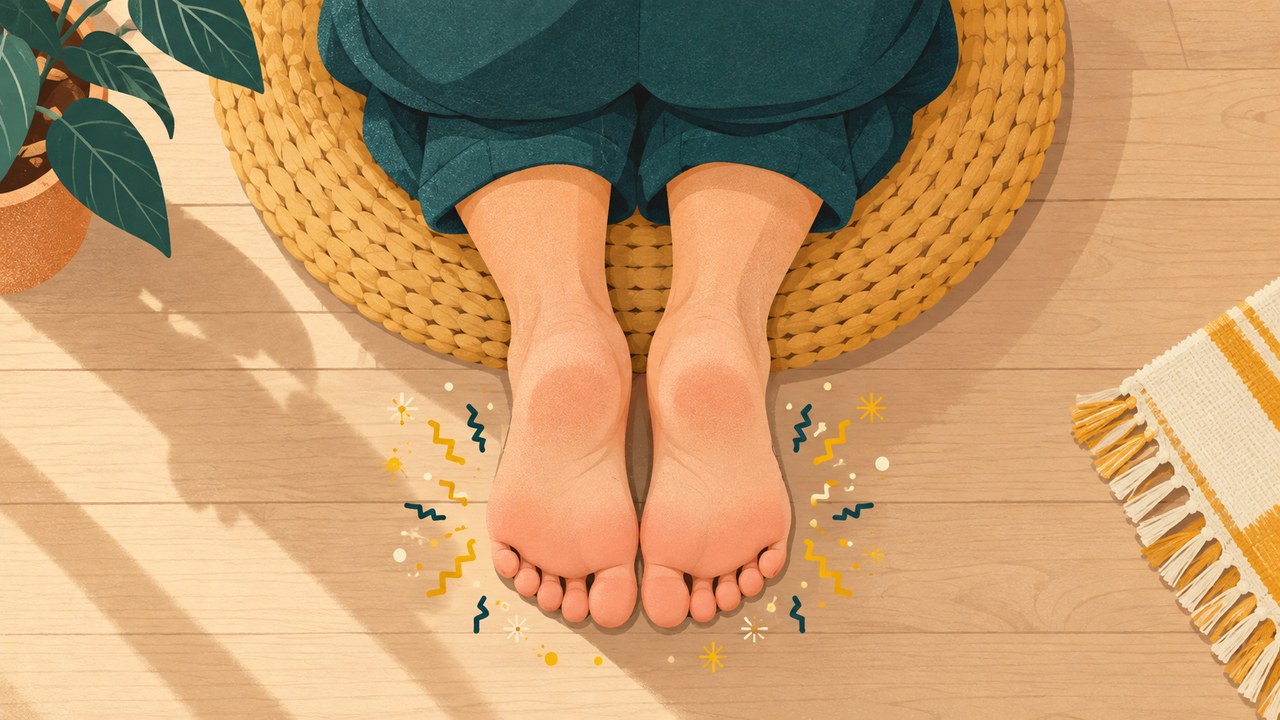
After squatting or sitting cross-legged for a long time, your legs can tingle when you stand up. This feeling comes from nerves in the leg being pressed and the blood reaching those nerves briefly dropping. Once the weight comes off, it usually goes away within a few minutes.
Nerves create the tingling
Nerves run through your legs, carrying sensations from the skin and muscles to the brain. When you stay in one position for a long time, your body weight presses hard on these nerves and the blood vessels around them. The UK's National Health Service (NHS) explains that pins and needles happens when the blood supply to the nerves is cut off, usually when you sit or sleep on part of your body.
With less blood, the nerves cannot send signals properly. So at first the feeling goes dull, and your leg may even feel as if it isn't yours.
Why it stings more when you stand
The sharp, prickly feeling is often worse after you stand up. When the pressing weight comes off and blood flows again, the resting nerves start sending signals all at once. That is when it feels like being poked with needles or like ants crawling on your skin.
It usually takes a few minutes for these signals to settle. Walking right away before the feeling fully returns makes it easy to twist an ankle, so it is safer to stay seated for a moment and rotate your ankles while you wait.
It is not the same as a cramp
Pins and needles and a leg cramp may seem alike, but they are different things. Pins and needles is a problem with sensation caused by a pressed nerve, while a cramp is a muscle suddenly contracting hard, stiffening and hurting. When you get a cramp, slowly stretching the tight muscle often helps it ease.
The easiest way to prevent pins and needles is to avoid holding one position for too long. When you sit on the floor, stretch your legs or shift your position now and then so the nerves are not pressed the whole time.
If it keeps happening, get it checked
Tingling that goes away quickly when you change position happens to everyone. But the NHS advises seeing a doctor if pins and needles is constant or keeps coming back. There may be another cause, such as diabetes or a nerve being trapped where it runs from the lower back down the leg.
In particular, if your legs tingle even when you are not in any awkward position, or the feeling spreads down the leg along with pain, it is better to have the cause checked at a clinic instead of guessing on your own.
Pins and needles happens when a pressed nerve gets less blood. It fades once the weight is off, but see a doctor if it keeps coming back.
Notes and references · UK National Health Service (NHS), Pins and needles. Explains that pins and needles happens when the blood supply to nerves is cut off and fades within minutes once the weight is removed. Diagnosing constant or recurring tingling is beyond the scope of this article
Editorial standardsReport an error
Quick quiz