No. 251Nature4 minviews 191
Published by GK Library Annex
Why Are Flamingos Pink?
Flamingos are born gray, and the secret to their pink color lies in what they eat.
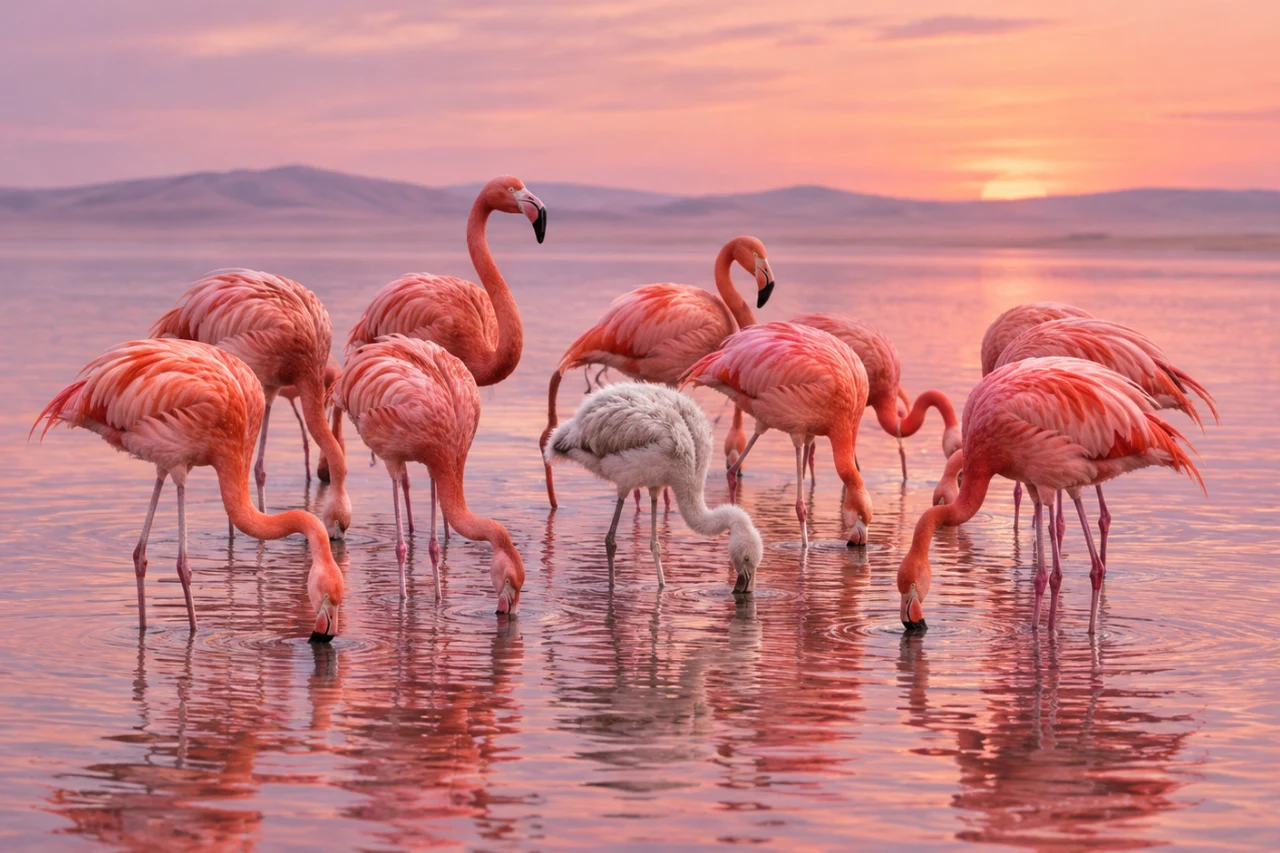
Picture a flamingo at the zoo or in a photo, and it is almost always a vivid pink. Yet a newly hatched flamingo is covered in grayish-white down. How does the same bird turn pink as it grows? The answer lies in the food it eats every day.
The color comes from food
A flamingo's pink is not a color its feathers make on their own. Many plants and microscopic algae produce red, yellow and orange pigments called carotenoids. They belong to the same family of pigments that makes carrots orange.
In shallow water, flamingos filter out microscopic algae and small creatures such as brine shrimp that live on those algae. As the body digests and processes the carotenoids in this food, the pigments move into the feathers, and the feathers take on a pink tint. The Smithsonian's National Zoo in the United States explains the flamingo's color the same way.
Upside-down filter feeding
The way flamingos eat is unusual too. Standing in shallow water, a flamingo lowers its neck and turns its head upside down, dipping it so the tip of its bill points toward its feet. It then moves its tongue like a piston, drawing water into the bill and pushing it back out. Rows of thin plates packed inside the bill act like a sieve and catch only the tiny food.
The food filtered this way must contain plenty of carotenoids for the pink to last. That is why zoos give flamingos a special feed with added pigment to keep them pink. In other words, a change in diet can change the color of their feathers.
Gray chicks, fading parents
Flamingo chicks hatch with grayish-white down and a straight bill. According to San Diego Zoo Wildlife Alliance, their bill and legs are pink at hatching but turn black within a week. It takes several years for them to gain the pink feathers and downward-curved bill of an adult.
Interestingly, parent flamingos actually fade while raising their young. Parents feed the chick a milk-like food called crop milk, made in the upper part of the digestive tract, and during this time their feathers can pale to light pink or almost white. Once the chick becomes independent, the parents' pink returns.
A flamingo's pink is not inborn; it comes from carotenoid pigments in its food building up in its feathers.
Notes and references · Smithsonian's National Zoo · San Diego Zoo. Smithsonian's National Zoo, "Why Are Flamingos Pink? And Other Flamingo Facts"; San Diego Zoo Wildlife Alliance, "Flamingo"
Editorial standardsReport an error
Quick quiz